Psychoanalysis, Neuroscience and Adolescent Development: Non-Linear Perspectives on the Regulation of the Self explores how psychoanalysis can combine its theoretical perspectives with more recent discoveries about neurological and non-linear developmental processes that unfold during the period of puberty to young adulthood, to help inform understanding of contemporary adolescent behaviours and mental health issues.
Cognitive Neuroscience of Language provides an up-to-date, wide-ranging, and pedagogically practical survey of the most important developments in this exciting field.
Key features:Presents a contemporary snapshot of the mechanisms underlying the evolution and adaptation of behaviorExplores how genetics, epigenetics, development, and environment shape behavior Discusses a broad range of behavioral repertoires and responses, including those related to thermoregulatory, foraging, predatory, displaying, social and escape strategies.
Key features:Presents a contemporary snapshot of the mechanisms underlying the evolution and adaptation of behaviorExplores how genetics, epigenetics, development, and environment shape behavior Discusses a broad range of behavioral repertoires and responses, including those related to thermoregulatory, foraging, predatory, displaying, social and escape strategies.
Two experimental procedures prompted the empirical development of psychophysical models: those that measure response frequency, often referred to as response probability; and those that measure response time, sometimes referred to as reaction time.
The Neuroscience of Coffee is a pioneering volume that delves into the intricate relationship between one of the world's most beloved beverages and the human brain.
Two experimental procedures prompted the empirical development of psychophysical models: those that measure response frequency, often referred to as response probability; and those that measure response time, sometimes referred to as reaction time.
Psychoanalytic Concepts and Technique in Development offers a clear and thorough overview of contemporary psychoanalytic theory and clinical technique, from a largely post-Freudian, French perspective, but also informed by the work of Klein, Bion and Winnicott.
Psychoanalytic Concepts and Technique in Development offers a clear and thorough overview of contemporary psychoanalytic theory and clinical technique, from a largely post-Freudian, French perspective, but also informed by the work of Klein, Bion and Winnicott.
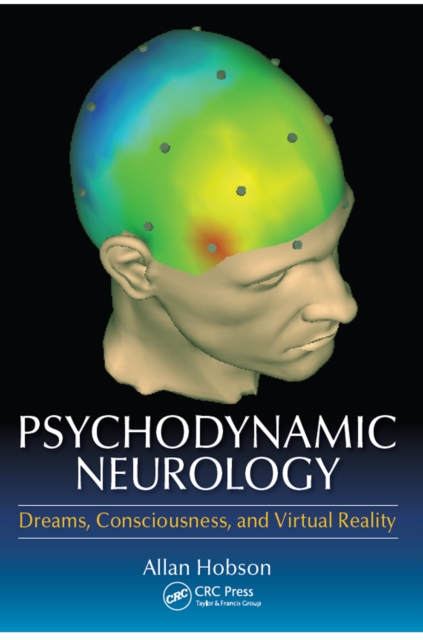
Psychodynamic Neurology: Dreams, Consciousness, and Virtual Realty presents a novel way of thinking about the value of dreaming, based in solid comprehension of scientific research on sleep and dreams, but with deep understanding of psychoanalytic and other interpretations of dreams.
Imagination in the Western Psyche: From Ancient Greece to Modern Neuroscience offers a comprehensive treatment of the human imagination by integrating the rich discourse on imagination in the humanities with modern neuroscientific research.
This book provides a comprehensive and up-to-date account of the information available on the morphological, physiological and evolutionary aspects of specialized cells distributed within the epithelia of the airways in the vertebrates.
Handbook of Behavioral State Control: Cellular and Molecular Mechanisms provides the first synthesis of information on the neurobiology of behavioral states, ranging from normal stress and sleep deprivation to debilitating neuropsychiatric disorders.
The Handbook of Neurophotonics provides a dedicated overview of neurophotonics, covering the use of advanced optical technologies to record, stimulate, and control the activity of the brain, yielding new insight and advantages over conventional tools due to the adaptability and non-invasive nature of light.
Imagination in the Western Psyche: From Ancient Greece to Modern Neuroscience offers a comprehensive treatment of the human imagination by integrating the rich discourse on imagination in the humanities with modern neuroscientific research.
Increasing interest in the study of coordinated activity of brain cell ensembles reflects the current conceptualization of brain information processing and cognition.
The molecular mechanisms, which are responsible for the functional differences between the various types of neuronal synapses, have become one of the central themes of modern neurobiology.
Sensory Neuroscience: Four Laws of Psychophysics organizes part of psychophysics -- a science of quantitative relationships between human sensations and the stimuli that evoke them.
This book represents a collection of recent advances in computational studies in neuroscience research that practically applies to a collaborative and integrative environment in engineering and medical domains.
Almost four decades of innovative and intensive research on Alzheimer's disease (AD) have brought major advances in our understanding of its pathogenesis, improved tools for diagnosis, and strategies for its treatment.
Brain Inspired Cognitive Systems 2008 (June 24-27, 2008; Sao Luis, Brazil) brought together leading scientists and engineers who use analytic, syntactic and computational methods both to understand the prodigious processing properties of biological systems and, specifically, of the brain, and to exploit such knowledge to advance computational methods towards ever higher levels of cognitive competence.
Neuronal Noise combines experimental, theoretical and computational results to show how noise is inherent to neuronal activity, and how noise can be important for neuronal computations.
Laboratory-bred common marmosets (Callithrix jacchus) have a natural lifespan in captivity in excess of 12 years, while their maximum longevity is more than 16 years.
Information on bioactive ether lipids and their involvement in neurological disorders is currently scattered throughout the literature in the form of original papers and reviews.
It has become widely acknowledged, and almost trivial to state, that the study of the control and coordination of biological movement - motor control - is inherently multidisciplinary.
The complexarchitectureofneuronal networks togetherwith the extraordinary associated functions make the nervous system a fascinating biological structure.
Cyclin Dependent Kinase 5 provides a comprehensive and up-to-date collection of reviews on the discovery, signaling mechanisms and functions of Cdk5, as well as the potential implication of Cdk5 in the treatment of neurodegenerative diseases.