Being both broad - perception and motor organization - andnarrow - just onegroup of animals - at the same time, thisbook presents a new unified framework for understandingperceptuomotor organization, stressing the importance of anecological perspective.
This study on the human midbrain examines how specific neuroanatomical structures are involved in the aging process and in certain degenerative diseases of the nervous system.
Bei automatischen Spracherkennungssystemen erweist sich ein Wechsel des Sprechers als besonderes Problem: Ein zuvor durch eine andere Person trainiertes Erkennungssystem hat eine deutlich erhöhte Fehlerwahrscheinlichkeit.
Latest issue in the CURRENT TOPICS IN NEUROENDOCRINOLOGY se-ries which has been gaining a great deal of reputation as aprimary source for reviews in neuroendocrinology and relatedareas in the past few years.
Rarely have the many mechanisms that might underlie neural plasticity been examined as explicitly as they are in this broad, lavishly illustrated treatment of plasticity in the somatosensory system.
This monographic work authored by eminent neurophysiologists will be of major interest to researchers investigating the visual system or working in behavioral neuroscience and sleep research.
This book is the fruit of a study group on perception and action that worked at the Center for Interdisciplinary Research (ZiP) of the University of Bielefeld, FRG in the academic year 1984-1985.
In July 1989 a symposium was held at the Physiology Department of the Georg August University, G6ttingen, on the physiological, biophysical, biochemical, and technical principles of the coding of chemical substances both in nervous systems and artificial devices.
As indicated in the Preface, the contributions to this volume are based upon the papers presented at the symposium on Thermoreceptors and Temperature Regula- tion held in July 1988 at the Institute of Physiology of the University of Marburg (Federal Republic of Germany) to celebrate and commemorate the life and achievements of HERBERT HENSEL, who directed that Institute from 1955 until his death in 1983, and whose most notable and significant contributions to thermo- physiology were in the areas of the properties and characteristics of thermo sensors, mammalian thermoregulation more generally, and the psychophysiology of ther- mal sensation.
This volume contains the contributions to a Satellite Symposium of the XXXI In- ternational Congress of Physiological Sciences in Espoo, Helsinki, Finland, July 15-17,1989.
Evolution of Castes in Insects l BERNHARD RENSCH The evolution of organisms in the succession of generations has been primarilly achieved through the appearance of new hereditary variants with minor deviations along with the development of stable structures and functions.
The 17th volume of the "e;Advances in Neurosurgery"e; contains a selection of the scientific reports of the 39th annual meeting of the German Society for Neurosurgery, which was held in Cologne from May 8-11, 1988.
The relatively simple, stratified nature of the retina and its spe- fied use in the visual process has long made it an inviting tissue to study both for its own sake and as a model for the more complex processes of the brain.
This volume is based on contributions to the second Brain Dynamics Conference, held in Berlin on August 10-14, 1987, as a satellite conference of the Budapest Congress of the International Brain Research Organization.
In dem Buch wird ein neues Verfahren, die elektromagnetische Artikulographie (EMA), vorgestellt, das erstmals eine direkte, medizinisch ungefährliche Untersuchung der Mundmotorik beim Sprechen erlaubt.
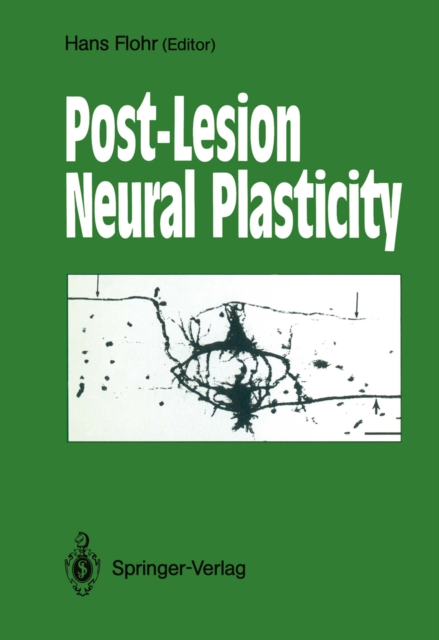
Neural networks are not rigidly wired but rather highly plastic structures, the functional architecture of which can be actively reorganized in response to external or internal events.
Sympathetic afferent fibers originate from a visceral organ, course in the thoracolumbar rami communicantes, have cell bodies located in dorsal root ganglia, and terminate in the gray matter of the spinal cord.
Die einzelnen Beiträge aus den verschiedensten Wissensgebieten der Natur- und Geisteswissenschaft geben ein biographisches Abbild von der Vielfalt der Interessen des Jubilars:
Das Buch enthält die Beiträge der Tagung "Neurowissenschaft und Ethik", die 1986 in Jakobsberg bei Bonn auf Einladung des Bundeskanzlers stattfand und sich mit den ethischen Fragen befaßte, die in den sich rasch entwickelnden Neurowissenschaften und der Neuromedizin eine Rolle spielen und schon jetzt in die öffentliche Diskussion eingetreten sind.
There can be little doubt that, to use the parlance of the advertising world, the elasmobranch fishes have a "e;high profile image"e; in today's world.
This 16th volume of Advances in Neurosurgery contains a selection of pa- pers presented at the 38th Annual Meeting of the German Society of Neurosurgery, held in Munster on 3-6 May 1987.
The following papers were presented at an international workshop on benzo- diazepine receptor ligands, memory and information processing, held during the 15th CINP meeting in Puerto Rico in December 1986 and organised by the editors and T.
One of the most impressive works of scholarship in the field of experimental pharmacology has been the Heffter-Heubner Handbuch der experimentellen Pharmakologie, internationalized some years ago under the title Handbook 0/ Experimental Pharmacology and kept up to date by a series of numbered Ergiin- zungswerke or supplementary volumes which have now replaced in importance the original Handbuch.