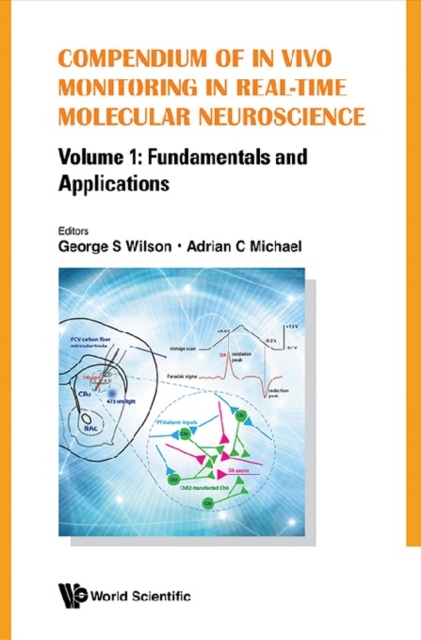
This new volume documents the transition from the development of electrochemical monitoring of brain function, now more than 40 years old, to fundamental neuroscience.
This book focuses on the sleep-related disorders in Parkinson's disease (PD), demonstrating that they are among the most common non-motor manifestations of PD and have a significant negative impact on quality of life.
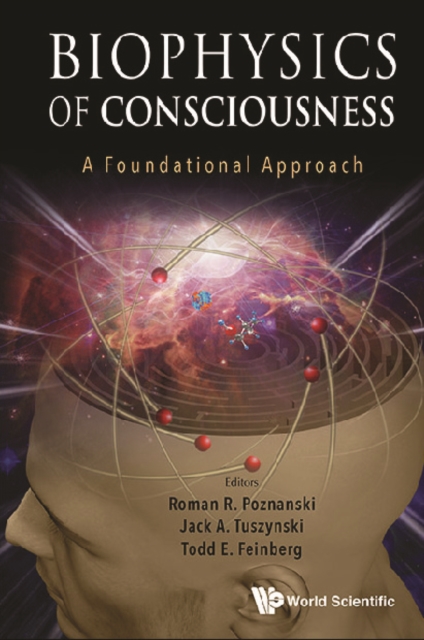
The problem of how the brain produces consciousness, subjectivity and 'something it is like to be' remains one of the greatest challenges to a complete science of the natural world.
This book describes the recent advancement of basic research on the biology of aging and longevity studies in various organisms, as well as the neurobiology of aging and neurodegeneration mechanisms.
This book provides an overview of bidirectional communication between gut-microbiome-brain, pathways, nutrients, and metabolites that are involved in microbiota gut-brain axis (MGBA) interactions.
Ambition, genius, thought, imagination, love, hate, greed and, above all, consciousness ourselves as alive and as part of our world - all this is somehow enabled by the brain.
This book explores the latest developments in the field the acute phase protein (APP), C-reactive protein or CRP in different diseases, highlighting the structural and functional aspects of CRP in disease biology.
This book provides an essential overview of the broad range of functional brain imaging techniques, as well as neuroscientific methods suitable for various scientific tasks in fundamental and clinical neuroscience.
The book reviews the recent developments in brain imaging and their technological advancements to understand molecular mechanisms associated with neurological disorders and basic behaviors in humans and rodents at the structural, molecular, and functional levels.
The contents of this book continues the theme as in the previous volume on cultural patterns and cognitive patterns in the East and West, with special regard to those patterns which are determined by our natural-genetic endownments in contrast to those patterns which are influenced by our cultural ('East-West') influences, and within this context a unique flavour is given to the 'good life' aspects of adapting to this global community.
Written by an international team of leading experts in neuroscience, this book presents an overview of some of the main schools of thought as well as current research trends in neuroscience.
This book presents the conceptual and mathematical basis and the implementation of both electroencephalogram (EEG) and EEG signal processing in a comprehensive, simple, and easy-to-understand manner.
This book provides an accessible introduction to an exciting new field of life science in which the focus is on small numbers of molecules and minorities within cell populations and their significance for the understanding of biological phenomena.
This innovative edited collection brings together leading international academics to explore the use of various non-prescription and prescription substances.
This volume explores major light microscopic imaging modalities that can be used to view nervous tissue, and discusses the steps needed to use each of them, and ways to interpret the data.
This second edition volume details the latest aspects of neural cells covering the practical and theoretical considerations of each techniques involved.
This volume explores the latest research in central nervous system (CNS) targeted nanocarriers, methods for their synthesis, and its characterization process.
This volume explores the latest techniques used to better understand the brain reward system with respect to neurotransmitters, brain structures, and connectivity.
This volume explores the recent advances in the study of translational paths in central inflammation and focuses on ongoing pathophysiological processes and the transition between inflammatory stages and progressive states with neurodegeneration.
This volume discusses different approaches to workflows for large volume electron microscopy - from preparation of samples to their imaging in a variety of microscopes - in some cases also applying correlative techniques.
This detailed book focuses on cutting-edge methods for Parkinson's disease (PD) research, such as the analysis of the prion-like properties of a-synuclein, mitochondrial functions related to the PINK1-Parkin pathway/CHCHD2, the endolysosome pathway related to LRRK2, VPS35, and ATP13A2 using cultured cells (including patient iPS cells), deep brain stimulation therapy, classic mitochondrial toxins related to PD, and genetic associations and screenings using mammalian and invertebrate genetic models of PD.
Synapses underlie rapid and flexible neural communication in the brain and they hold the key to understanding higher brain functions in health and disease.
This detailed book explores techniques for further elucidating the peripheral and central roles of oxytocin as well as techniques key to oxytocin receptor-related drug discovery.
Brain Energy Metabolism addresses its challenging subject by presenting diverse technologies allowing for the investigation of brain energy metabolism on different levels of complexity.
This volume discusses experimental brain injury models thatcontain valuable information carefully chosen to widen the researchers horizonabout neurotrauma.
This new edition provides updated and novel protocols of neuroproteomics methods that encompass both global-scale as well as targeted and specialized topics, which are timely additions for the molecular and phenotypic analysis of the central nervous system and CNS-related disorders.