More than 100 years ago, Dr Casimir Funk suggested the existence of a family of organic substances that are essential for life and thus introduced the concept of "e;vital amines"e; as essential nutrients with a specific action, requiring only minute amount with the power to cure a specific disease.
This volume explores the latest techniques used to study neurodevelopmental diseases (NDD) that range from molecular aspects to integrated research approaches and brain imaging in living rodents.
Food flavor, appearance, and texture are the sensory properties that influence food acceptance, and among these, flavor is usually the decisive factor for the choice of a particular product.
This volume provides current state-of-the-art methods for screening, diagnosis, management, and prevention of fetal alcohol spectrum disorder (and FASD).
Emotion Theory: The Routledge Comprehensive Guide is the first interdisciplinary reference resource which authoritatively takes stock of the progress made both in the philosophy of emotions and in the affective sciences from Ancient Greece to today.
This volume explores multiple methods and approaches used to generate human brain and neuroretinal organoids to address fundamental questions in human brain research.
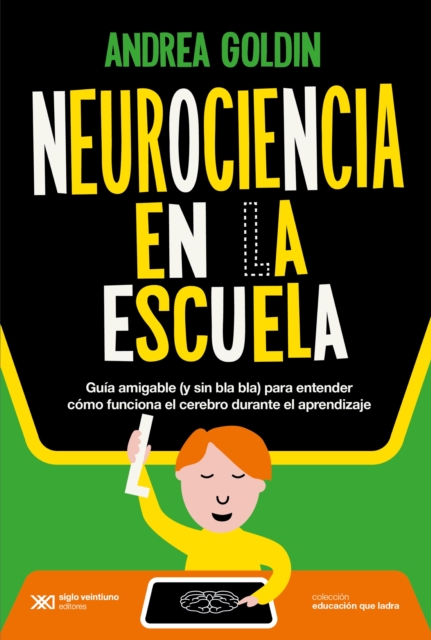
Scientists, educationalists and policymakers are increasingly recognizing the relevance of neuroscience to education and its potential impact on pedagogy.
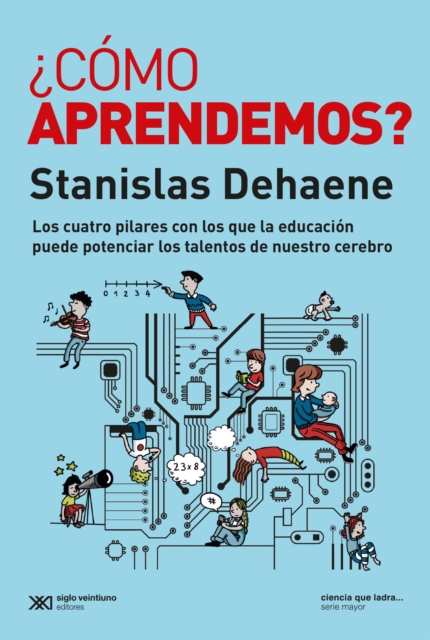
El cerebro humano es una máquina extraordinaria, capaz de transformarse a sí misma a partir de la experiencia y de albergar talentos que nos vuelven únicos como especie: lenguaje, lectura, matemáticas, creación artística.
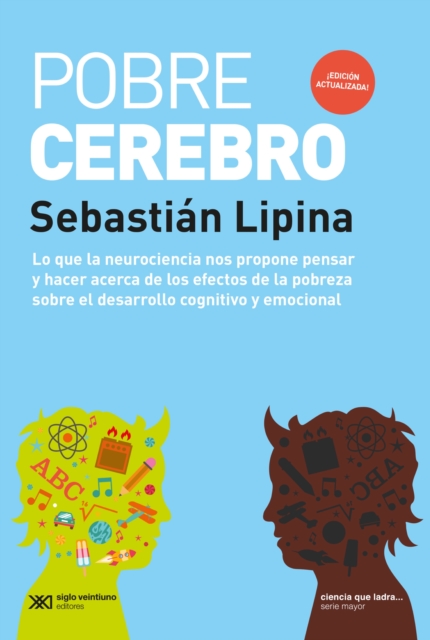
Cunde en nuestros días la ilusión de que la neurociencia puede explicarlo todo: los sueños y las adicciones, las dificultades de aprendizaje, nuestras decisiones financieras y nuestros consumos, los trastornos de la alimentación y los sentimientos religiosos.
Son nuestros genes los que dictan que tengamos cierto color de pelo, condiciones para la música o el básquet, predisposición a enfermarnos de algunas cosas.
¿Por qué, en pleno siglo XXI, seguimos creyendo en algo o alguien superior, llámese Dios, meditación trascendental, espiritualidad o sentido de la vida?
¿Por qué es tan fácil para cualquier niño descubrir de manera implícita las reglas ocultas del lenguaje y tan difícil memorizar listas o multiplicar números de muchos dígitos?
This book will cover recent advances in genetics and molecular biology of cerebrovascular diseases, including ischemic stroke, brain arteriovenous malformation, brain aneurysms, and cavernous malformation.
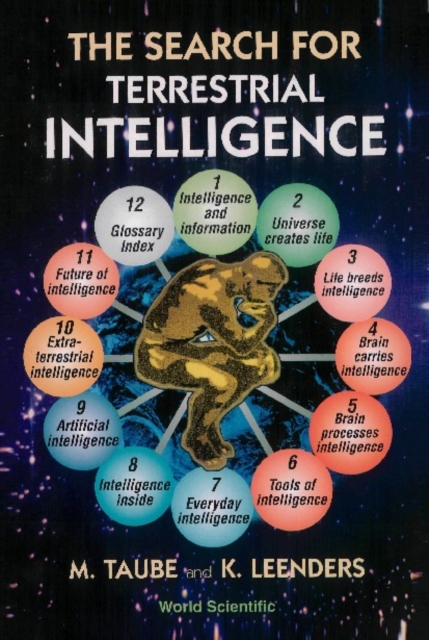
The book, written for a general educated public, compares the most important elements of the human nervous system to the corresponding capacities of robots.
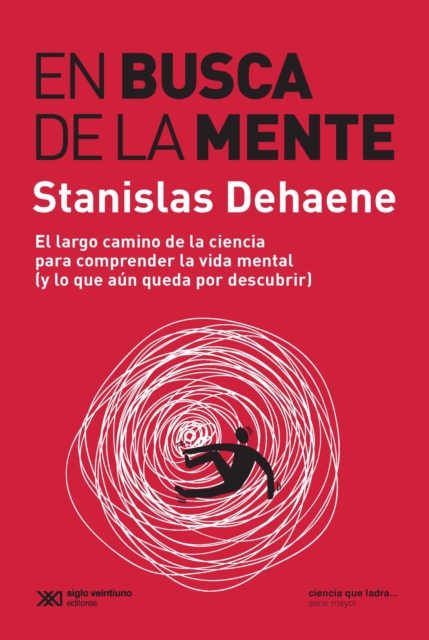
The problem of how the brain produces consciousness, subjectivity and 'something it is like to be' remains one of the greatest challenges to a complete science of the natural world.
Neurobiology of Depression: Road to Novel Therapeutics synthesizes the basic neurobiology of major depressive disorder with discussions on the most recent advances in research, including the interacting pathways implicated in the pathophysiology of MDD, omics technologies, genetic approaches, and the development of novel optogenetic approaches that are changing research perspectives and revolutionizing research into depression.
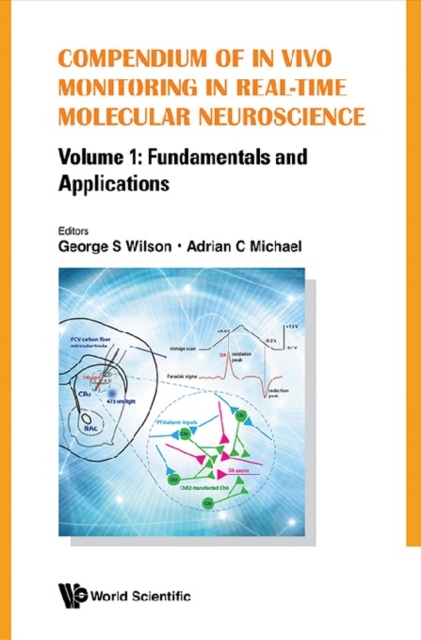
This new volume documents the transition from the development of electrochemical monitoring of brain function, now more than 40 years old, to fundamental neuroscience.
This proceedings volume contains papers presented during the meeting on Diversity in Auditory Mechanics by leading neurobiologists, biophysicists and mathematicians interested in auditory periphery.
The papers appearing in this proceedings volume cover a broad range of subjects, owing to the highly cross-disciplinary character of the workshop, and include: experiments and models concerning the dynamics of the neural activity in the cortex (DMS experiments, attractor dynamics in the cortex, spontaneous activity.
Perception is the first step in the whole of the cognitive processes (attention, learning, memory, categorization, imagery, intuition, inference, comprehension, thought, judgement, expression) which culminate in the reasoning activity and to which emotions make a contribution.
Recent advances in auditory neuroscience are characterized by a close interaction between neurophysiological findings, psychophysical effects and integrative models that attempt to bridge the gap between neuroscience and psychophysics.
The purpose of this book is to describe the memory system of the brain, taking into account all the levels of neural organization: molecule, cell, small network, and anatomical circuit.
This is the second volume in a series intended to give clear expositions of the applications of the new techniques developed to understand nonlinear phenomena in the life sciences.
Leon Cooper's somewhat peripatetic career has resulted in work in quantum field theory, superconductivity, the quantum theory of measurement as well as the mechanisms that underly learning and memory.
The phenomenon of consciousness has long been one of the great mysteries of life, perhaps because it is inexplicable in terms of the deterministic theories of classical science.
For a few decades, the puzzle of consciousness, which for centuries was analysed by philosophers, has been finding a wide interest in the scientific field, where previously it was not entitled to be a member.
Recent developments in the neurosciences have considerably modified our knowledge of both the operating modes of neurons and information processing in the cortex.
This volume looks at the associative mechanisms of the brain, particularly of the cortico-limbic and diencephalic systems, and also at the macromolecular effects on them, by integrating the contributions of various disciplines converging on one subject and from different points of view.
The articles in this volume are the results of discussions among biophysicists, neurobiologists and mathematicians with research interests in auditory mechanics and signal processing.