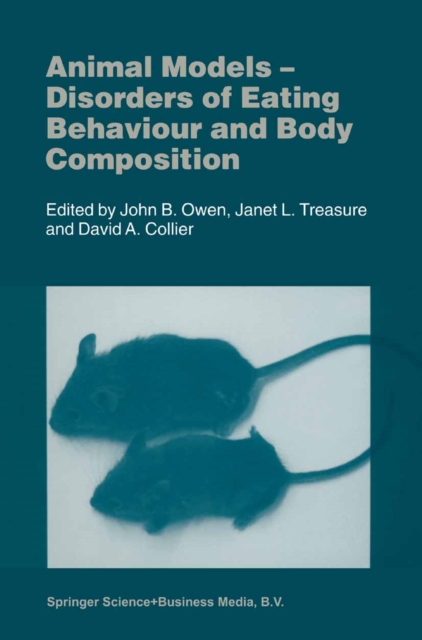
The book aims to review knowledge on the disorders of eating behaviour and body composition in some of the non-primate higher animals and to relate these to similar conditions in humans.
PHILOSOPHY AND COGNITIVE SCIENCE: CATEGORIES, CONSCIOUSNESS, AND REASONING The individual man, since his separate existence is manifested only by ignorance and error, so far as he is anything apart from his fellows, and from what he and they are to be, is only a negation.
In the developed world, images of brain structure are available as an everyday diagnostic aid, and the characteristic appearances of most pathological conditions can be looked up in a textbook.
A critical summary of the state of the art of PET technology and related disciplines (camera physics, radiochemistry, radiopharmacology, computerised brain atlases and databases, etc.
This volume contains a number of contributions, which concern basic issues in the field of brain-behavioural development in the human, especially with regard to the young child.
This volume contains the proceedings of the latest in a series of international symposia on advances in neuro-oncology, held September 26-29, 1990, in San Remo, Italy and sponsored by the University of Pavia, I.
This book is intended for students of medicine, pharmacy and other biological disciplines, who want to have a working knowledge of the mechanisms of action, uses and adverse effects of drugs which modify the activity of neurotransmitters in the peripheral and central nervous systems.
This book offers an insightful exploration into the relationship between diet and Multiple Sclerosis (MS), aiming to address a crucial question: Can dietary interventions serve as effective preventative and therapeutic measures for patients with MS?
This volume contains the Proceedings of the invited lectures of the Second International Sym- posium on SEROTONIN from Cell Biology to Pharmacology and Therapeutics held in Houston, Texas September 15-18, 1992.
Receptors for cell hormones, growth factors, Fourth, alterations in the development of neu- and neurotransmitters are involved in the ral receptors may have profound implications control and modulation of an enormous array for the structure and function of the of biological processes.
Molecular and Cell Biology of Muscular Dystrophy gives a series of accounts of various aspects of the remarkable breakthrough which has been achieved in our understanding of the Duchenne/Becker muscular dystrophies and of the consequences and ramifications of this breakthrough.
Surgery for the treatment of deformities such as scoliosis carries a small but significant risk of damage to the spinal cord through inadvertent compression or interference with the blood supply.
This book deals with the cellular biology, biochemistry and physiology of photoreceptors and their interactions with the second-order neurons, bipolar and horizontal cells.
Multiple voices throughout the last century have preached the merits of various treatments for schizophrenia, ranging from cold baths to the currently accepted standards such as neuroleptic medication.
Encephalopathy and Nitrogen Metabolism in Liver Failure contains research reports and state-of-the-art reviews that were presented at the 11th International Symposium on Hepatic Encephalopathy and Nitrogen Metabolism in relation to liver disease, that was held in Amsterdam, The Netherlands from 30 May to 1 June, 2002.
The expression 'Neural Networks' refers traditionally to a class of mathematical algorithms that obtain their proper performance while they 'learn' from examples or from experience.
Exploration of Cortical Function summarizes recent research efforts aiming at the revelation of cortical population coding and signal processing strategies.
the mass of experimental data from current research in psychology and physiology, Grossberg proposes and develops a non-linear mathematics as a model for specific functions of mind and brain.
Despite the fact that many years have elapsed since the first microcalorimetric measurements of an action potential were made, there is still among the research workers involved in the study of bioelectrogenesis a complete overlooking of the most fundamental principle governing any biological phenomenon at the molecular scale of dimension.
From a historical point of view the first studies on the response of the organism to stressful situations in general, and on the psychobiology of stress in particular, are probably those of Cannon and de la Paz, the physiologists who showed in 1911 that the adrenal medulla and the sympathetic system are involved in emergency situations.
In spite of today's increasing body of knowledge in regard to central nervous func- tion and/or the mode of action of centrally active compounds, little is done to monitor those patients which are at risk of cerebral lesions either in the OR or in the ICU.