A series of concise books, each by one or several authors, will provide prompt, world-wide information on approaches to analyzing ecological systems and their interacting parts.
Cajal and contemporary scientists have laid the basis of the modem concepts of the organization of the nervous system: the cir- cuits of the brain are made up of individual neurons which transfer information via specialized structures called synapses.
Although many books deal with isolated problems of calcium disturbance in relation to cardiac and cerebral function, this is the first to focus specifically on calcium metabolism and cerebral ischemia.
Following the overwhelmingly successful response to the first printing in hardcover, the hottest topics in Selective Neurotoxicity are now available in this special softcover edition"e;.
Root disease epidemics, because much of the activity takes place in soil and out of sight, pose special challenges to growers who seek to manage them and to scientists who study them.
The past two decades have seen a remarkable broadening of interest in global warming from a research concern on the part of a limited number of scientists to a political problem on a worldwide scale.
Medullary Thyroid Carcinoma is a rare thyroid tumororiginating from neural crest cells, the C-cell that impliesseveral special features, secretion of differentneuroendocrine markers, association with other endocrinetumors and familial appearance.
Biological markers used to assess the effects of environmental pollution have attracted considerable attention from regulatory agencies and are currently under evaluation at a number of research facilities throughout the world.
Key biogeochemical events in the ocean take place in less than a second, are studied in experiments lasting a few hours, and determine cycles that last over seasons or even years.
In the past few years, the Fondation IPSEN has been increasing its activity in the neurosciences, especially by supporting researchers working on Alzheimer's disease.
Wild taxa are invaluable sources of resistance to diseases, insects/ pests, nematodes, temperature extremes, salinity and alkalinity stresses, and also of nutritional quality; adaptation; genetic diversity and new species.
Der Tagungsband gibt einen Überblick über den gegenwärtigen Stand der Forschung auf dem Gebiete der Mustererkennung vorwiegend im deutschsprachigen Raum.
The great strides made in the field of morphological methods during the past decades have perhaps found their most spectacular expression in the functional exploration of the nervous system.
Because of the great variety of problems which this genus presents to biologists, Oenothera belongs to the best-known genera of plants not used economically.
An introductory discussion of basic chromosome structure andfunction preceeds the main text on the application ofcytogenetic approaches to the analysis of the manipulationof both the genetic make-up and the genetic transmissionsystem of plant breeding material.
Antarctic Ecosystems comprises 55 papers presented at the Fifth Symposium on Antarctic Biology held under the auspices of the Scientific Committee on Antarctic Research (SCAR) in Hobart, Australia, 29 August - 3 September, 1988.
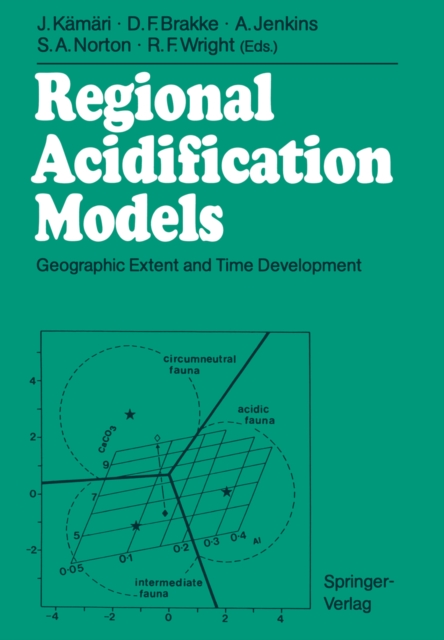
In order to provide meaningful information for evaluating environmental consequences of alternative control strategies of air pollutant emissions, scientists have recently initiated numerous studies aiming at collecting and making use of regional data.