The 15th International Workshop on Conceptual Structures ICCS 2007 brings together numerous discussions between international groups of researchers from the field of Information and Communications Technology (ICT).
Probabilistic Modelling in Bioinformatics and Medical Informatics has been written for researchers and students in statistics, machine learning, and the biological sciences.
Every cell, tissue, organ and organism is competent to use signs to exchange information reaching common coordinations and organisations of both single cell and group behavior.
Dieses Buch zeigt einen interdisziplinären Ansatz zur Untersuchung der Affektivität beim menschlichen Lernen und überbrückt dabei die Kluft zwischen Neurowissenschaften, Kultur- und Kognitionspsychologie.
The book provides a self-contained and complete description of the long time evolution of the solutions to a class of one-dimensional reaction-diffusion equations, in which the diffusion is given by an integral operator.
Individual-based models (IBM) describe a population as a collection of different organisms whose local interactions determine the behaviour of the entire population.
Marine biorefineries of macroalgal (seaweed) feedstock are sustainable sources of food, materials, and energy, and can alleviate the growing pressure on land and freshwater resources.
Modern biology is moving away from reductionist approaches towards holistic studies that encompass whole genomes, transcriptomes, proteomes, and metabolomes.
This book illustrates advanced technologies for imaging electrons and atoms in action in various forms of matter, from atoms and diatoms to protein molecules and condensed matter.
This book explores spatiotemporal analysis and impact assessment of agricultural drought in China and investigates the correlation coefficient between meteorological drought and agricultural drought.
This book discusses the recent advancements in chemical engineering and their role in achieving the United Nations' 2030 Agenda and Sustainable Development Goals (SDGs).
WINNER OF THE JOHN AVERY AWARD AT THE ANDR SIMON AWARDS If we can save the salmon, we can save the world Over the centuries, salmon have been a vital resource, a dietary staple and an irresistible catch.
This monograph covers uniqueness of micromorphology in resolving many important but enigmatic pedological issues such as clay illuviation, formation of pedogenic and non-pedogenic CaCO3, modification of plasmic fabric, contemporary and relict pedogenic processes, polygenesis of soils in Alfisols, Mollisols, Ultisols, Vertisols and Inceptisols of the tropical Indian environments.
This book investigates the complex interrelationships between neuroscience, arts, technical design, and the spectrum of neurodivergent conditions, introducing the emerging topic of neuroarts.
Biologist John Spicer shows how closely our future is linked with that of biodiversity while navigating readers through some key problems facing our planet, including mass extinctions, population explosions, habitat destruction, and pollution.
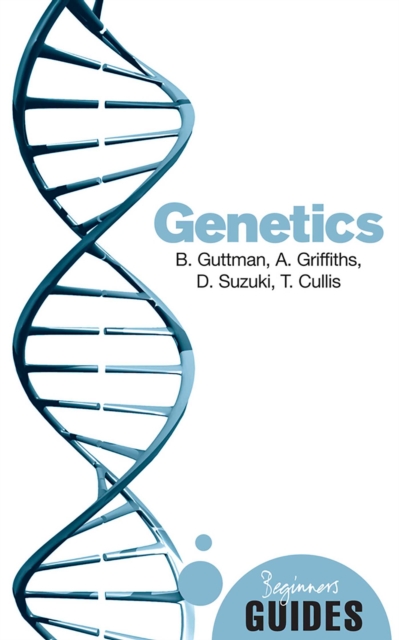
With genetics and genetic engineering receiving almost daily coverage in the media, this book is an introduction for general readers who wish to know more about a science that is changing our world.
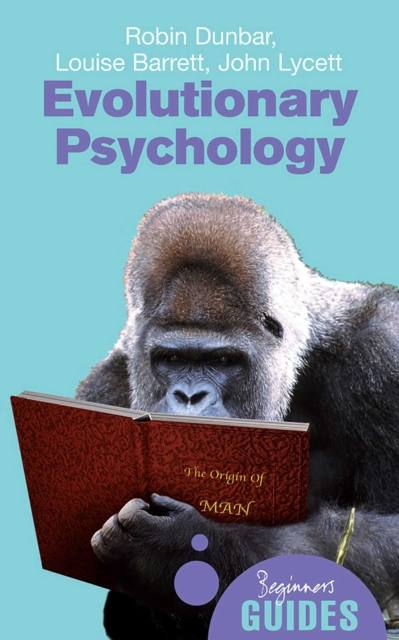
Evolutionary Psychology: A Beginner's Guide is a uniquely accessible yet comprehensive guide to the study of the effects of evolutionary theory on human behaviour.
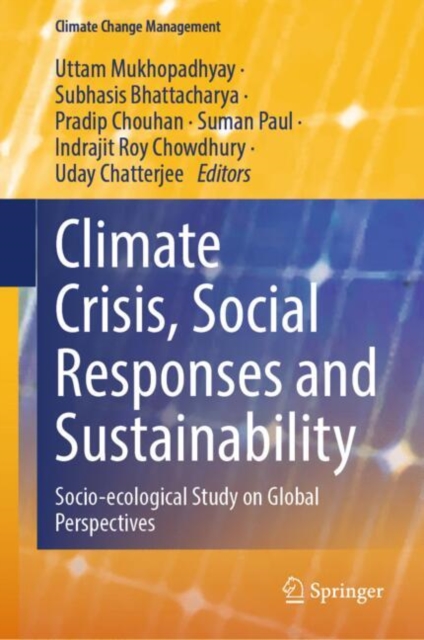
This proposed book aims to present an analysis of several crisis issues induced by global climate changes and implications at the micro-level, particularly from the perspective of ground-based study.
This compact book relies on the story of two intertwined Jewish immigrant families to tell a multigenerational Jewish story about the interplay between public/social policy, cultural categories, and the lived experience of working class immigrant Jews from Eastern Europe, including trans-/intergenerational trauma.
This book discusses various aspects of Seed Science and Technology including seed production, seed certification, seed quality enhancements, seed testing and harvesting, and post-harvest management.
Every cell, tissue, organ and organism is competent to use signs to exchange information reaching common coordinations and organisations of both single cell and group behavior.
This book concerns two subthemes, 'temperature sensing' and 'temperature-responding systems', addressing the questions of how temperature is sensed and how temperature is related to biological functions, respectively.
This book provides a knowledge base of the existing indigenous and local water knowledge, values, and practices, and how this water knowledge can be mainstreamed into the decision-making process.
This edited book provides a comprehensive framework for the integration of mathematical methodologies into biological research, emphasizing applications that directly address topics related to SDG 3 (Good Health and Well Being) and SDG 6 (Clean Water and Sanitation).