Einstein's Enigma or Black Holes in My Bubble Bath is a humourous and informal rendition of the story of gravitation theory from the early historic origins to the latest developments in astrophysics, focusing on Albert Einstein's theory of general relativity and black-hole physics.
Have you new and interesting, or even outstanding, scientific results that you want to be recognized by your scientific colleagues, or be understood by the public?
Die preisgekrönte Biographie des norwegische Schriftstellers Atle Næss führt den Leser auf eine fesselnde Reise durch die Höhen und Tiefen des Lebens einer der schillerndsten Persönlichkeiten der europäischen Wissenschaftsgeschichte - Galileo Galilei.
This book offers an alternative to faith-dependent analytical approaches, explaining how original data can be transformed into cogent and compelling interpretations with analytical techniques that are straightforward and accessible to biomedical scientists.
Neuroanatomy and visualization technologies have experienced transformative progress in recent years, offering unprecedented insights into the intricate architecture and functions of the central nervous system.
This volume examines regenerative medicine (RM) through a global bioethics lens that foregrounds the structural asymmetries, epistemic exclusions, and governance disparities shaping its development and uptake.
This book examines theoretical and applied aspects of wavelet analysis in neurophysics, describing in detail different practical applications of the wavelet theory in the areas of neurodynamics and neurophysiology and providing a review of fundamental work that has been carried out in these fields over the last decade.
This Brief is an essay at the interface of philosophy and complexity research, trying to inspire the reader with new ideas and new conceptual developments of cellular automata.
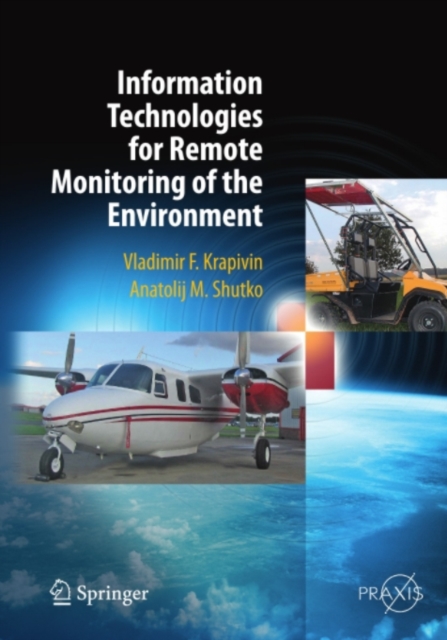
The key novelty of this book is first of all in the successful attempt to conduct jointly modeling of environment in terms of physical environment related parameters and measuring similar parameters by means of multispectral remote sensing, primarily by means of passive microwave remote sensing technology.
The first book on the subject, this monograph examines the phenomenon of a huge sealed, freshwater lake, isolated from the rest of the world by kilometers' thick ice.
Model integration - the process by which different modelling efforts can be brought together to simulate the target system - is a core technology in the field of Systems Biology.
Underlying most of the IWANN calls for papers is the aim to reassume some of the motivations of the groundwork stages of biocybernetics and the later bionics formulations and to try to reconsider the present value of two basic questions.
The goal of this book is to provide a current overview of the impacts of climate change on tropical forests, to investigate past, present, and future climatic influences on the ecosystems with the highest biodiversity on the planet.
Hybrid neural systems are computational systems which are based mainly on artificial neural networks and allow for symbolic interpretation or interaction with symbolic components.
This book presents a selection of revised full papers accepted for presentation at the First International Conference on Biology, Informatics, and Mathematics, JOBIM 2000, held in Montpellier, France, in May 2000.
Brain Dynamics serves to introduce graduate students and nonspecialists from various backgrounds to the field of mathematical and computational neurosciences.
The widespread interest this book has found among professors, scientists and stu- dents working in a variety of fields has made a new edition necessary.
Physical Oceanography of the Dying Aral Sea describes the background, present crisis state, and possible future of this peculiar inland water body from the physical oceanographic standpoint.
It is our great pleasure and honor to organize the First IEEE Computer Society International Workshop on Biologically Motivated Computer Vision (BMCV 2000).
Bioinformatics, which can be defined as the application of computer science and information technology to the field of biology and medicine, has been rapidly developing over the past few decades.
One of the major contemporary challenges in both physical and social sciences is modeling, analyzing, and understanding the self-organization, evolution, behavior, and eventual decay of complex dynamical systems ranging from cell assemblies to the human brain to animal societies.
The central theme of this book is the extent to which the structure of the free dynamical boundaries of a system controls the evolution of the system as a whole.