Biochar Application: Essential Soil Microbial Ecology outlines the cutting-edge research on the interactions of complex microbial populations and their functional, structural, and compositional dynamics, as well as the microbial ecology of biochar application to soil, the use of different phyto-chemical analyses, possibilities for future research, and recommendations for climate change policy.
Sialic Acids and Sialoglycoconjugates in the Biology of Life, Health and Disease enables the reader to understand the role of sialylation as a post translational modification.
Food Applications of Nanotechnology, Volume 88, consolidates the literature on recent developments in nanotechnology, addressing production, safety and nutritional aspects pertaining to foods and nutraceuticals.
Rampant industrialization has caused high levels of contamination by various toxic chemicals in our water bodies, which is a matter of concern in terms of ecosystems, as well as human and animal health.
Analytical Methods for Agricultural Contaminants provides proven laboratory practices and methods necessary to control contaminants and residues in food and water.
This two-volume edited book highlights and reviews the potential of the fossil record to calibrate the origin and evolution of parasitism, and the techniques to understand the development of parasite-host associations and their relationships with environmental and ecological changes.
In the past few decades, it has been realized through research that fungal siderophores epitomize the uptake of iron as well as other essential elements like zinc, magnesium, copper, nickel and arsenic.
This book serves as essential reading for research scientists and biotechnologists from both academia and industry working in marine biotechnology and related disciplines.
This book discusses the latest developments in our understanding of microbial endophytes, their ecology, diversity and potential biotechnological applications.
In the current era current era of significant innovations, science and technology are powerful tools improving human welfare through prosperity and sustainable development.
Applied Microbiology and Bioengineering: An Interdisciplinary Approach discusses recent advances in microbiology and cutting-edge biotechnology that have generated interest among researchers.
Nitric Oxide and Other Small Signalling Molecules, Volume 73, the latest release in the Advances in Microbial Physiology series, continues the long tradition of topical, important, cutting-edge reviews in microbiology.
Advances in Applied Microbiology, Volume 102, the latest release in one of the most widely read and authoritative review sources in microbiology, contains comprehensive reviews of the most current research in applied microbiology.
This book focuses on the multitude of functions bacterial membrane vesicles perform in bacterial ecology and pathogenesis as well as in emerging medical and biotechnological applications.
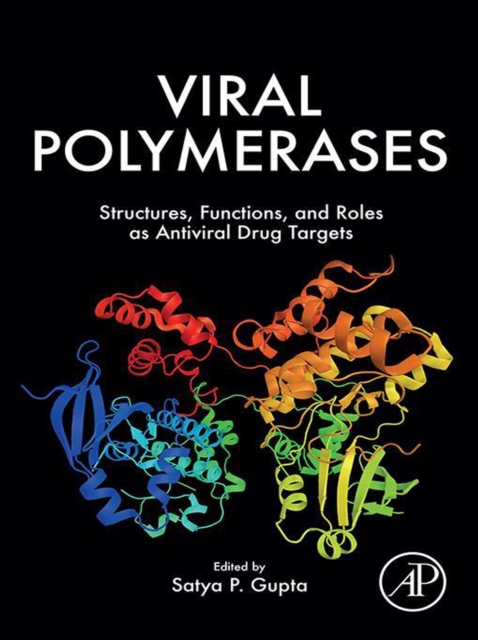
Viral Polymerases: Structures, Functions and Roles as Antiviral Drug Targets presents in-depth study information on the structure and functions of polymerases and their roles in the lifecycle of viruses, and as drug targets.
It is widely acknowledged that life has adapted to its environment, but the precise mechanism remains unknown since Natural Selection, Descent with Modification and Survival of the Fittest are metaphors that cannot be scientifically tested.
The book will provide an update on our understanding of predator-prey through the prism of ecology, physiology, molecular biology, and mathematical modelling.
Bacteriology Methods for the Study of Infectious Diseases provides knowledge, understanding and experience of contemporary, robust methodologies for studies into the pathogenicity and virulence of human/animal bacterial pathogens.
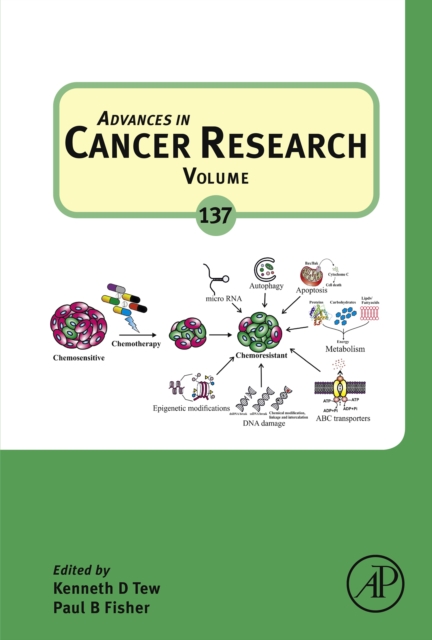
Advances in Cancer Research, Volume 137, the latest release in this ongoing, well-regarded serial provides invaluable information on the exciting and fast-moving field of cancer research.
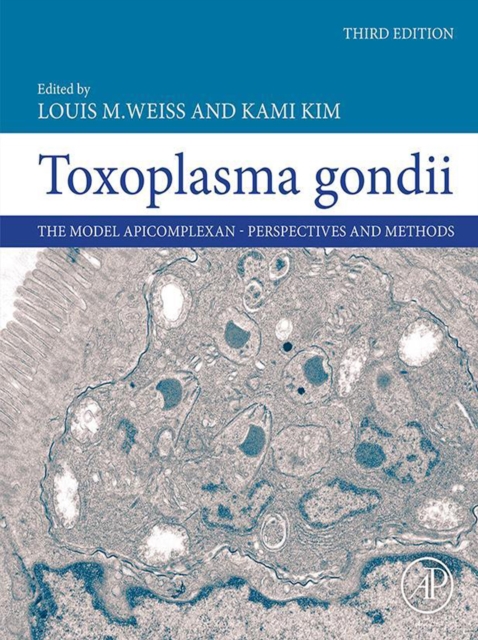
Toxoplasma gondii: The Model Apicomplexan - Perspectives and Methods, Third Edition, reflects significant advances in the field in the last five years, including new information on the genomics, epigenomics and proteomics of T.
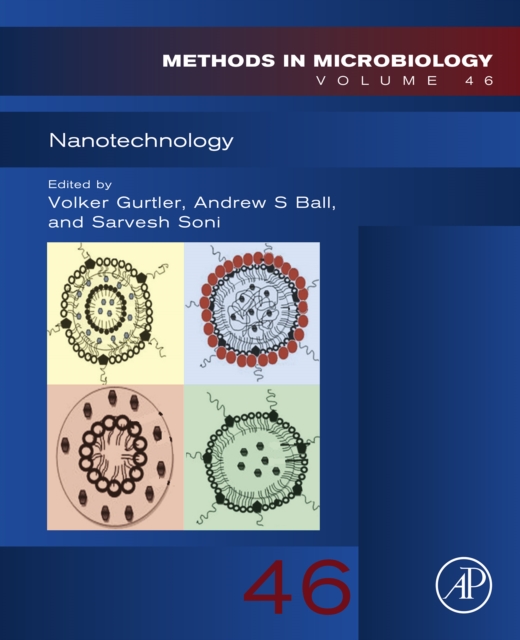
Nanotechnology, Volume 46, the latest release in the Methods in Microbiology series, contains review articles on the application of nanotechnology in various fields of microbiology, including environmental microbiology, food microbiology and medical microbiology.
Emerging and Reemerging Viral Pathogens: Applied Virology Approaches Related to Human, Animal and Environmental Pathogens, Volume Two presents new research information on viruses and their impact on the scientific community.
This book describes the structures and functions of active protein filaments, found in bacteria and archaea, and now known to perform crucial roles in cell division and intra-cellular motility, as well as being essential for controlling cell shape and growth.
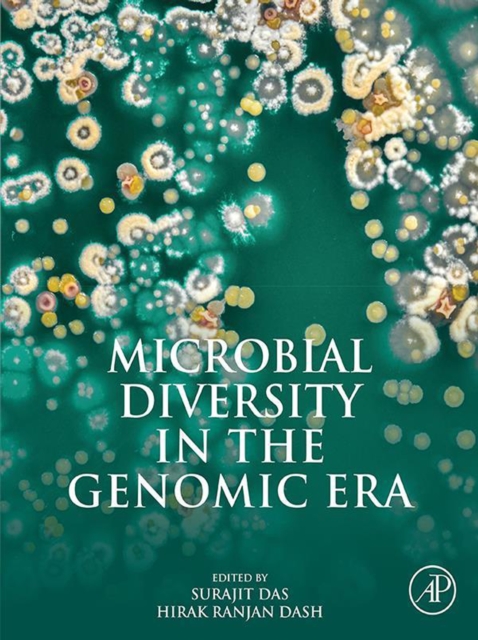
Microbial Diversity in the Genomic Era presents insights on the techniques used for microbial taxonomy and phylogeny, along with their applications and respective pros and cons.
Functional foods and nutraceuticals are food products that naturally offer or have been modified to offer additional health benefits beyond basic nutrition.
Cyanobacteria constitute the most widely distributed group of photosynthetic prokaryotes found in almost all realms of the earth and play an important role in Earth's nitrogen and carbon cycle.
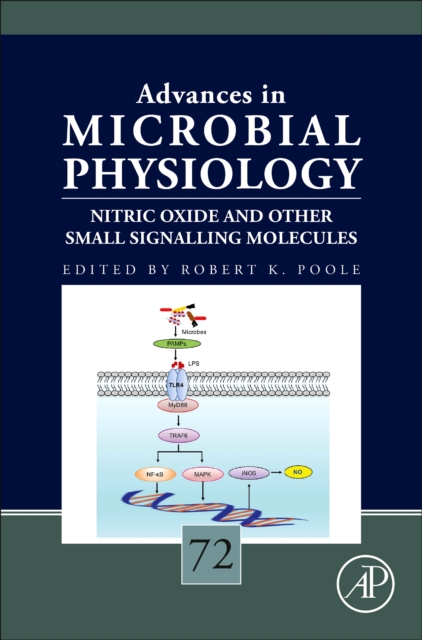
Nitric Oxide and Other Small Signalling Molecules, Volume 72, the latest release in the Advances in Microbial Physiology series, continues the long tradition of topical, important, cutting-edge reviews in microbiology.
This book is designed to provide easy-to-read and basic information about vaccines for those undertaking a vaccine course or for medical providers seeking to improve their skills.
An essential introduction to microbiome science, a new cutting-edge discipline that is transforming the life sciencesThis book provides an accessible and authoritative guide to the fundamental principles of microbiome science, an exciting and fast-emerging new discipline that is reshaping many aspects of the life sciences.
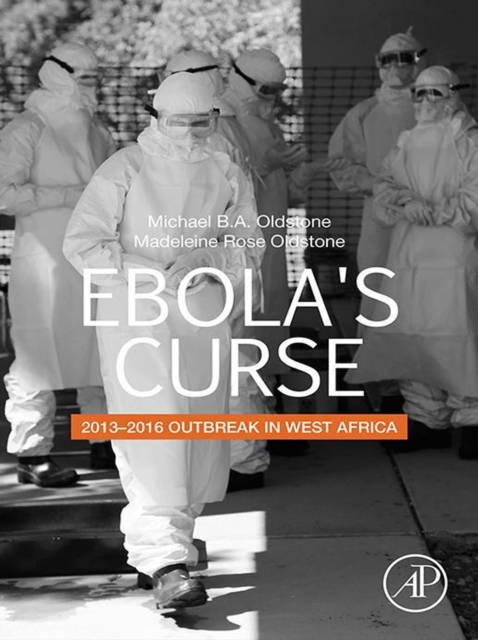
Ebola's Curse: 2013-2016 Outbreak in West Africa is about hemorrhagic fever viruses, especially Ebola, its initial origin in central Africa 1976, its unprecedented appearance in West Africa in 2013.
The Microbiology of Central Nervous System Infections, Volume 3, discusses modern approaches to the diagnosis, treatment and prophylaxis of central nervous system (CNS) infections.
Human Parasitology, Fifth Edition emphasizes a medical perspective that also incorporates functional morphology, physiology, biochemistry and immunology to enhance appreciation of the diverse implications of parasitism.
Pet-to-Man Travelling Staphylococci: A World in Progress explores Staphylococci, a dangerous pathogen that affects both humans and animals with a wide range of infection states.
The Natural Anti-Gal Antibody as Foe Turned Friend in Medicine provides a comprehensive review of the natural anti-Gal antibody, which is the most abundant antibody in humans constituting ~1% of immunoglobulins and the carbohydrate antigen it recognizes, the a-gal epitope.
Studies on Hepatitis Viruses: Life Cycle, Structure, Functions, and Inhibition presents the latest on this systemic infection that predominantly affects the liver with inflammation that can be acute or chronic.
Model Ecosystems in Extreme Environments, Second Edition examines ecosystems at the most extreme habitats and their interaction with the environment, providing a key element in our understanding of the role and function of microorganisms in nature.