For the first time ever, a DVD featuring exclusive video and audio material accompanies the latest New Naturalist volume, a multimedia first for the series.
A tie-in to the TV series, offering practical advice to beginners wanting to learn more about wildlifeBill Oddie's How to Watch Wildlife is a practical beginner's guide to enjoying the wildlife of Britain.
Studying animals in the environment may be a realistic and highly beneficial approach to identifying unknown chemical contaminants before they cause human harm.
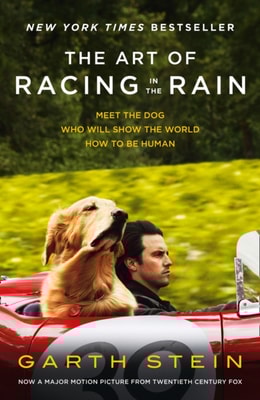
Soon to be a major motion picture, this heart-warming and inspirational tale follows Enzo, a loyal family dog, tells the story of his human family, how they nearly fell apart, and what he did to bring them back together.
Sociality, Hierarchy, Health: Comparative Biodemography is a collection of papers that examine cross-species comparisons of social environments with a focus on social behaviors along with social hierarchies and connections, to examine their effects on health, longevity, and life histories.
A unique, beautifully illustrated exploration of our fascination with our closest primate relatives, and the development of primatology as a disciplineThis insightful work is a compact but wide-ranging survey of humankind's relationship to the great apes (chimpanzees, bonobos, gorillas, orangutans), from antiquity to the present.
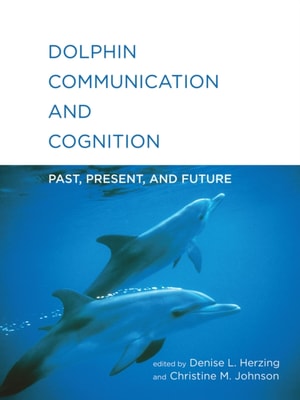
Experts survey the latest research on dolphin communication and cognition, offering a comprehensive reference to findings in the laboratory and from the field.
A true cat-alogue of more than 100 feline breeds and cross-breeds adorn the pages of this mini-encyclopedia, which includes a whole lot of information!
The study of the chimpanzee, one of the human species' closest relatives, has led scientists to exciting discoveries about evolution, behavior, and cognition over the past half century.
Primate Societies is a synthesis of the most current information on primate socioecology and its theoretical and empirical significance, spanning the disciplines of behavioral biology, ecology, anthropology, and psychology.
From eye-witness accounts of elephants apparently mourning the death of family members to an experiment that showed that hungry rhesus monkeys would not take food if doing so gave another monkey an electric shock, there is much evidence of animals displaying what seem to be moral feelings.
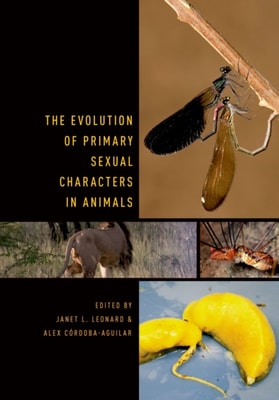
Primary sexual traits, those structures and processes directly involved in reproduction, are some of the most diverse, specialized, and bizarre in the animal kingdom.
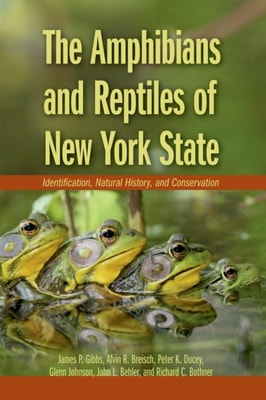
This is the first guide yet produced to the amphibians and reptiles of New York State, a large and heavily populated state that hosts a surprisingly diverse and interesting community of amphibians and reptiles.
Crustaceans are increasingly used as model organisms in all fields of biology, including neurobiology, developmental biology, animal physiology, evolutionary ecology, biogeography, and resource management.
From eye-witness accounts of elephants apparently mourning the death of family members to an experiment that showed that hungry rhesus monkeys would not take food if doing so gave another monkey an electric shock, there is much evidence of animals displaying what seem to be moral feelings.
The Crustacea is one of the dominant invertebrate groups, displaying staggering diversity in form and function, and spanning the full spectrum of Earth's environments.
Understanding of animal social and sexual evolution has seen a renaissance in recent years with discoveries of frequent infidelity in apparently monogamous species, the importance of sperm competition, active female mate choice, and eusocial behavior in animals outside the traditional social insect groups.
For many agricultural crops, bees play a vital role as pollinators, and this book discusses the interplay among bees, agriculture, and the environment.
Primary sexual traits, those structures and processes directly involved in reproduction, are some of the most diverse, specialized, and bizarre in the animal kingdom.
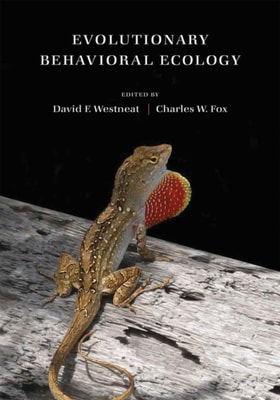
Evolutionary Behavioral Ecology is intended to be used as a text for graduate students and a sourcebook for professional scientists seeking an understanding of the evolutionary and ecological processes shaping behavior across a wide array of organisms and a diverse set of behaviors.
In The Intelligent Movement Machine: An Ethological Perspective on the Primate Motor System, Michael Graziano offers a fundamentally new theory of motor cortex organization: the rendering of the movement repertoire onto the cortex.
This volume celebrates comparative cognition's first quarter century with a state-of-the-art collection of chapters covering the broad realm of the scientific study of animal intelligence.
Social behavior occurs in some of the smallest animals as well as some the largest, and the transition from solitary life to sociality is an unsolved evolutionary mystery.
This is the first guide yet produced to the amphibians and reptiles of New York State, a large and heavily populated state that hosts a surprisingly diverse and interesting community of amphibians and reptiles.
In The Triumph of Sociobiology, John Alcock reviews the controversy that has surrounded evolutionary studies of human social behavior following the 1975 publication of E.
Evolutionary Ecology simultaneously unifies conceptual and empirical advances in evolutionary ecology and provides a volume that can be used as either a primary textbook or a supplemental reading in an advanced undergraduate or graduate course.