This book will serve as the definitive reference work on the basic physiology, biochemistry, development, genetics, and molecular biology of Neurospora, together with a description of basic laboratory methods.
Unlike nearly all science books which tell of successful ventures and satisfactory conclusions, this book reveals the harsher but more common side of scientific research.
As part of the SFI series, this book presents the most up-to-date research in the study of human and primate societies, presenting recent advances in software and algorithms for modeling societies.
The evolutionary, ecological and behavioral questions posed by obligate brood parasites are among the most intriguing of all contemporary ornithological topics.
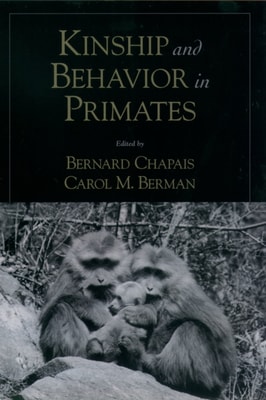
This book presents a series of review chapters on the various aspects of primate kinship and behavior, as a fundamental reference for students and professionals interested in primate behavior, ecology and evolution.
Thinking bees, ice-skating buffaloes, dreaming rats, happy foxes, ecstatic elephants, despondent dolphins--in Minding Animals, Marc Bekoff takes us on an exhilarating tour of the emotional and mental world of animals, where we meet creatures who do amazing things and whose lives are filled with mysteries.
While there have been controversial attempts to link conclusions from sociobiological studies of animal populations to humans, few behavioral scientists or anthropologists have made serious progress.
This novel, transdisciplinary work explains how perturbations (defined as strong disturbances or deviations to a system) can affect the population dynamics of social animals, including ourselves.
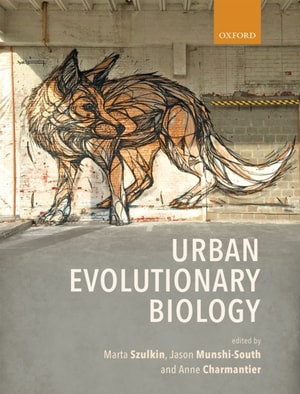
Urban Evolutionary Biology fills an important knowledge gap on wild organismal evolution in the urban environment, whilst offering a novel exploration of the fast-growing new field of evolutionary research.
Essential Ornithology provides the reader with a concise but comprehensive introduction to the biology of birds, one of the most widely studied taxonomic groups.
Throughout their lives animals must complete many tasks, including finding food, avoiding predators, attracting mates, and navigating through a complex and dynamic environment.
Throughout their lives animals must complete many tasks, including finding food, avoiding predators, attracting mates, and navigating through a complex and dynamic environment.
The Flexible Phenotype attempts a true synthesis of physiology, behaviour, and ecology by developing an empirical argument that describes the intimate connections between phenotypes and their environments.
Primate Sexuality provides an authoritative and comprehensive synthesis of current research on the evolution and physiological control of sexual behaviour in the primates - prosimians, monkeys, apes, and human beings.
A charismatic naturalist, bird-watcher, teacher, artist, photographer, film-maker, and winner of the Nobel Prize, Niko Tinbergen was a prominent and influential scientist.
In this, the first of two ground-breaking volumes on the nature of language in the light of the way it evolved, James Hurford looks at how the world first came to have a meaning in the minds of animals and how in humans this meaning eventually came to be expressed as language.
When we interact with animals, we intuitively read thoughts and feelings into their expressions and actions - it is easy to suppose that they have minds like ours.
Trust - our belief in the truth or reliability of someone or something - lies at the very heart of our relationships, our society and our everyday lives.
From termite mounds that in relative terms are three times as tall as a skyscraper, to the elaborate nests of social birds and the deadly traps of spiders, the constructions of the animal world can amaze and at times humble our own engineering and technology.