How our growing knowledge of the evolution of complex ecosystems, using the latest genetic tools, can help us heal them - and surviveThis is not another Chicken Little book about the environment.
Newcomers to the field of structural biology, which aims to understand life at the molecular level, see a vast number of existing results and are faced with a diverse range of experimental methods.
Everyone Flows starts with an ancient and fundamental philosophical question: whether we live in a world of things, stable, autonomous, and with sharp boundaries, or a world of processes in flux, in which stabilities are only transient and processes are inextricably intertwined with one another.
This book delves into the critical intersection of waste management, bioenergy production, and the pursuit of a sustainable global future through the process of valorization.
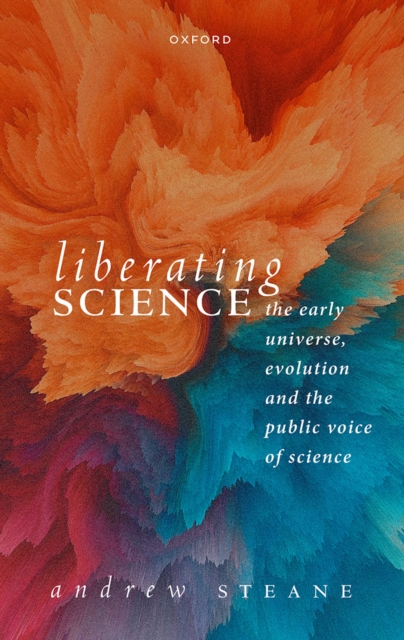
Liberating Science: The Early Universe, Evolution and the Public Voice of Science is a presentation of science for the general reader, with an emphasis on correcting widely held misconceptions, and a call to liberate science from 'private ownership' in cultural terms.
The First Adirondackers challenges the widespread, long-standing belief that the Adirondack uplands of northern New York were uninhabited before the arrival of European colonizers.
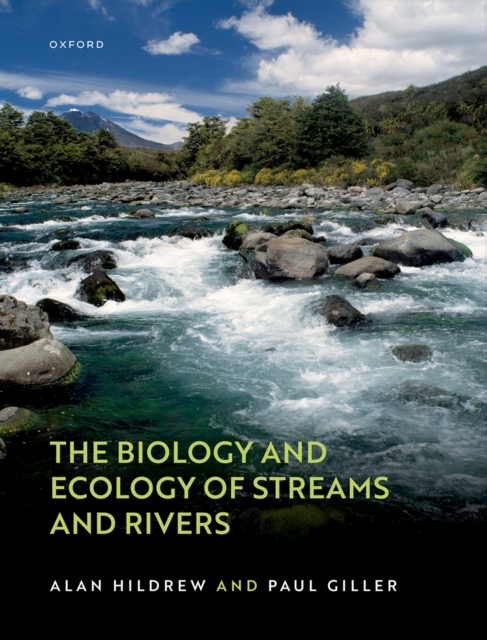
The challenges that the world's running water systems now face have never been more numerous or acute; at the same time, these complex habitats remain absolutely crucial to human wellbeing and future survival.
This accessible and entertaining book explores the fundamental connections between life and information and how they emerged inextricably linked, taking the reader on a journey through all the major evolutionary transitions.
Aquaculture exemplifies the ongoing global struggle to strike a sustainable balance between the conflicting needs of a rapidly increasing world population, human health, ecosystem health, the welfare of wild and domesticated animals, and the economic principles of globalized economies.
Evolutionary medicine has been steadily gaining recognition, not only in modern clinical research and practice, but also in bioarchaeology (the study of archaeological human remains) and especially its sub-discipline, palaeopathology.
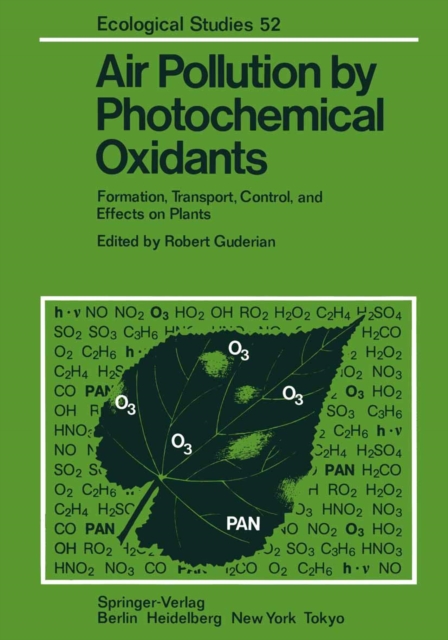
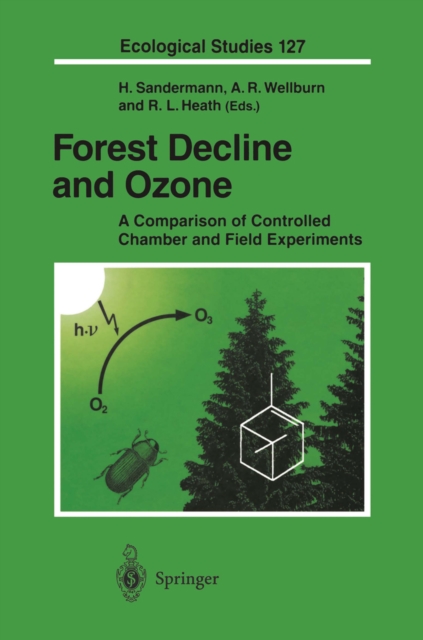
Photochemical oxidants are secondary air pollutants formed under the influence of sunlight by complex photochemical reactions in air which contains nitrogen oxides and reactive hydrocarbons as precursors.
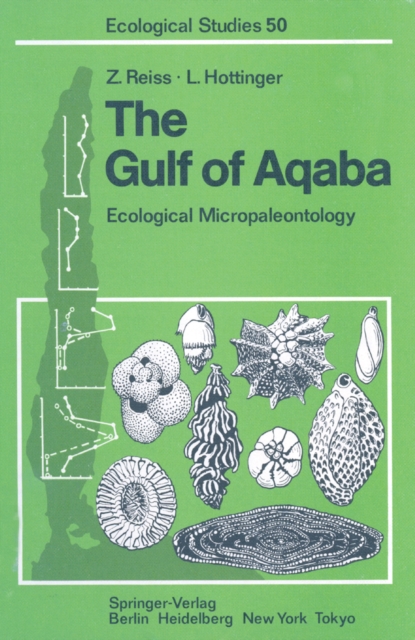
The reconstruction of ancient marine environments is an important task of the Earth Sciences, of great interest to geology, pure and applied, to oceanography and climatology, as well as to such fields as ecology and evolution.
Increasing amounts of various types of wastes and pollutants including nutrients enter the coastal waters via rivers, direct discharges from land drainage systems, diffuse land runoff, dumping and via the atmosphere.
The idea for this book arose in 1993, after the Free State of Bavaria through its Bayrisches Staatsministerium rur Landesentwicklung und Umweltfragen (Bavarian Ministry of Regional Development and the Environment) decided to discontinue both the Bavarian project management (PBWU) for forest decline research and the multidisciplinary field research on the Wank Mountain in the Alps near Garmisch.
The First Adirondackers challenges the widespread, long-standing belief that the Adirondack uplands of northern New York were uninhabited before the arrival of European colonizers.
The deep sea covers more than half the surface of the Earth, but until the circumnavigation made by the HMS Challenger almost nothing was known about the animals that live there.
Clusia is the only dicotyledonous tree genus with crassulacean acid metabolism (CAM), and in some cases all variants of CAM can be expressed in one given species.
The deep sea covers more than half the surface of the Earth, but until the circumnavigation made by the HMS Challenger almost nothing was known about the animals that live there.
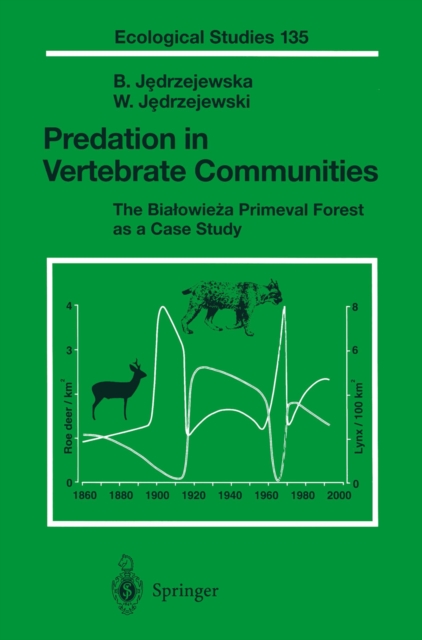
While ecology is one of the scientific disiplines that most clearly belongs to 'basic research"e;, it also strives to serve as a predictive tool for management.
Recovering the forgotten discipline of Natural Philosophy for the modern worldThis book argues for the retrieval of 'natural philosophy', a concept that faded into comparative obscurity as individual scientific disciplines became established and institutionalized.
This is the first of two volumes offering the very first comprehensive treatise of self-organization and non-linear dynamics in electrochemical systems.
Mycological studies of yeasts are entering a new phase, with the sequencing of multiple fungal genomes informing our understanding of their ability to cause disease and interact with the host.
SHORTLISTED FOR THE 2015 BRAGG UNSW PRESS PRIZE FOR SCIENCE WRITINGDisease specifically infectious disease is what eventually kills the overwhelming majority of us.