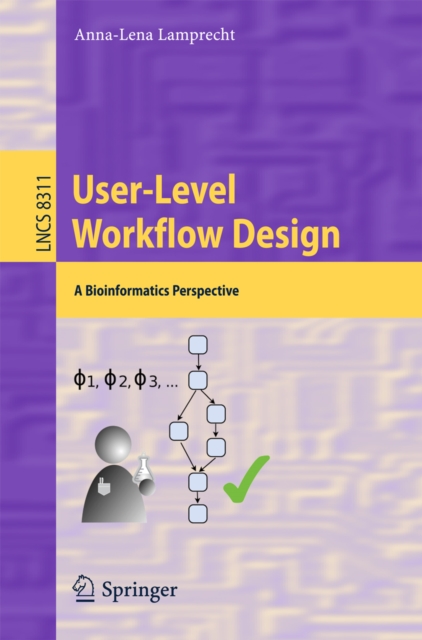
The continuous trend in computer science to lift programming to higher abstraction levels increases scalability and opens programming to a wider public.
Myocardial tissue engineering (MTE), a concept that intends to prolong patients' life after cardiac damage by supporting or restoring heart function, is continuously improving.
By providing a comprehensive overview of current research findings, emerging therapies, and clinical practices, Ovarian Cancer: Disease, Diagnosis and Treatment is an invaluable resource.
The LNCS journal Transactions on Computational Systems Biology is devoted to inter- and multidisciplinary research in the fields of computer science and life sciences and supports a paradigmatic shift in the techniques from computer and information science to cope with the new challenges arising from the systems oriented point of view of biological phenomena.
Computational Neurosciences is a burgeoning field of research where only the combined effort of neuroscientists, biologists, psychologists, physicists, mathematicians, computer scientists, engineers and other specialists, e.
This book presents 5 tutorial lectures given by leading researchers at the 13th edition of the International School on Formal Methods for the Design of Computer, Communication and Software Systems, SFM 2013, held in Bertinoro, Italy, in June 2013.
This unique book written by Russian and Norwegian scientists is an analysis of studies based on extensive data analysis and numerical modelling simulations of the White Sea and provides a quantitative assessment of vulnerability of the White Sea marine ecosystems of future anthropogenic and, to some extent, climate change forcing.
Underlying most of the IWANN calls for papers is the aim to reassume some of the motivations of the groundwork stages of biocybernetics and the later bionics formulations and to try to reconsider the present value of two basic questions.
"e;Contradictions"e; is a general interest book that exposes the incompatibility between popular religious beliefs and the scientific view of human nature.
This book constitutes the post-proceedings of the DIMACS/RECOMB Satellite Workshop on Computational Methods for SNPs and Haplotype Inference held in Piscataway, NJ, USA, in November 2002.
It is increasingly being recognized that the experimental and theoretical study of the complex system brain requires the cooperation of many disciplines, in- cluding biology, medicine, physics, chemistry, mathematics, computer science, linguistics, and others.