New insights into modern medicine and systems biology are enabled by innovative protocols and advanced technologies in mass spectrometry-based proteomics.
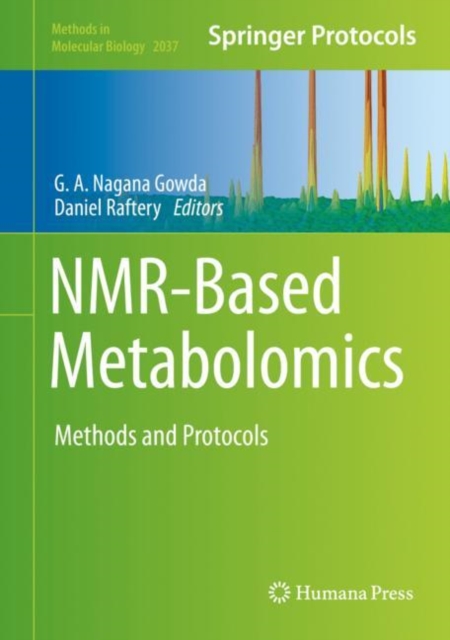
This book provides broad coverage of nuclear magnetic resonance (NMR) spectroscopy-based methods and applications for the analysis of metabolites in a wide range of biological samples, from biofluids, cells, animal models, human, to plants and foods.
The volume brings together some of the best experts in the field of modern metabolomics to discuss various techniques used today to study specific metabolite classes, and metabolomics in bacterial systems and mammalian systems.
The advent of non-invasive imaging technology, such as magnetic resonance imaging (MRI), has allowed biologists and clinicians to make great strides in unraveling the secrets of the brain.
SELDI is distinct from other TOF-MS technologies in that it couples features of chromatography and mass spectrometry, facilitating analyte enrichment and sample cleanup on an array surface.
As the emerging field of proteomics continues to expand at an extremely rapid rate, the relative quantification of proteins, targeted by their function, becomes its greatest challenge.
As mass spectrometric methods now offer a level of specificity and sensitivity unrealized by spectrophotometric- and immunoassay-based methods, mass spectrometry has entered the clinical laboratory where it is being used for a wide range of applications.
The field of protein NMR spectroscopy has rapidly expanded into new areas of biochemistry, molecular biology and cell biology research that were impossible to study as recently as ten years ago.
Now a routine tool in biomedical and life science research, live cell imaging has made major progress enabling this core biochemical, cell, and molecular biology technique to become even more powerful, versatile, and affordable.
Since the publishing of the first edition, the methodologies and instrumentation involved in the field of mass spectrometry-based proteomics has improved considerably.
Reflecting the expanding field's need for reliable protocols, Fluorescence Spectroscopy and Microscopy: Methods and Protocols offers techniques from a worldwide team of experts on this versatile and vital subject.
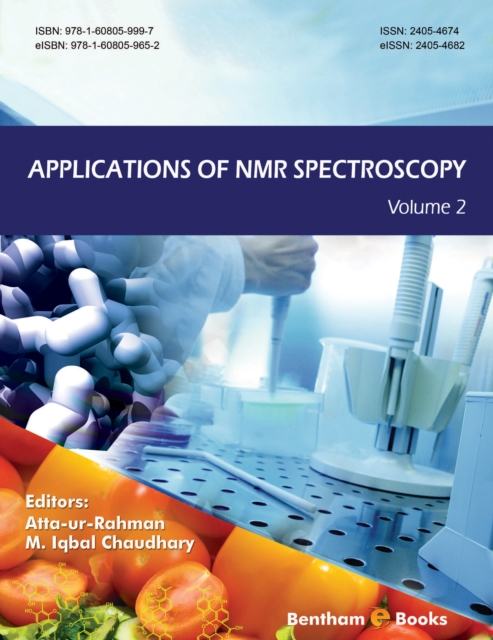
Applications of NMR Spectroscopy, Volume 2, originally published by Bentham and now distributed by Elsevier, presents the latest developments in the field of NMR spectroscopy, including the analysis of plant polyphenols, the role of NMR spectroscopy in neuroradiology, NMR-based sensors, studies on protein and nucleic acid structure and function, and mathematical formations for NMR spectroscopy in structural biology.
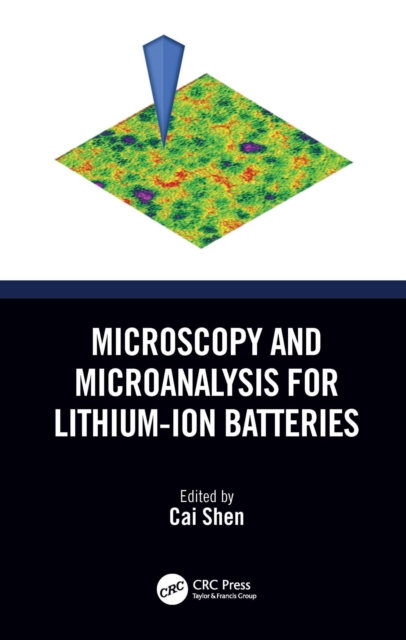
The past three decades have witnessed the great success of lithium-ion batteries, especially in the areas of 3C products, electrical vehicles, and smart grid applications.
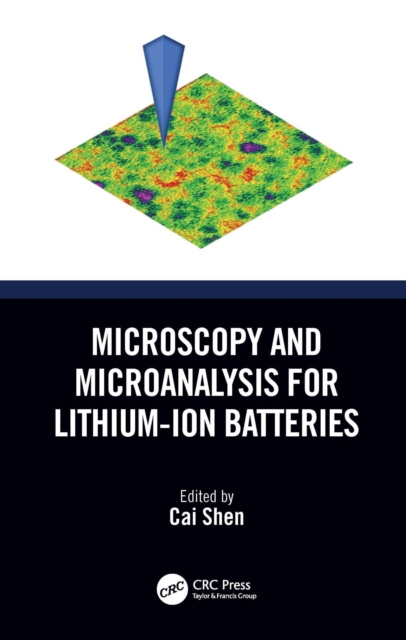
The past three decades have witnessed the great success of lithium-ion batteries, especially in the areas of 3C products, electrical vehicles, and smart grid applications.
Viruses do not behave as other microbes; their life cycles require infecting healthy cells, commandeering their cellular apparatus, replicating and then killing the host cell.
Viruses do not behave as other microbes; their life cycles require infecting healthy cells, commandeering their cellular apparatus, replicating and then killing the host cell.
Spectroscopy can be defined as the study of the interaction of electromagnetic radiation with matter, during which absorption, emission, or scattering of radiation may take place.
Spectroscopy can be defined as the study of the interaction of electromagnetic radiation with matter, during which absorption, emission, or scattering of radiation may take place.
Elements of Spectroscopy is a well-written, easy-to-read guide to understanding the fundamentals of lasers, experimental methods of modern spectroscopy and applications.
This volume outlines the physical and methodical concepts of X-ray photoelectron spectroscopy (XPS) specifically for surface studies using both inner and valence electron levels.
This volume outlines the physical and methodical concepts of X-ray photoelectron spectroscopy (XPS) specifically for surface studies using both inner and valence electron levels.
This book offers a comprehensive overview of recent advances in the area of laser-induced breakdown spectroscopy (LIBS), focusing on its application to biological, forensic and materials sciences.
This textbook delivers a comprehensive review of modern spectroscopy encompassing a plethora of various X-ray, photoelectron, optical and laser, as well as radiofrequency and microwave spectroscopic techniques.
The 3rd edition of this textbook offers clear explanations of optical spectroscopic phenomena and shows how spectroscopic techniques are used in modern chemistry, biochemistry and biophysics.
The book covers various methods of characterization of advanced materials commonly used in engineering including understanding of the working principle and applicability of devices.
The book covers various methods of characterization of advanced materials commonly used in engineering including understanding of the working principle and applicability of devices.
This versatile resource consolidates available methods for the spectrophotometric determination of palladium and platinum and serves as a practical ready-to-use guide for those researching palladium and platinum and for those working in the field of medicinal metal complexes of the two metals.
This versatile resource consolidates available methods for the spectrophotometric determination of palladium and platinum and serves as a practical ready-to-use guide for those researching palladium and platinum and for those working in the field of medicinal metal complexes of the two metals.
This book provides a comprehensive review of modern nuclear magnetic resonance approaches to biomedical problems in vivo using state-of-the-art techniques.
This book covers the main ideas, methods, and recent developments of quantum-limit optical spectroscopy and applications to quantum information, resolution spectroscopy, measurements beyond quantum limits, measurement of decoherence, and entanglement.
Synchrotron radiation has been a revolutionary and invaluable research tool for a wide range of scientists, including chemists, biologists, physicists, materials scientists, geophysicists.
Using a novel approach that combines high temporal resolution of the laser T-jump technique with unique sets of fluorescent probes, this study unveils previously unresolved DNA dynamics during search and recognition by an architectural DNA bending protein and two DNA damage recognition proteins.