This book features selected articles based on contributions presented at the 9th International Symposium on Optics and Its Applications (OPTICS-2022) in Yerevan-Ashtarak, Armenia.
This textbook is an excellent guide to microscopy for students and scientists, who use microscopy as one of their primary research and analysis tool in the laboratory.
This book comprises the proceedings of the 12th International Conference on Asia-Pacific Microscopy Conference (APMC12) focusing on emerging opportunities and challenges in the field of materials sciences, life sciences and microscopy techniques.
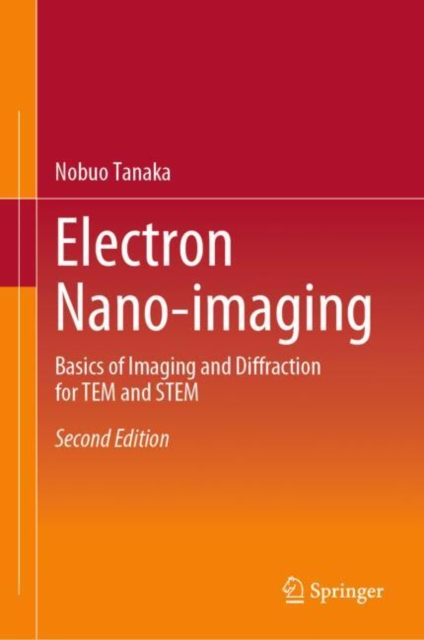
In this book, the bases of imaging and diffraction in transmission electron microscopy (TEM) and scanning transmission electron microscopy (STEM) are explained in the style of a textbook.
This book is intended to provide a course of infrared spectroscopy for quantitative analysis, covering both bulk matter and surface/interface analyses.
This thesis focuses on theoretical analysis of the sophisticated ultrafast optical experiments that probe the crucial first few picoseconds of quantum light harvesting, making an important contribution to quantum biology, an exciting new field at the intersection of condensed matter, physical chemistry and biology.
This book gathers 12 outstanding contributions that reflect state-of-the-art industrial applications of fluorescence, ranging from the pharmaceutical and cosmetics industries to explosives detection, aeronautics, instrumentation development, lighting, photovoltaics, water treatment and much more.
This book covers the role of water in global atmospheric phenomena, focussing on the physical processes involving water molecules and water microparticles.
This book, a consecutive contribution to the series Challenges and Advances in Computational Chemistry and Physics, focuses on understanding the photoinduced processes in biological systems.
The tremendous impact of electronic devices on our lives is the result of continuous improvements of the billions of nanoelectronic components inside integrated circuits (ICs).
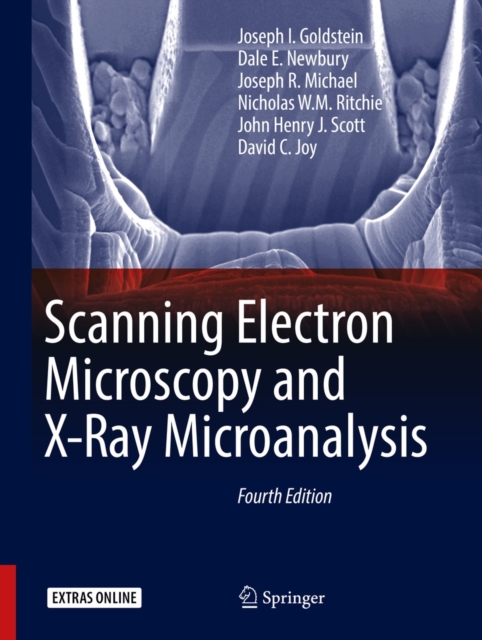
This thoroughly revised and updated Fourth Edition of a time-honored text provides the reader with a comprehensive introduction to the field of scanning electron microscopy (SEM), energy dispersive X-ray spectrometry (EDS) for elemental microanalysis, electron backscatter diffraction analysis (EBSD) for micro-crystallography, and focused ion beams.
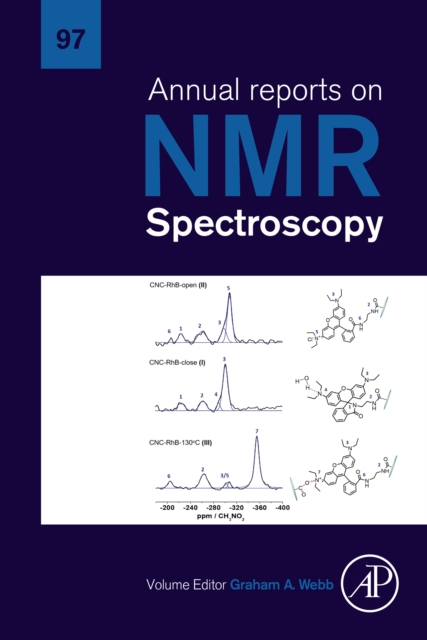
Annual Reports on NMR Spectroscopy, Volume 97, provides an in-depth accounting of progress in nuclear magnetic resonance (NMR) spectroscopy and its many applications.
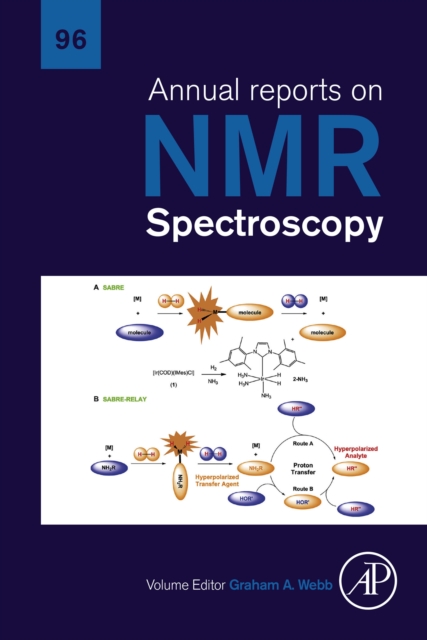
Annual Reports on NMR Spectroscopy, Volume 96, provides an in-depth accounting of progress in nuclear magnetic resonance (NMR) spectroscopy and its many applications, including all branches of science in which precise structural determination is required, and in which the nature of interactions and reactions in solution is being studied.
Annual Reports on NMR Spectroscopy provides a thorough and in-depth accounting of progress in nuclear magnetic resonance (NMR) spectroscopy and its many applications.
Annual Reports on NMR Spectroscopy provides a thorough and in-depth accounting of the progress made in nuclear magnetic resonance (NMR) spectroscopy and its many applications.
Annual Reports on NMR Spectroscopy provides a thorough and in-depth accounting of progress in nuclear magnetic resonance (NMR) spectroscopy and its many applications.
Annual Reports on NMR Spectroscopy provides a thorough and in-depth accounting of the progress made in nuclear magnetic resonance (NMR) spectroscopy and its many applications.
Introduction to Laser Spectroscopy is a well-written, easy-to-read guide to understanding the fundamentals of lasers, experimental methods of modern laser spectroscopy and applications.
Sustainable Quality Improvements for Isotope Dilution in Molecular Ultratrace Analyses: Fitness for Purpose, Performance-Based Criteria, and Measurement Uncertainty uses a novel Sustainable Quality Improvement (SQI) framework with the aim of helping to re-introduce much needed flexibility and restore accountability and integrity necessary for developing confidence in products obtained with these specialty assays.
This expanded and updated well-established textbook contains an advanced presentationof quantum mechanics adapted to the requirements of modern atomic physics.
During the last decade, scientific studies have supported using human scent as a biometric tool and indicator of the presence or absence of an individual at a crime scene.
In this second edition, most chapters of the first edition, which published in 2017, have been revised and recent advancement of electron microscopy such as differential phase contrast (DPC) STEM, sparse-coding image processing and quantum electron microscopy have been supplemented with further details.
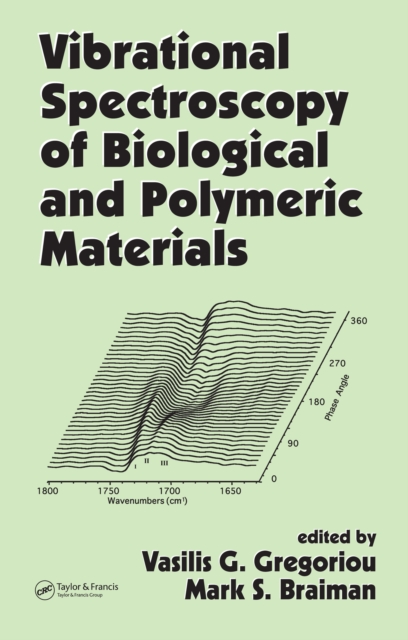
Used primarily for characterizing polymers and biological systems, vibrational spectroscopy continues to uncover structural information pertinent to a growing number of applications.
The volume details techniques, methods, and conceptual developments to further the study of protein aggregation with emphasis on the pleiomorphic proteins implicated in etiology of neurodegeneration.
Food flavor, appearance, and texture are the sensory properties that influence food acceptance, and among these, flavor is usually the decisive factor for the choice of a particular product.
Food materials are processed prior to their consumption using different processing technologies that improve their shelf life and maintain their physicochemical, biological, and sensory qualities.
Ultrafast Dynamics at the Nanoscale provides a combined experimental and theoretical insight into the molecular-level investigation of light-induced quantum processes in biological systems and nanostructured (bio)assemblies.
Over the past decade, fluorine (19F) magnetic resonance imaging (MRI) has garnered significant scientific interest in the biomedical research community owing to the unique properties of fluorinated materials and the 19F nucleus.
This book presents state-of-the-art contributions related to advanced structural characterization techniques in the field of clean energy materials with particular emphasis on solid oxide fuel cells and hydrogen storage materials.
Techniques such as Raman, infrared, fluorescence, and even nonlinear spectroscopies have recently grown in resolution and possibilities thanks to the use of nanostructured surfaces.
In this second edition, most chapters of the first edition, which published in 2017, have been revised and recent advancement of electron microscopy such as differential phase contrast (DPC) STEM, sparse-coding image processing and quantum electron microscopy have been supplemented with further details.