Analytical Chemistry - 4 is a collection of plenary lectures presented at the International Congress on Analytical Chemistry, held in Kyoto, Japan on April 3-7, 1972.
Indicators offers a comprehensive account of indicators and their applications in areas such as titrimetric analysis and the analysis of mineral waters.
Compendium of Analytical Nomenclature: Definitive Rules 1977 focuses on the recommended nomenclature and symbols to be used in various disciplines of analytical chemistry.
GC/LC Instruments, Derivatives in Identifying Pollutants and Unknowns outlines the methods of identifying various components in products, processes, or discharges to the environment.
International Series of Monographs in Analytical Chemistry, Volume 37: Microanalysis by the Ring-Oven Technique, Second Edition focuses on the ring-oven method.
Photoelectron Spectroscopy provides an introduction to the principles of photoelectron spectroscopy, including its applications in structural and analytical chemistry.
Classification and Nomenclature of Electroanalytical Techniques contains the revised and updated recommendations on electroanalytical classification and nomenclature.
International Union of Pure and Applied Chemistry: Nomenclature, Symbols, Units and their Usage in Spectrochemical Analysis-III: Analytical Flame Spectroscopy and Associated Non-Flame Procedures covers the analytical application of flame spectroscopy and related procedures, which is not encompassed in the first two parts of the series.
The second edition of Internal Photoemission Spectroscopy thoroughly updates this vital, practical guide to internal photoemission (IPE) phenomena and measurements.
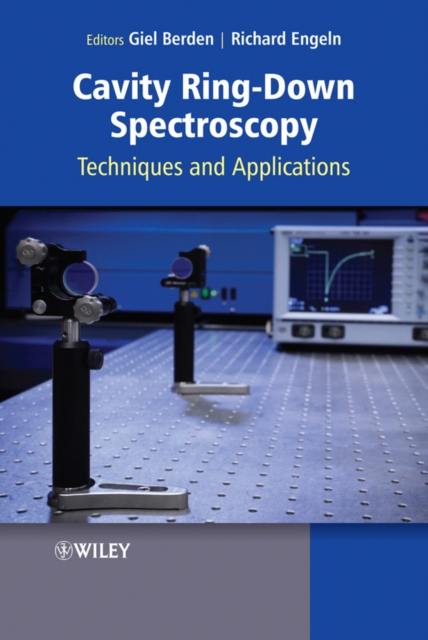
Cavity Ring-Down Spectroscopy: Techniques and Applications provides a practical overview of this valuable analytical tool, explaining the fundamental concepts and experimental methods, and illustrating important applications.
Annual Reports on NMR Spectroscopy, Volume 114 presents the latest release in a series that has established itself as a premier resource for both specialists and non-specialists interested in new techniques and applications pertaining to NMR spectroscopy.
Annual Reports on NMR Spectroscopy, Volume 111 presents the latest release in a series that has established itself as a premier resource for both specialists and non-specialists interested in new techniques and applications pertaining to NMR spectroscopy.
The use of real or near real time measurement of chemical production process parameters as the basis for achieving control or optimisation of a manufacturing process has wide application in the petrochemical, food and chemical industries.
Organic Spectroscopy presents the derivation of structural information from UV, IR, Raman, 1H NMR, 13C NMR, Mass and ESR spectral data in such a way that stimulates interest of students and researchers alike.
This latest edition of the highly successful text Organic Spectroscopy continues to keep both student and researcher informed of the most recent developments in the various fields of spectroscopy.
PRINCIPLES OF INSTRUMENTAL ANALYSIS, 7th Edition, places an emphasis on operating principles of each type of instrument, its optimal area of application, its sensitivity, its precision, and its limitations.
Put ideas into practice using theoretical concepts and real-life examples The MBA Handbook, 9th Edition by Cameron is a vital resource for MBA and other postgraduate management students to gain maximum learning benefit from their programme.
If you are studying forensic science, or a related course such as forensic chemistry or biology, then this book will be an indispensable companion throughout your entire degree programme.
The full text downloaded to your computer With eBooks you can: search for key concepts, words and phrases make highlights and notes as you study share your notes with friends eBooks are downloaded to your computer and accessible either offline through the Bookshelf (available as a free download), available online and also via the iPad and Android apps.
Sensing of Deadly Toxic Chemical Warfare Agents, Nerve Agent Simulants, and their Toxicological Aspects provides a general overview of the development and performance of different novel molecular frameworks as potent vehicles for sensing Chemical Weapons (CWs).
Stimulated Raman Scattering Microscopy: Techniques and Applications describes innovations in instrumentation, data science, chemical probe development, and various applications enabled by a state-of-the-art stimulated Raman scattering (SRS) microscope.
New advances in proteomics, driven largely by developments in mass spectrometry, continue to reveal the complexity and diversity of pathogenic mechanisms among microbes that underpin infectious diseases.
The classic authority on colour measurement now fully revised and updated with the latest CIE recommendations The measurement of colour is of major importance in many commercial applications, such as the textile, paint, and foodstuff industries; as well as having a significant role in the lighting, paper, printing, cosmetic, plastics, glass, chemical, photographic, television, transport, and communication industries.
This unique book stands as the only comprehensive introduction to vibrational optical activity (VOA) and is the first single book that serves as a complete reference for this relatively new, but increasingly important area of molecular spectroscopy.
This unique book stands as the only comprehensive introduction to vibrational optical activity (VOA) and is the first single book that serves as a complete reference for this relatively new, but increasingly important area of molecular spectroscopy.
The classic authority on colour measurement now fully revised and updated with the latest CIE recommendations The measurement of colour is of major importance in many commercial applications, such as the textile, paint, and foodstuff industries; as well as having a significant role in the lighting, paper, printing, cosmetic, plastics, glass, chemical, photographic, television, transport, and communication industries.
Nuclear Magnetic Resonance (NMR) spectroscopy, a physical phenomenon based upon the magnetic properties of certain atomic nuclei, has found a wide range of applications in life sciences over recent decades.
Nuclear Magnetic Resonance (NMR) spectroscopy, a physical phenomenon based upon the magnetic properties of certain atomic nuclei, has found a wide range of applications in life sciences over recent decades.
This completely updated and revised second edition of Surface Analysis: The Principal Techniques, deals with the characterisation and understanding of the outer layers of substrates, how they react, look and function which are all of interest to surface scientists.
This text is aimed at people who have some familiarity with high-resolution NMR and who wish to deepen their understanding of how NMR experiments actually work .
This book provides a serious introduction to the subject of mass spectrometry, providing the reader with the tools and information to be well prepared to perform such demanding work in a real-life laboratory.