In this compilation, the authors review the planning of multithermal titration calorimetry experiments using triosephosphate isomerase as a case study with two of its inhibitors, 2PG and PGH, under physiological conditions and osmotic stress.
Lewis acids have been utilized to activate molecules, whether it be the generation of a simple Lewis acid-base adduct or the coordination and activation of a substrate molecule in a catalytic transformation.
In recent decades, the science of gas separation by use of a nanoporous permselective membrane has widely developed due to properties such as low energy consumption, easy operation, low waste generation and economic benefits.
Conventional sample preparation techniques like solid phase extraction and liquid-liquid extraction prove to be tedious, time-consuming and oftentimes cumbersome.
Crystal structures and their associated electronic features play an enormous role in chemistry, constituting the most fundamental basis for analyzing and predicting properties of solid-state materials.
X-Ray Fluorescence: Technology, Performance and Applications opens with a study wherein the possibilities of polarizing energy dispersive X-ray fluorescence spectrometry were fully explored to materialize rapid trace element determinations of various geological samples.
In this collection, the authors discuss the way in which it is possible to detect the low concentrations at which toxic compounds and metabolites are present in specimens due to the huge development of chromatographic techniques.
Although initially described as major regulators of cytoskeletal remodeling, Rho GTPases have been implicated in the establishment of polarity, endocytosis, vesicle trafficking, morphogenesis, cytokinesis, transcriptional activation, cell cycle progression, and apoptosis, to mention a few.
In diesem Buch wird ein umfangreiches Forschungsprogramm zur Erforschung von Signaltransduktionsprozessen mithilfe von Sonden mit kleinen Molekülen vorgestellt.
In diesem Buch wird ein umfangreiches Forschungsprogramm zur Erforschung von Signaltransduktionsprozessen mithilfe von Sonden mit kleinen Molekülen vorgestellt.
It is widely recognized that analytical technologies and techniques are playing a pioneering role in a range of today's foremost challenging scientific endeavours, including especially biological and biomedical research.
This edited book contains chapters that describe bespoke three-dimensional (3D) printing aimed at democratizing anatomy education by providing open-source scans for download and printing as 3D models.
Chemometrics uses advanced mathematical and statistical algorithms to provide maximum chemical information by analyzing chemical data, and obtain knowledge of chemical systems.
Conjugated polymeric materials and their nanocomposites are widely used for the creation of alternative sources of renewable energy, cell phone screens, mobile gadgets, video players and OLED-TV, as well as organic diodes, transistors, sensors, etc.
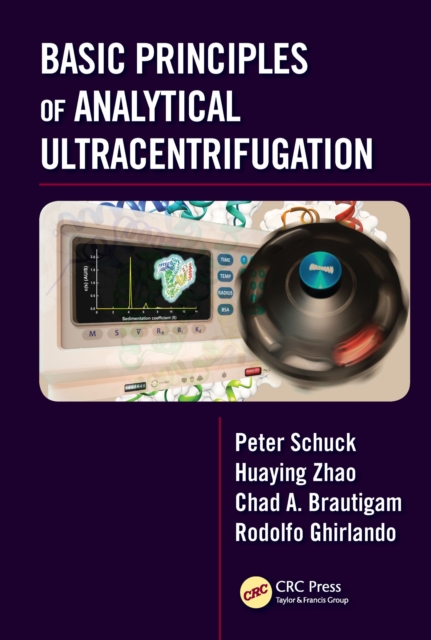
A follow-up to the experimental and instrumental aspects described in Basic Principles of Analytical Ultracentrifugation, the volume Sedimentation Velocity Analytical Ultracentrifugation: Discrete Species and Size-Distributions of Macromolecules and Particles describes the theory and practice of data analysis.
Since the Second World War, the field of ion exchange has taken a dominant role in offering solutions to many problems in the developed and developing world.
Chemical Analysis of Firearms, Ammunition, and Gunshot Residue, Second Edition continues in the tradition of the popular first edition, filling the void in forensic texts on the subject.
Presenting a detailed, hands-on approach to fluorescence spectroscopy, this book describes experiments that cover basic spectroscopy and advanced aspects of fluorescence spectroscopy.
Toxins and Other Harmful Compounds in Foods provides information on the contents, distribution, chemical properties, and biological activity of toxins and other harmful compounds in foods that are natural components of the raw materials, accumulated due to microbial actions and environmental pollution, or are generated due to processing.
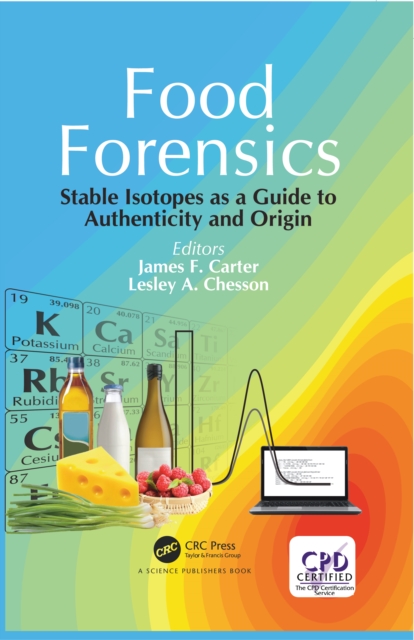
Food forensics is a multi-disciplinary science involving advanced analytical techniques, plant and animal metabolism, and sophisticated data interpretation tools.
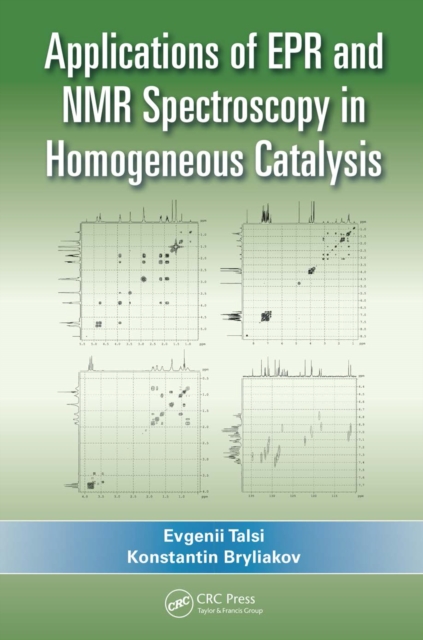
This book reviews advances in important and practically relevant homogeneous catalytic transformations, such as single-site olefin polymerizations and chemo- and stereo-selective oxidations.
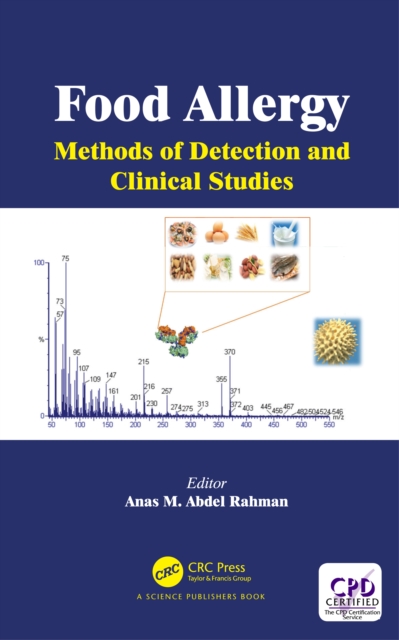
This book explores the recent advances and integrations in molecular technology in food research platforms, which have revolutionized the way we discover and trace potential allergens in our food and drugs and how we utilize that for diagnosis and management.
This book is part of an acclaimed continuing series designed to provide authoritative reviews on recent developments and applications of well-established techniques in the field of electroanalytical chemistry.
For more than four decades, scientists and researchers have relied on the Advances in Chromatography series for the most up-to-date information on a wide range of developments in chromatographic methods and applications.
Originally published in 1982 by Pearson/Prentice-Hall, the Forensic Science Handbook, Third Edition has been fully updated and revised to include the latest developments in scientific testing, analysis, and interpretation of forensic evidence.
With extensive detailed spectral data, it contains a variety of problems designed by renowned authors to develop proficiency in organic structure determination.
One of Nature's most important talents is evolutionary development of systems capable of molecular recognition: distinguishing one molecule from another.
Successful Management of the Analytical Laboratory provides a comprehensive discussion of the problems that face analytical laboratory managers and presents proven techniques for improving the operation and performance of analytical labs.
Since the completion of the first edition of this book, major developments have occurred in the pharmaceutical industry that have shaped the field of near-infrared (NIR) spectroscopy.
The presence of concentrations of organic substances and cations in sea water is a matter of increasing concern to the water industry, environmentalists and the general public alike.
This book covers the main ideas, methods, and recent developments of quantum-limit optical spectroscopy and applications to quantum information, resolution spectroscopy, measurements beyond quantum limits, measurement of decoherence, and entanglement.
This book covers the latest research work done in the area of interface mechanics of collagen and chitin-based biomaterials along with various techniques that can be used to understand mechanics of biological systems and materials.
This thoroughly revised and updated Fourth Edition of a time-honored text provides the reader with a comprehensive introduction to the field of scanning electron microscopy (SEM), energy dispersive X-ray spectrometry (EDS) for elemental microanalysis, electron backscatter diffraction analysis (EBSD) for micro-crystallography, and focused ion beams.
This book, written by a pioneer in surface physics and thin film research and the inventor of Low Energy Electron Microscopy (LEEM), Spin-Polarized Low Energy Electron Microscopy (SPLEEM) and Spectroscopic Photo Emission and Low Energy Electron Microscopy (SPELEEM), covers these and other techniques for the imaging of surfaces with low energy (slow) electrons.
This book presents an exhaustive overview of electrochemical sensors and biosensors for the analysis and monitoring of the most important analytes in the environmental field, in industry, in treatment plants and in environmental research.
Applications of NMR Spectroscopy, Volume 1, originally published by Bentham and now distributed by Elsevier, presents the latest developments in the field of NMR spectroscopy, including the analysis of edible oils and lipid content in foods, the role of NMR spectroscopy in the human metabolomics and the diagnosis of autism-related disorders, protein-protein interactions, and NMR spectroscopy of chiral molecules.
Urea-SCR Technology for deNOx After Treatment of Diesel Exhausts presents a complete overview of the selective catalytic reduction of NOx by ammonia/urea.
The clinical laboratory is often known as a "e;black box"e; to nurses, physicians, and surgeons, but this concise book removes the veil by covering all the pertinent aspects of the clinical laboratory.