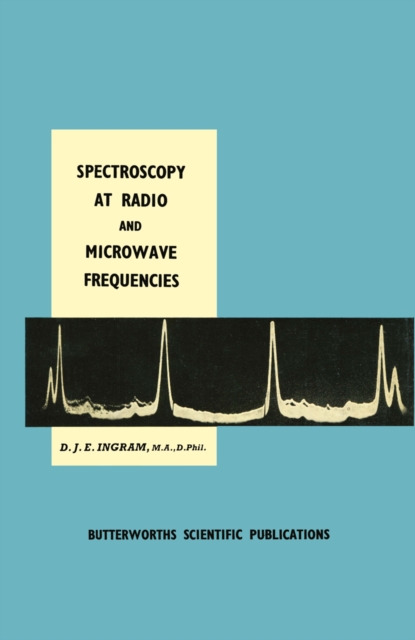
IN view of the growing interest in spectroscopy at radio and micro- wave frequencies, and the increasing number of its applications to both physics and chemistry, it was thought that a general outline of the subject for non-specialists might be of some value.
A comprehensive examination of the chemistry of food toxicants produced during processing, formulation, and storage of food, Food Safety Chemistry: Toxicant Occurrence, Analysis and Mitigation provides the information you need to develop practical approaches to control and reduce contaminant levels in food products and food ingredients, including c
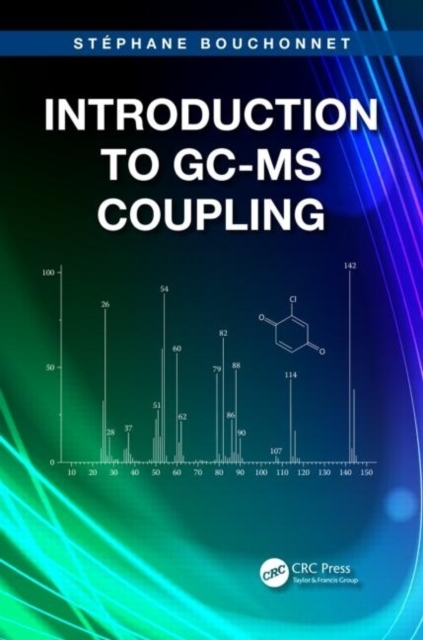
Mass spectrometry has played an integral part in the study of organic molecular structures for more than 50 years, offering significant information from small amounts of sample.
This volume is part of a continuing Electroanalytical Chemistry Series designed to provide authoritative reviews on recent developments and applications of well-established techniques in the field of electroanalytical chemistry.
Photon-in-photon-out core level spectroscopy is an emerging approach to characterize the electronic structure of catalysts and enzymes, and it is either installed or planned for intense synchrotron beam lines and X-ray free electron lasers.
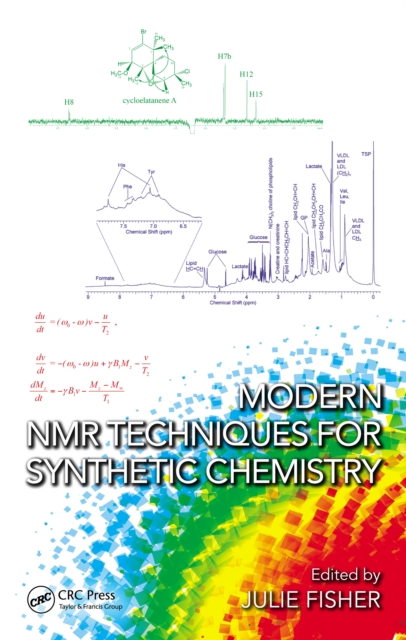
A blend of theory and practical advice, Modern NMR Techniques for Synthetic Chemistry illustrates how NMR spectroscopy can be used to determine the abundance, size, shape, and function of organic molecules.
Nanocomposite Membrane Technology: Fundamentals and Applications is the first book to deliver an extensive exploration of nanocomposite membrane technology.
A Practical Guide to Environmental Crime Scene InvestigationsReleasing contaminants into the environment-whether deliberate or unintentional-can be thought of as a crime against the environment.
This book introduces the key concepts of nanoscale spectroscopy methods used in nanotechnologies in a manner that is easily digestible for a beginner in the field.
Easily Get Started with Biological ExperimentsIntroduction to Experimental Biophysics - A Laboratory Guide presents wet lab methods for courses in biophysics or molecular biology.
Characterizing bulk organic matter in seawater and bay water by various analytical techniques and linking these measurements with fouling in membrane systems.
Fundamentals of Environmental and Toxicological Chemistry: Sustainable Science, Fourth Edition covers university-level environmental chemistry, with toxicological chemistry integrated throughout the book.
The advent of laser-based sources of ultrafast infrared pulses has extended the study of very fast molecular dynamics to the observation of processes manifested through their effects on the vibrations of molecules.
Several areas of forensic science use the technique of gas chromatography, ranging from fire analysis to the investigation of fraudulent food and perfumes.
Used routinely in drug control laboratories, forensic laboratories, and as a research tool, thin layer chromatography (TLC) plays an important role in pharmaceutical drug analyses.
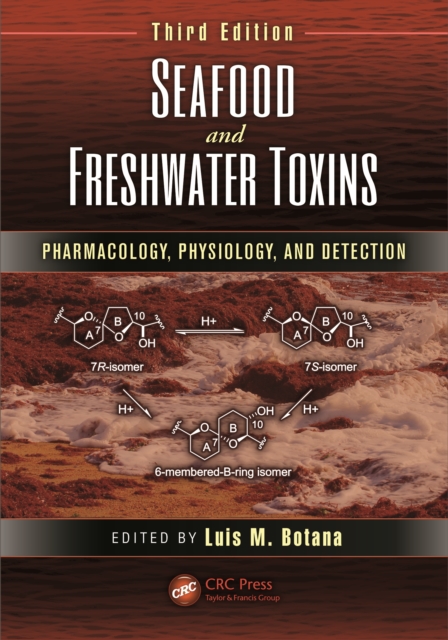
The last few years have brought about many changes in the field of marine and freshwater toxins, with advances in analytical technology and the realization that these toxins are a global issue.
The second edition of Internal Photoemission Spectroscopy thoroughly updates this vital, practical guide to internal photoemission (IPE) phenomena and measurements.
This work originated in a series of lectures on meson and baryon ex- cited states which I gave at the Stanford Linear Accelerator Center in the fall of 1962.
This book contains 17 invited papers and 80 communicated papers presented at the International Symposium on Physical Acoustics, held at the University Campus of Kortrijk, Belgium, from 19-22 June 1990.
The importance of real space imaging and spatially-resolved spectroscopy in many of the most significant problems of surface and interface behaviour is almost self evident.
The study of the effects of dimensional ity and disorder on phase transitions, electronic transport, and superconductivity has become an important field of research in condensed matter physics.
In the course of the development of surface science, advances have been identified with the introduction of new diagnostic probes for analytical characterization of the adsorbates and microscopic structure of surfaces and interfaces.
Those well-intending workers, especially theorists, who have viewed hungrily the mixed valence problem, but have not yet made the bold leap, might be comforted to learn that the Rochester conference left the virginal state of that problem essentially intact.
Solid state physics after solving so successfully many fundamental problems in perfect or slightly imperfect crystals, tried in recent years to attack problems associated with large disorder with the aim to understand the consequences of the lack of the long-range order.
More and more biologists, chemists, pharmacologists, toxicologists, gov- ernmental agencies, and "e;food control"e; (regulatory) ofncials around the world are nnding it increasingly difncult to keep abreast of the technical literature in the pesticide neid; indeed, many libraries do not have even a small proportion of the journals and other sources that now regularly contain research, development, and application information ab out all aspects of modern chemical pest control.
A hundred and eighty five chemists, physicists, and engineers met in Schenectady, New York, for the three days May 10-12, 1976, to discuss the subject of Superionic Conductors.
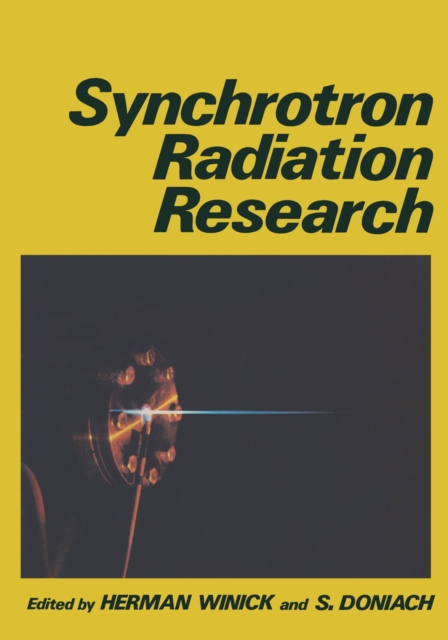
This book has grown out of our shared experience in the development of the Stanford Synchrotron Radiation Laboratory (SSRL), based on the electron-positron storage ring SPEAR at the Stanford Linear Accelerator Center (SLAC) starting in Summer, 1973.