This book provides relevant findings on nanoparticles' toxicity, their uptake, translocation and mechanisms of interaction with plants at cellular and sub-cellular level.
Rather than a loosely connected list of facts/topics, this book addresses virtually every field that involves the use of developing animals in environmental science.
This book addresses the highly relevant subject of emerging pollutants, which are especially alarming since most of the available treatment technologies are unable to degrade them.
Reviews of Environmental Contamination and Toxicology attempts to provide concise, critical reviews of timely advances, philosophy and significant areas of accomplished or needed endeavor in the total field of xenobiotics, in any segment of the environment, as well as toxicological implications.
The indiscriminate use of medications and their inadequate disposal have resulted in them being released into the environment via municipal, hospital and industrial discharges.
This book focuses on different aspects of microplastic pollution, offering authors and readers the opportunity to share their knowledge, identify issues and propose solutions and actions to face this environmental threat.
This book presents a detailed history of chemical warfare development during the First World War and discusses design approaches to gas masks and the performance of new filter materials that decontaminate chemical warfare agents (CWA) when applied in the vapor phase.
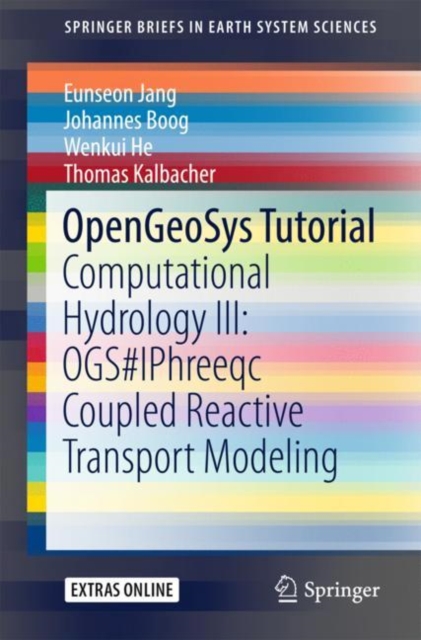
This tutorial provides the application of the coupling interface OGS#IPhreeqc (open-source scientific software) to model reactive mass transport processes in environmental subsurface systems.
Reviews of Environmental Contamination and Toxicology attempts to provide concise, critical reviews of timely advances, philosophy and significant areas of accomplished or needed endeavor in the total field of xenobiotics, in any segment of the environment, as well as toxicological implications.
This book is a treatise on microbial ecotoxicology, discussing the effect of pollutants on microbial ecosystems and the role of microorganisms in ecosystems services.
This book presents an assortment of case-studies pertaining to the use of sustainable technologies for heavy metal removal and recovery from mining and metallurgical wastes, construction and demolition wastes, spent catalysts and electronic wastes.
Reviews of Environmental Contamination and Toxicology attempts to provide concise, critical reviews of timely advances, philosophy and significant areas of accomplished or needed endeavor in the total field of xenobiotics, in any segment of the environment, as well as toxicological implications.
This book covers the principles, underlying mechanisms, thermodynamic functions, kinetics and modeling aspects of sustainable technologies, particularly from the standpoint of applying physical, chemical and biological processes for the treatment of wastewater polluted with heavy metals.
Featuring a collection of informative and descriptive chapters, this book is essential reading for environmental scientists, environmental toxicologists and people from allied fields.
This book describes nanomaterials used and existing in the environment, food industry and packaging, health care products and cosmetics, housekeeping, nanomaterials for cleaning purposes, architectural building products, medicine, clothing and textile, smart electronics and sensors.
This two-volume work is an effort to provide a common platform to environmental engineers, microbiologists, chemical scientists, plant physiologists and molecular biologists working with a common aim of sustainable solutions to varied environmental contamination issues.
This volume gives a detailed account into how renewables can be transformed into value-added products via homogeneous catalysis, especially via transiton metal homogeneous catalysis.
This book explores the application of the open-source software OpenGeoSys (OGS) for hydrological numerical simulations concerning conservative and reactive transport modeling.
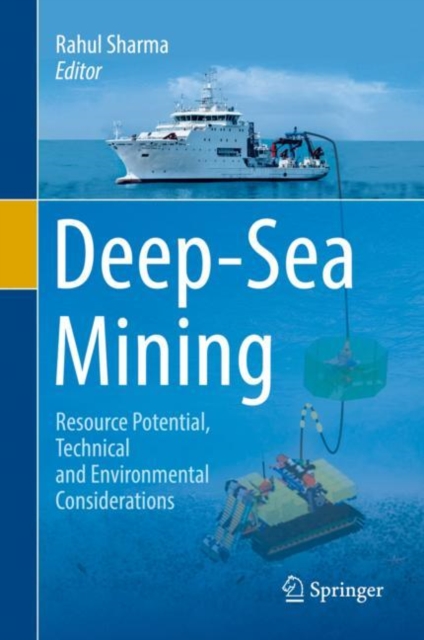
This comprehensive book contains contributions from specialists who provide a complete status update along with outstanding issues encompassing different topics related to deep-sea mining.
This text details the plant-assisted remediation method, "e;phytoremediation"e;, which involves the interaction of plant roots and associated rhizospheric microorganisms for the remediation of soil contaminated with high levels of metals, pesticides, solvents, radionuclides, explosives, crude oil, organic compounds and various other contaminants.
Reviews of Environmental Contamination and Toxicology attempts to provide concise, critical reviews of timely advances, philosophy and significant areas of accomplished or needed endeavor in the total field of xenobiotics, in any segment of the environment, as well as toxicological implications.
This book highlights various aspects of shale gas production and discusses the associated problems, which have greatly influenced the current situation on the global gas market.
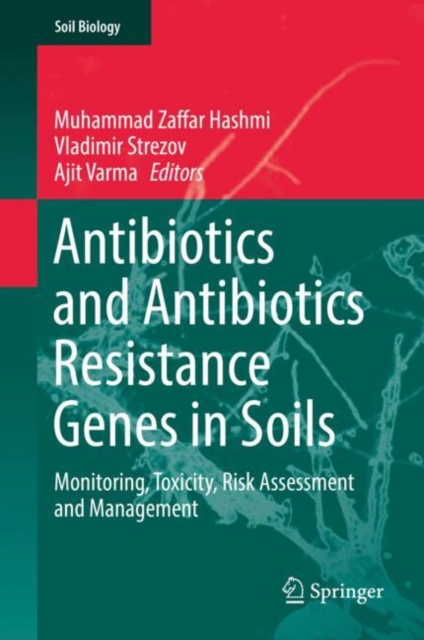
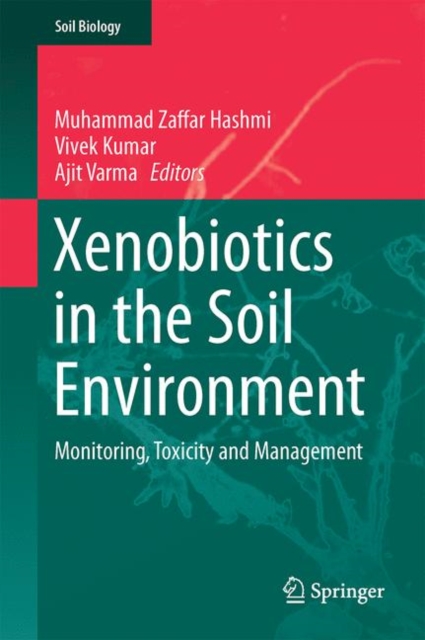
This book describes the vast variety of xenobiotics, such as pesticides, antibiotics, antibiotic resistance genes, agrochemicals and other pollutants, their interactions with the soil environment, and the currently available strategies and techniques for soil decontamination and bioremediation.
Reviews of Environmental Contamination and Toxicology attempts to provide concise, critical reviews of timely advances, philosophy and significant areas of accomplished or needed endeavor in the total field of xenobiotics, in any segment of the environment, as well as toxicological implications.
This book is a valuable contribution to the debate about the harmful effects of environmental toxicants on human health, which is a growing concern in the 21st century.
This book provides a comprehensive overview of the potential use of graphene-based materials in two important societal areas: medicine and the environment.
The proposed book features a systematic and thorough treatment of the dominant persistent organic pollutants (POP's) encountered in the tropical marine environment of the Indian Sundarban mangrove wetlands, a UNESCO World Heritage Site.
Reviews of Environmental Contamination and Toxicology attempts to provide concise, critical reviews of timely advances, philosophy and significant areas of accomplished or needed endeavor in the total field of xenobiotics, in any segment of the environment, as well as toxicological implications.
This book presents major hydrological, physicochemical and biological processes determining the formation of hydro-physical properties and chemical composition of terrestrial surface water.
This text details the plant-assisted remediation method, "e;phytoremediation,"e; which involves the interaction of plant roots and associated rhizospheric microorganisms for the remediation of soil contaminated with high levels of metals, pesticides, solvents, radionuclides, explosives, crude oil, organic compounds and various other contaminants.
This book details the plant-assisted remediation method, "e;phytoremediation"e;, which involves the interaction of plant roots and associated rhizospheric microorganisms for the remediation of soil contaminated with high levels of metals, pesticides, solvents, radionuclides, explosives, crude oil, organic compounds and various other contaminants.
Soil is the most important natural non-renewable resource developed over a longer period of time due to weathering of rocks and subsequently enrichment of organic matter.