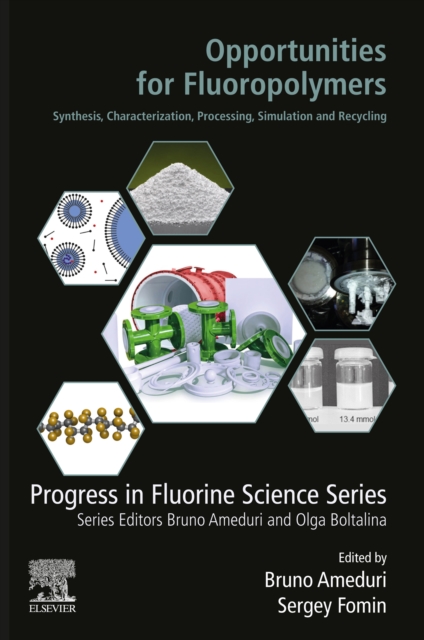
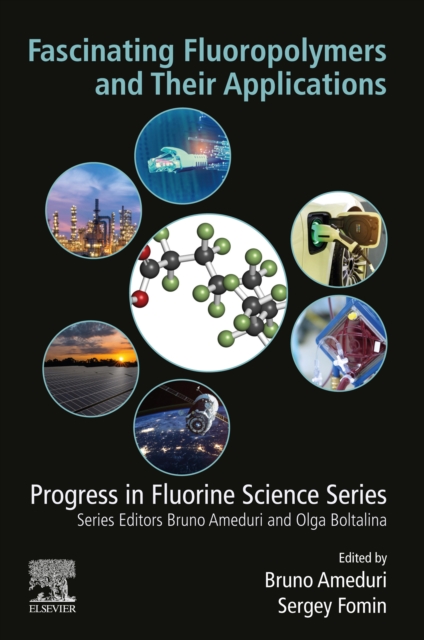
Reactive and functional polymers are manufactured with the aim of improving the performance of unmodified polymers or providing functionality for different applications.
Reactive and functional polymers are manufactured with the aim of improving the performance of unmodified polymers or providing functionality for different applications.
Must-have reference for processes involving liquids, gases, and mixturesReap the time-saving, mistake-avoiding benefits enjoyed by thousands of chemical and process design engineers, research scientists, and educators.
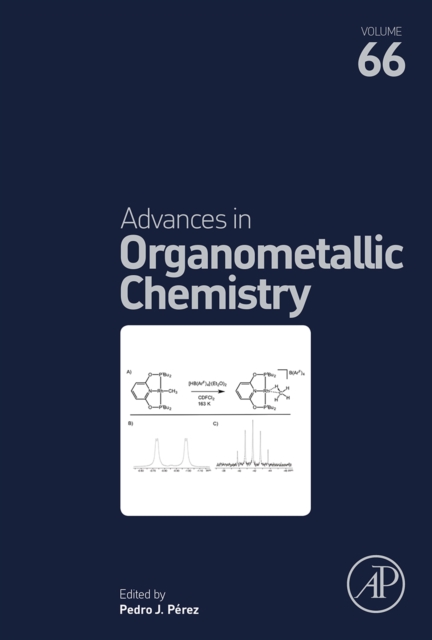
Advances in Organometallic Chemistry contains authoritative reviews on the field of organometallic chemistry, covering topics in organometallic synthesis, reactions, mechanisms, homogeneous catalysis, and more.
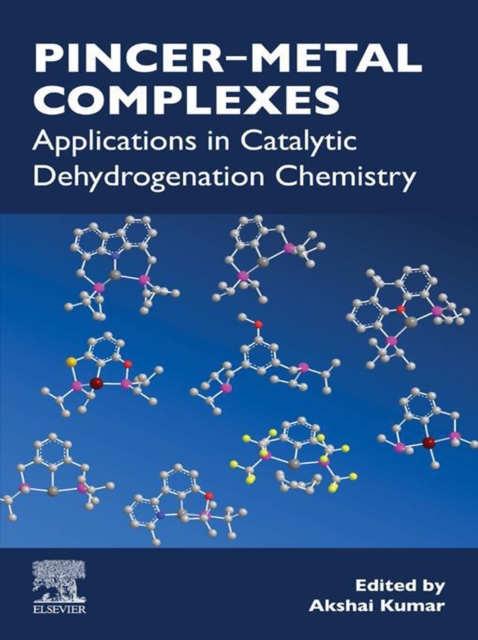
Pincer-Metal Complexes: Applications in Catalytic Dehydrogenation Chemistry provides an overview of pincer-metal catalytic systems that transform hydrocarbons and their derivatives from an synthetic and mechanistic point-of-view.
Energetic Nanomaterials: Synthesis, Characterization, and Application provides researchers in academia and industry the most novel and meaningful knowledge on nanoenergetic materials, covering the fundamental chemical aspects from synthesis to application.
The Handbook on the Physics and Chemistry of Rare Earths is a continuous series of books covering all aspects of rare earth science - chemistry, life sciences, materials science, and physics.
The book reviews the use of spectroscopic and related methods to investigate the complex structures and mechanisms of biological inorganic systems that contain metals.
Palladium-Catalyzed Modification of Nucleosides, Nucleotides and Oligonucleotides describes the procedures and protocols related to the modification of nucleosides, nucleotides and oligonucleotides via Pd-mediated cross-coupling processes.
Advances in Organometallic Chemistry contains authoritative review articles of world-wide known researchers on the field of organometallic chemistry, covering topics in organometallic synthesis, reactions, mechanisms, homogeneous catalysis, and more.
Advances in Organometallic Chemistry contains authoritative review articles of worldwide known researchers on the field of organometallic chemistry, covering topics in organometallic synthesis, reactions, mechanisms, homogeneous catalysis, and more.
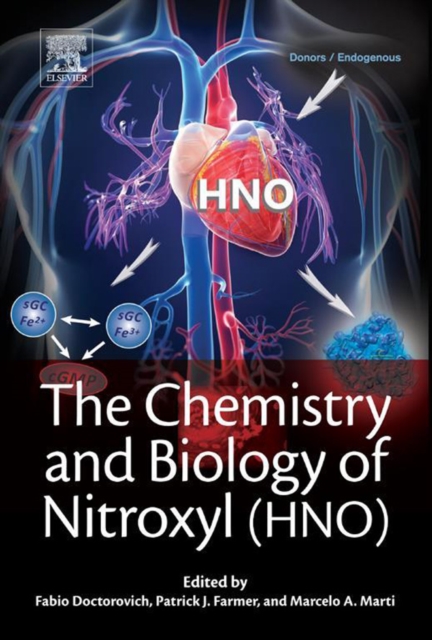
The Chemistry and Biology of Nitroxyl (HNO) provides first-of-its-kind coverage of the intriguing biologically active molecule called nitroxyl, or azanone per IUPAC nomenclature, which has been traditionally elusive due to its intrinsically high reactivity.
Environmental Inorganic Chemistry for Engineers explains the principles of inorganic contaminant behavior, also applying these principles to explore available remediation technologies, and providing the design, operation, and advantages or disadvantages of the various remediation technologies.
The science of carbon materials has experienced a renaissance in recent decades, with Nobel prizes having been awarded for the discovery of C60 in 1996, and graphene in 2010.
Volume 1 of the Handbook of Colorants Chemistry comprehensively covers the fundamentals of color as well as the underlying scientifi c principles, via the presentation of molecular compositions of inorganic and organic pigments.
This is the second volume in the series of books covering practical aspects of synthesis and characterization of various categories of nanomaterials taking into consideration the most up to date research publications.
In continuation of the earlier book on spectrophotometric methods for iron and copper the present book is the next attempt for covering methods and reagents for single as well as simultaneous Spectrophotometric determination methods for the two most important industrial and biologically useful metals Ni and Co.
This first volume of Metal-Organic Framework Composites focusses on pharmaceutical pollution as an issue of concern due to its effects on the environment and the application of MOFs for remediation.
In continuation of the earlier book on spectrophotometric methods for iron and copper the present book is the next attempt for covering methods and reagents for single as well as simultaneous Spectrophotometric determination methods for the two most important industrial and biologically useful metals Ni and Co.