Using inorganic solid adsorbents/sorbents is a promising approach for carbon dioxide (CO2) capture and is attracting intense attention from both academic and industrial fields.
The metal-ligand coordination of metallomacrocycles allows for the production of both discrete and infinite metallosupramolecular structures with high-degrees of complexity.
Showcasing recent developments in inorganic materials in an area of societal interest and importance, this book provides an up-to-date introduction to the contemporary use of functional solids in emerging technologies.
New materials are required to solve global challenges such as the growing energy demand and reducing the threat of new and re-emerging diseases and infections.
The Structure of Rare-Earth Metal Surfaces introduces the concepts of surface crystallography and surface-structure determination, outlines the principles of the most widely used experimental techniques and theoretical simulations, and reviews their application to the surfaces of rare-earth metals.
This book deals with polypyrazolylborates (scorpionates), a class of ligands known since 1966, but becoming rapidly popular with inorganic, organometallic and coordination chemists since 1986, because of their versatility and user-friendliness.
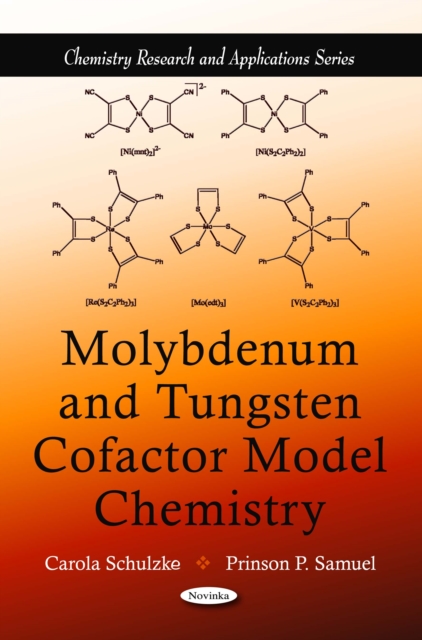
There has been enormous progress in our understanding of molybdenum and tungsten enzymes and relevant inorganic complexes of molybdenum and tungsten over the past twenty years.
Metal nanoclusters, which bridge metal atoms and nanocrystals, are gaining attention due to their unique chemical and physical properties which differ greatly from their corresponding large nanoparticles and molecular compounds.
In less than 20 years N-heterocyclic carbenes (NHCs) have become well-established ancillary ligands for the preparation of transition metal-based catalysts.
Powder diffraction is a widely used scientific technique in the characterization of materials with broad application in materials science, chemistry, physics, geology, pharmacology and archaeology.
Since the discovery of the first examples of 2-oxoglutarate-dependent oxygenase-catalysed reactions in the 1960s, a remarkably broad diversity of alternate reactions and substrates has been revealed, and extensive advances have been achieved in our understanding of the structures and catalytic mechanisms.
There has been enormous progress in our understanding of molybdenum and tungsten enzymes and relevant inorganic complexes of molybdenum and tungsten over the past twenty years.
There has been enormous progress in our understanding of molybdenum and tungsten enzymes and relevant inorganic complexes of molybdenum and tungsten over the past twenty years.
This work is a foundation course text for first and second year undergraduates in which description and understanding of inorganic chemistry are fully integrated.
This extensive overview combines both instrumental and radiochemical techniques with qualitative and quantitative (volumetric and gravimetric) analyses, and also with preparation of compounds, thereby strengthening analytical and preparative skills.
In this title the correlation between the properties of elements and compounds and their structures with their electronic arrangements has been shown in the text as far as possible using orbital hybridization, molecular orbital and crystal field concepts.
The incredible "e;glowing"e; history of the "e;Devil's element "e;phosphorusDiscovered by alchemists, prescribed by apothecaries, exploited by ninth-century industrialists, and abused by twentieth-century combatants, the chemical element phosphorus has fascinated us for more than three centuries.
Aluminium Oxide: Structure, Production and Applications opens with a study wherein it is proposed that, according to the electrolyte composition and the parameters of an applied electric signal, it is possible to obtain either barrier or porous oxide films with precisely controlled dimensions.
In Zinc Oxide: Production, Properties and Applications, the authors first provide a summary of the natural sources available for the synthesis of zinc oxide nanoparticles, enlisting some plant-mediated synthesized zinc oxide nanoparticles showing promising antimicrobial, antioxidant, cytotoxic and photocatalytic properties.
Lewis acids have been utilized to activate molecules, whether it be the generation of a simple Lewis acid-base adduct or the coordination and activation of a substrate molecule in a catalytic transformation.
This timely and unique publication is designed for graduate students and researchers in inorganic and materials chemistry and covers bonding models and applications of symmetry concepts to chemical systems.
This book provides comprehensive coverage of nanocomposite materials obtained by the sol-gel method, from synthesis to applications and including design tools for combining different properties.
Successful industrial heterogeneous catalysts fulfill several key require- ments: in addition to high catalytic activity for the desired reaction, with high selectivity where appropriate, they also have an acceptable commercial life and are rugged enough for transportation and charging into plant reactors.
During the past few decades, much research has been reported on the formation of insoluble monomolecular films of lipids and biopolymers (synthetic polymers and proteins) on the surface of water or at the oil-water interface.
This book contains a series of papers and abstracts from the 7th Industry-University Cooperative Chemistry Program symposium held in the spring of 1989 at Texas A&M University.