The phenomenon of catalysis is found in many homogeneous and heterogeneous systems undergoing chemical change, where it effects the rates of approach to the equilibrium state in processes as diverse as those found in the stars, the earth's mantle, living organisms, and the various chemistries utilized by industry.
Some have predicted that the coming several decades will be the decades of "e;biotechnology,"e; wherein cancer, birth defects, life span increases, cosmetics, biodegradation, oil spills and exploration, solid waste disposal, and almost every aspect of our material life will be affected by this new area of science.
Hydroxyapatite is the structural prototype of the main inorganic constituent of bone and teeth and, together with fluorapatite, is also one of the principal minerals in commercial phosphate ores.
For several years, I have been responsible for organizing and teaching in the fall a short course on "e;Fundamentals of Adhesion: Theory, Practice, and Applications"e; at the State University of New York at New Paltz.
Over the past fifteen years the Commission on Equilibrium Data of the Analytical Division of the I nter- national Union of Pure and Applied Chemistry has been sponsoring a noncritical compilation of metal complex formation constants and related equilibrium constants.
In the last five years, the study of metal hydrides has ex- panded enormously due to the potential technological importance of this class of materials in hydrogen based energy conversion schemes.
The Plenum Press series, Monographs in Inorganic Chemistry, is intended to fill an obvious need for high-level surveys of recent research in that area, particularly in matters which go beyond the traditional or classical bound- aries of the subject.
In August, 1996, the ACS Division of Polymeric Materials: Science and Engineering hosted a symposium on Interfacial Aspects of Multicomponent Polymer Materials at the Orlando, Florida, American Chemical Society meeting.
'A comprehensive review of the current state of the theoretical development in this important area of potential application of conducting polymers, and is very timely.
Extractions of Metals from Soils and Waters represents a new emphasis in the series Modern Inorganic Chemistry, namely the impact inorganic chemistry can have on the environment.
This book was planned and written with one central goal in mind: to demonstrate that statistical thermodynamics can be used successfully by a broad group of scientists, ranging from chemists through biochemists to biologists, who are not and do not intend to become specialists in statistical thermodynamics.
Over the past fifteen years the Commission on Equilibrium Data of the Analytical Division of the Inter- national Union of Pure and Applied Chemistry has been sponsoring a noncritical compilation of metal complex formation constants and related equilibrium constants.
The term "e;carbon-functional organosilicon compound"e; is used for organosilicon compounds in which a functional group is bonded to an organic moiety that is in turn con- nected to silicon via a Si-C bond.
In the short time since the first nitroxyl radical was obtained in 1959, a new branch of chemical science has arisen and taken shape-the chemistry of stable nitroxyl radicals.
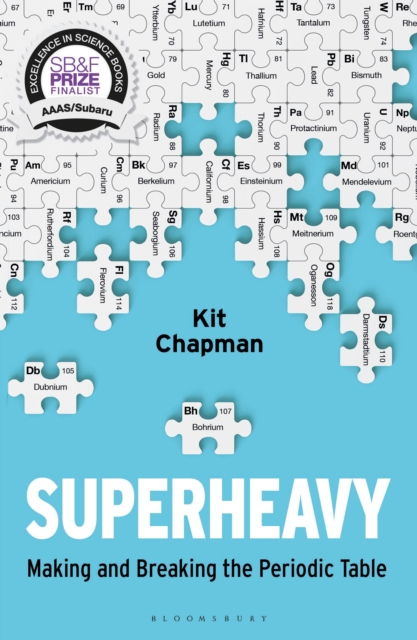
SHORTLISTED FOR THE 2020 AAAS/SUBARU SB&F PRIZE FOR EXCELLENCE IN SCIENCE BOOKSHow new elements are discovered, why they matter and where they will take us.
This book is intended to provide a fundamental basis for the study of the interaction of polymers with living systems, biochemicals, and with aqueous solutions.
In recent years many research workers have turned their attention to the quantitative characterization of complex compounds and reactions of complex-formation in solution.
In the last twenty years the literature on the processes of ionic polymerization has reached such a level that there is not a single question which is not covered by the information contained in the many monographs, reference books, and textbooks in this field.
Nearly three years have passed since the publication of the original Russian edition, in which time there have appeared various papers on recent research on the transuranium elements, of which the most notable concern the production of element 105 at Dubna and Berkeley.
Since the early 1930's, Soviet chemists have played a lead- ing role in the study of unfamiliar oxidation state compounds of the peroxide, superoxide, and ozonide types.
This book contains the proceedings of the Symposium on FT-IR Characterization of Polymers, which was held under the auspices of the Division of Polymer Chemistry, American Chemical Society (ACS) during the annual ACS meeting in Philadelphia, August, 1984.
The ever-increasing importance of chemical reactions at high and superhigh temperatures in crystalline, amorphous, and semicrystalline SOlids, as well as the reactions of these solids with gases, prompted the authors of this book to examine critically the literature available in this field and to present a general review of the subject.
This book is about compounds such as the boron hydrides and associated metal hydrides and alkyls which acquired the label 'electron deficient' when they were thought to contain too few valence electrons to hold together.
This volume contains a series of papers originally presented at the Symposium on Polymer Gels organized and sponsored by the Research Group on Polymer Gels,The Society of Polymer Science of Japan and co-sponsored by the Science and Technology Agency (ST A) and MIT!
A wonderfully successful NATO Advanced Study Institute on "e;Sulfur-Centered Reactive Intermediates in Chemistry and Biology"e; was held 18-30 June, 1989, at the Hotel Villa del Mare in Maratea, Italy.
The field of gas phase inorganic ion chemistry is relatively new; the early studies date back approximately twenty years, but there has been intense interest and development in the field in the last ten years.
After the success of the previous summer schools organized by the Nuclear Physics Division of the Netherlands' Physical Society in 1975 and 1977, we thought it worthwhile to continue this tradition.
The three natural streams of present-day chemistry are Structure, Dynamics and Synthesis and all these three elements are essential for the study of materials, particularly in the solid state.
During the course of far-infrared investigations of inorganic and coordina- tion compounds at Argonne National Laboratory in the years 1962-1966, it became apparent that no suitable book existed which correlated and dis- cussed the important vibrations occurring in this region for these molecules.
One of the characteristics of the development of chemical science in the middle of the present century is the vigorous pro- gress of the "e;third chemistry,"e; which is often named now the chemistry of heteroorganic compounds.