This third edition retains the general level and scope of earlier editions, but has been substantially updated with over 900 new references covering the literature through 2005, and 140 more pages of text than the previous edition.
The Aqueous Chemistry of Oxides is a single-volume text that encapsulates all of the critical issues associated with how oxide materials interact with aqueous solutions.
This book is a synthesis of two of Hudlicky's earlier books outlining the many unpredictable properties of fluorine and its compounds that are not analogous to the properties of any other halogens and their compounds.
Because of the importance of the hydrogen bond, there have been scores of insights gained about its fundamental nature by quantum chemical computations over the years.
Most people are familiar with the fact that diamond and graphite are both composed only of carbon; yet they have very different properties which result from the very different structures of the two solids - they are polymorphs of carbon.
This book consists of over 422 problems and their acceptable answers on structural inorganic chemistry at the senior undergraduate and beginning graduate level.
Natural Products (NPs) is the term used to describe the hundreds of thousands of chemical compounds or substances that are continually produced by living organisms (plants and microbes).
This text focuses on the practical aspects of crystal structure analysis, and provides the necessary conceptual framework for understanding and applying the technique.
The crystallization of proteins and nucleic acids and/or their complexes has become more highly automated but is still often a trial and error based approach.
This book provides a systematic description of the molecular structures and bonding in simple compounds of the main group elements with particular emphasis on bond distances, bond energies and coordination geometries.
This book starts with the most elementary ideas of molecular orbital theory and leads the reader progressively to an understanding of the electronic structure, geometry and, in some cases, reactivity of transition metal complexes.
The bond valence model, a description of acid-base bonding, is widely used for analysing and modelling the structures and properties of solids and liquids.
The bond valence model, a description of acid-base bonding, is widely used for analysing and modelling the structures and properties of solids and liquids.
In 1984 physicists discovered a monster in the world of crystallography, a structure that appeared to contain five-fold symmetry axes, which cannot exist in strictly periodic structures.
In the modern world of ever smaller devices and nanotechnology, electron crystallography emerges as the most important method capable of determining the structure of minute objects down to the size of individual atoms.
Since 1969, the international chemistry community has only held conferences on the topic of the Periodic Table three times, and the 2012 conference in Cusco, Peru was the first in almost a decade.
* * * Winner of the Royal Society Winton Prize for Science Books * * * FROM THE TEA-CUP TO THE JET ENGINE, STUFF MATTERS IS A UNIQUE, INSPIRING EXPLORATION OF HUMAN CREATIVITY.
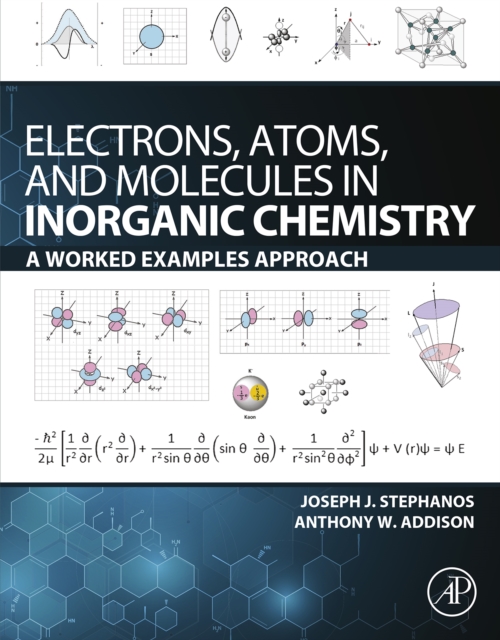
Electrons, Atoms, and Molecules in Inorganic Chemistry: A Worked Examples Approach builds from fundamental units into molecules, to provide the reader with a full understanding of inorganic chemistry concepts through worked examples and full color illustrations.
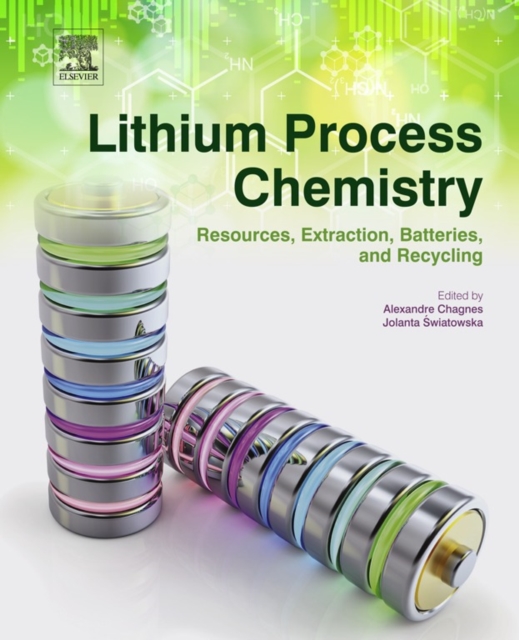
Lithium Process Chemistry: Resources, Extraction, Batteries and Recycling presents, for the first time, the most recent developments and state-of-the-art of lithium production, lithium-ion batteries, and their recycling.
Inorganic Controlled Release Technology: Materials and Concepts for Advanced Drug Formulation provides a practical guide to the use and applications of inorganic controlled release technology (iCRT) for drug delivery and other healthcare applications, focusing on newly developed inorganic materials such as bioresorbable glasses and bioceramics.
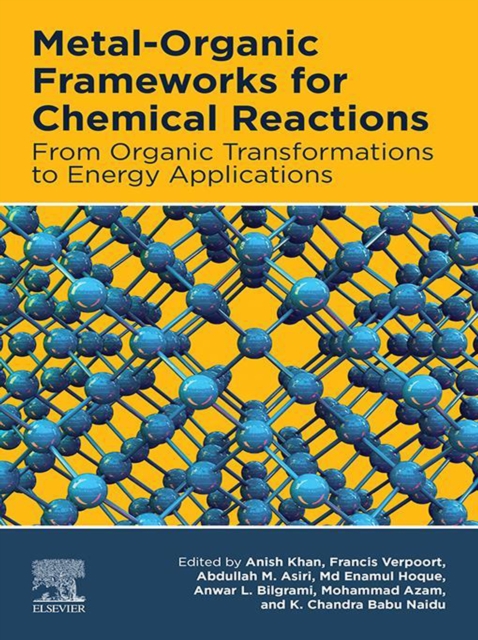
Metal-Organic Frameworks for Chemical Reactions: From Organic Transformations to Energy Applications brings together the latest information on MOFs materials, covering recent technology in the field of manufacturing and design.
Fundamentals and Applications of Boron Chemistry highlights its impressive potential for current and future developments across a range of fields, providing foundational information on boron chemistry and systematically summarizing applications of boron in energy, medicinal chemistry, and materials chemistry.
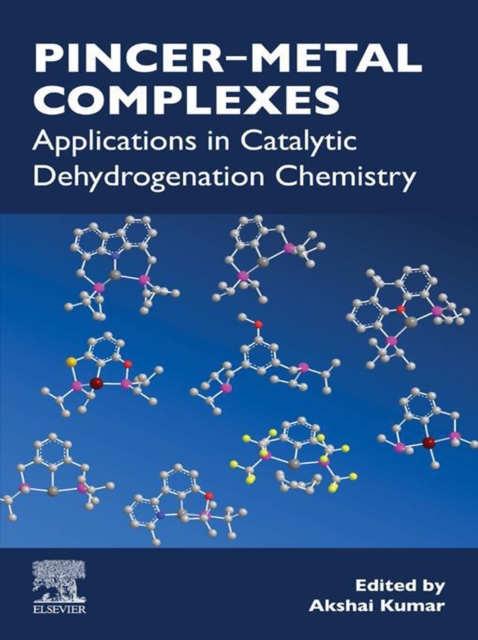
Pincer-Metal Complexes: Applications in Catalytic Dehydrogenation Chemistry provides an overview of pincer-metal catalytic systems that transform hydrocarbons and their derivatives from an synthetic and mechanistic point-of-view.
Advances in Organometallic Chemistry, Volume 73, the latest release in this longstanding serial, is known for its comprehensive coverage of topics in organometallic synthesis, reactions, mechanisms, homogeneous catalysis, and more.
The Curious World of Fluorinated Molecules: Molecules Containing Fluorine is the sixth volume in the Progress in Fluorine Science series and is edited by the world-renowned scientist Konrad Seppelt.
Medicinal Chemistry, Volume 75, the latest release in the Advances in Inorganic Chemistry series, presents timely and informative summaries on current progress in a variety of subject areas.
Sol-gel processing is a low temperature, low cost wet chemistry route to a range of different materials, particularly glassy and ceramic oxides, including nanoparticles and powders, fibers, thin films and membranes, or monoliths and composites.