This book offers an excellent introduction to the use of novel therapeutic vaccines for common diseases based on their ability to induce antibody production.
This book summarizes experimentally-supported research on the therapeutic efficacy of plant extracts and their constituents on a range of respiratory diseases including infections.
Im Zentrum dieses Lehrbuchs steht die Anwendung, weniger die die reine Wissensvermittlung der Ergebnisse aller chemisch biologischer Arbeiten (was auch den Rahmen eines Buches sprengen würde).
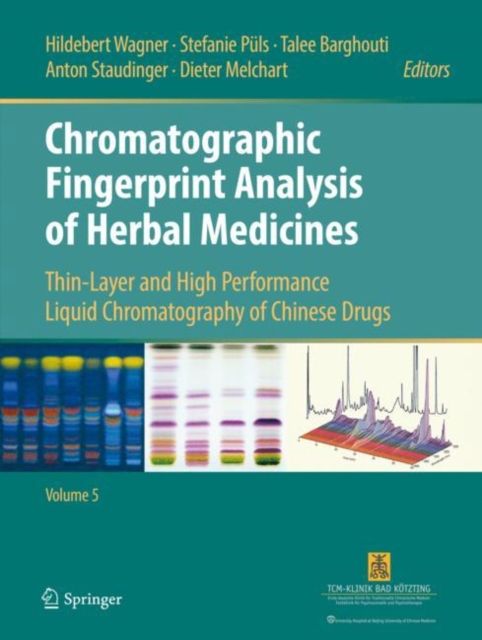
Volume V of this manual provides an overview of the analytical investigation of numerous additional Chinese herbal drugs that are commonly used in Traditional Chinese Medicine (TCM).
This book exclusively focuses on the science and fundamentals of polymer gels, as well as the numerous advantages that polymer gel-based materials offer.
This book covers a wide range of topics concerning human tear based science, starting from basics such as the normal composition of tears and moving up to novel disease detection platforms.
Reversed-phase high-performance liquid chromatography (RP-HPLC) has become the most widely used method for pharmaceutical analysis, as it ensures accuracy, specificity and reproducibility for the quantification of drugs, while avoiding interference from any of the excipients that are normally present in pharmaceutical dosage forms.
In this book, a summary and update of the most important areas of CPP research are presented, whilst raising relevant questions for further development.
This book covers strategies to improve cell permeability, intestinal permeability, and metabolic stability, which are the typical liabilities associated with cyclic peptides, to enhance protein-protein recognition, and to build upon nature's cyclic peptides and macrocycles.
This book presents a series of protocols in multiple disease areas affected by the aging process along with several methods which have shown progress in nutrient- or intervention-based approaches to maximize the healthspan.
This book, which is the third volume of Biomedical translational research, focuses on the fundamental role of biomedical research in developing new medicinal products.
The purpose of this book is to highlight some of latest developments and applications of CRISPR, RNA, and DNA to treat diseases ranging from cancers to cardiovascular and degenerative disorders.
This third edition is a comprehensive and extended study about the best known approaches for preparing the main types of glycosides, covering the classic and more recent glycosylation reactions used for preparing simple and challenging glycosides currently used as potent antiviral and antineoplastic drugs, or fluorogenic substrates used for enzymatic detection in cell biology.
In diesem kurzen Lehrbuch werden grundlegende wissenschaftliche und klinische Aspekte der Toxikologie dargestellt und ihre wichtigsten Inhalte, Ziele und Aufgaben beschrieben.
This detailed book focuses on analytical separations by chromatographic and electrophoretic techniques, providing some overview along with numerous practically-oriented applications of the most important analytical techniques in chiral separation sciences.
This contributed volume focuses on cardiovascular diseases (CVDs), and explores the ways in which signaling mechanisms at the biochemical, molecular, and cellular levels in the blood vessels (vascular) and heart contribute to the underlying causes of development and progression of the CVDs.
This detailed book collects modern and established computer-based methods aimed at addressing the drug discovery challenge from disparate perspectives by exploiting information on ligand-protein recognition.
This book provides a variety of procedures for synthetically producing peptides and their derivatives, ensuring the kind of precision that is of paramount importance for successful synthesis.
Driving further the research on mammalian alkaline phosphatase structure and function, Phosphatase Modulators collects expert contributions into one "e;how to"e; manual for basic scientists interested in initiating a drug discovery effort.
This book serves as a guide for identifying and applying commonly used cell-based translational assays as well as for assessing the therapeutic potential of new immuno-oncology therapeutics and advancing their mechanism of action.
This book on "e;Renin-Angiotensin System in Cardiovascular Disease"e; includes 25 chapters, which are organized in three sections, namely (i) modulatory aspects, (ii) pathophysiological aspects, and (iii) pharmacotherapeutic aspects.
This book focuses on the different compounds (polyphenols, sterols, alkaloids terpenes) that arise from the secondary metabolism of plants and fungi and their importance for research and industry.
This book explores cutting-edge methods to work with the notoriously difficult, but highly prevalent, obligate intracellular pathogen, Chlamydia trachomatis.
This collection explores detailed experimental protocols necessary for setting up a variety of in vitro cytochrome P450 (CYP) assays that are vital in selecting drug candidates in a drug discovery pipeline.
With significant developments in the areas of chromatography and spectroscopy as well as the unique inherent chemical diversity of natural products, vital in drug research, natural products research has gained new momentum.
This fully updated volume presents a wide range of methods for synthesis, surface modification, characterization and application of nano-sized materials (nanoparticles) in the life science and medical fields, with a focus on drug delivery and diagnostics.
The last decade has seen the confluence of several enabling technologies that have allowed protein crystallographic methods to live up to their true potential.
This book aims to provide a guide to researchers on how to work with Transient Receptor Potential (TRP) channels, describing current methodologies and protocols, and highlighting the challenges ahead that will require the development of new technologies.
Despite the critical importance of the cerebellum in brain function, the scientific community still lacks effective treatments for most cerebellar ataxias.