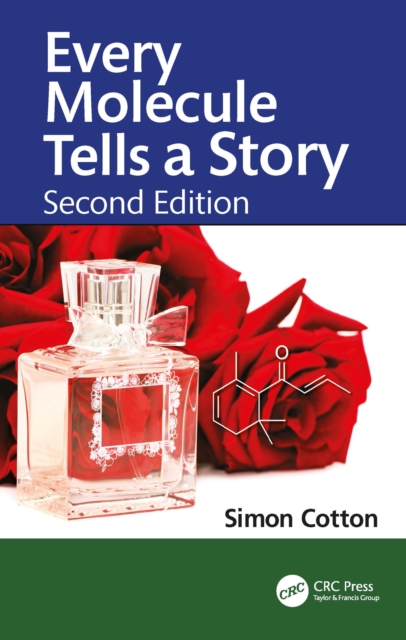
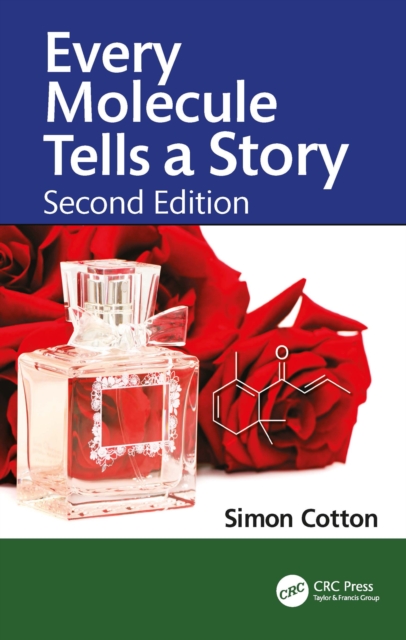
Every Molecule Tells a Story, Second Edition continues the celebration of molecules responsible for the experiences of everyday life: the air we breathe, the water we drink, the chemicals that fuel our living, the steroids that give us sex, the colours of the seasons, the drugs that heal us, and the scented molecules that enrich our diet and our encounters with each other.
Every Molecule Tells a Story, Second Edition continues the celebration of molecules responsible for the experiences of everyday life: the air we breathe, the water we drink, the chemicals that fuel our living, the steroids that give us sex, the colours of the seasons, the drugs that heal us, and the scented molecules that enrich our diet and our encounters with each other.
The rapid advances in recombinant DNA technology and the increasing availability of peptides and proteins with therapeutic potential are a challenge for pharmaceutical scientists who have to formulate these compounds as drug products.
Drawing on the vast amount of experience the author has gained from working in industrial and university laboratories, this collection of excerpt reports contains essential details from literature relevant to the synthesis of compounds on a milligram to kilogram scale.
In order to understand drug metabolism at its most fundamental level, pharmaceutical scientists must be able to analyze drug compound structures and predict possible metabolic pathways in order to avoid the risk of adverse reactions that lead to the withdrawal of a drug from the market.
A comprehensive and authoritative exploration of Tempol (4-Hydroxy-TEMPO), an exceptional chemical compound with diverse applications in both scientific research and medical practice.
Drawing on the vast amount of experience the author has gained from working in industrial and university laboratories, this collection of excerpt reports contains essential details from literature relevant to the synthesis of compounds on a milligram to kilogram scale.
A comprehensive and authoritative exploration of Tempol (4-Hydroxy-TEMPO), an exceptional chemical compound with diverse applications in both scientific research and medical practice.
Intrigued as much by its complex nature as by its outsider status in traditional organic chemistry, the editors of The Organic Chemistry of Sugars compile a groundbreaking resource in carbohydrate chemistry that illustrates the ease at which sugars can be manipulated in a variety of organic reactions.
Drug discovery originating in Africa has the potential to provide significantly improved treatment of endemic diseases such as malaria, tuberculosis and HIV/AIDS.
Ion channels play a vital role in basic physiological functions such as generation of electrical activity in nerves and muscle, control of cardiac excitability, intracellular signaling, hormone secretion, cell proliferation and many other biological processes.
This volume reviews advances in cancer chemotherapy research over the last 10 years and will be of interest to scientists engaged in drug research in the pharmaceutical industry, biotechnology and startup companies, academia and government institutions.
In recent years, inorganic polymers have attracted much attention in nano-biomedicine, in particular in the area of regenerative medicine and drug delivery.
In order to meet the ever-increasing demands for enantiopure compounds, heteroge- ous, homogeneous and enzymatic catalysis evolved independently in the past.
Use of medicinal plants is as old as human civilization and continuous efforts are being made to improve medicinal plants or produce their products in high amounts through various technologies.
Der erste Band des Lexikons der Medizinischen Laboratoriumsdiagnostik deckt mit 7817 Einträgen, 500 Tabellen und 745 überwiegend farbigen Abbildungen und Schemata nahezu vollständig alle Kern- und Randbegriffe der Klinischen Chemie im weitesten Sinne ab.
Basic Methods for the Biochemical Lab elucidates proven lab procedures and practical hints for research in analytical and preparative biochemistry, as well as summarizing key data in numerous tables.
The topic of this book is the development of automated and inexpensive tools that transfer medical tests from a specialized clinical laboratory directly to the point of care, using biochip technology.
Functional Polymer Conjugates for Medicinal Nucleic Acid Delivery, by Ernst WagnerBiodegradable Nanoparticles as Vaccine Adjuvants and Delivery Systems: Regulation of Immune Responses by Nanoparticle-Based Vaccine, by Takami Akagi, Masanori Baba and Mitsuru AkashiBiodegradable Polymeric Assemblies for Biomedical Materials, by Yuichi Ohya, Akihiro Takahashi and Koji Nagahama PEGylation Technology in Nanomedicine, by Yutaka Ikeda and Yukio NagasakiCytocompatible Hydrogel Composed of Phospholipid Polymers for Regulation of Cell Functions, by Kazuhiko Ishihara, Yan Xu and Tomohiro KonnoDesign of Biointerfaces for Regenerative Medicine, by Yusuke Arima, Koichi Kato, Yuji Teramura and Hiroo IwataAdvances in Tissue Engineering Approaches to Treatment of Intervertebral Disc Degeneration: Cells and Polymeric Scaffolds for Nucleus Pulposus Regeneration, by Jeremy J.
This set of six volumes provides a systematic and standardized description of 23,033 chemical components isolated from 6,926 medicinal plants, collected from 5,535 books/articles published in Chinese and international journals.
This set of six volumes provides a systematic and standardized description of 23,033 chemical components isolated from 6,926 medicinal plants, collected from 5,535 books/articles published in Chinese and international journals.
The present edited book is the presentation of 18 in-depth national and international contributions from eminent professors, scientists and instrumental chemists from educational institutes, research organizations and industries providing their views on their experience, handling, observation and research outputs on HPTLC, a multi-dimensional instrumentation.