Microwave-assisted Organic Synthesis: One Hundred Reaction Procedures provides readers with a broad overview of microwave assisted Organic Synthesis, enabling students and researchers alike to produce more efficient and high yield syntheses while saving time and resources.
Lectins: Analytical Technologies covers both analytical and biological aspects of lectins (functional carbohydrate (complex sugar) recognition proteins) and provides researchers in the field with a resource containing background information and 'look-up' tables detailing lectin specificity and structures.
Standard medicinal chemistry courses and texts are organized by classes of drugs with an emphasis on descriptions of their biological and pharmacological effects.
This book provides the "e;nuts and bolts"e; background for a successful study of carbohydrates - the essential molecules that not only give you energy, but are an integral part of many biological processes.
Organic Structure Determination Using 2-D NMR Spectroscopy: A Problem-Based Approach, Second Edition, is a primary text for a course in two-dimensional (2-D) nuclear magnetic resonance (NMR) techniques, with the goal to learn to identify organic molecular structure.
A classic in the area of organic synthesis, Strategies and Tactics in Organic Synthesis provides a forum for investigators to discuss their approach to the science and art of organic synthesis.
This volume, number 23 in the "e;Tetrahedron Organic Chemistry"e; series, presents organolithium chemistry from the perspective of a synthetic organic chemist, drawing from the synthetic literature to present a unified overview of how organolithiums can be used to make molecules.
Modern Methods for Theoretical Physical Chemistry of Biopolymers provides an interesting selection of contributions from an international team of researchers in theoretical chemistry.
The ultimate source of information on the design of new anticancer agents, emphasizing small molecules, this newest work covers recent notable successes resulting from the human genome and cancer genomics projects.
This volume of Progress in Heterocyclic Chemistry(PHC) is the thirteenth annual review of the literature, covering the work published on important heterocyclic ring systems during 2000.
Industrialists developing new food and pharmaceutical products face the challenge of innovation in an increasingly competitive market that must consider incredient cost, product added-value, expectations of a healthy life-style, improved sensory impact, controlled delivery of active compounds and last, but not lease, product stability.
"e;Progress in Heterocyclic Chemistry"e; (PHC) an ongoing reference work on heterocyclic chemistry is published with the active involvement of The International Society of Heterocyclic Chemistry (ISHC) whose aim is to promote heterocyclic chemistry, in particular by serving as the primary sponsoring agency for the ISHC-Congress, a large biannual meeting attracting up to a thousand participants.
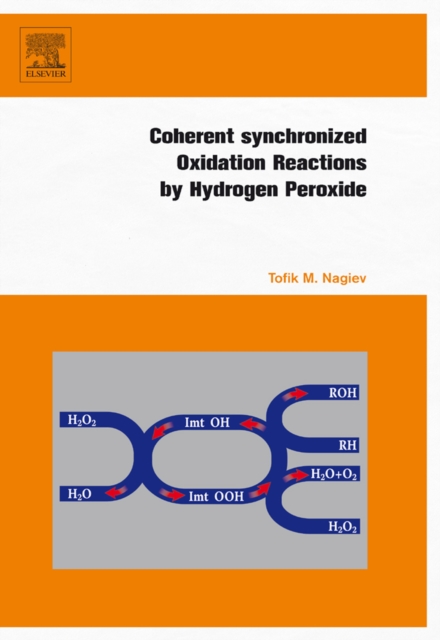
Describes the relations between reactions in chemical and biochemical systems with special emphasis to high selective oxidation reactions by hydrogen peroxide.
The Organic Chemistry of Enzyme-Catalyzed Reactions is not a book on enzymes, but rather a book on the general mechanisms involved in chemical reactions involving enzymes.
In the case of students, this laboratory preparations manual can be used to find additional experiments to illustrate concepts in synthesis and to augment existing laboratory texts.
Providing fundamental knowledge necessary to understand graphene's atomic structure, band-structure, unique properties and an overview of groundbreaking current and emergent applications, this new handbook is essential reading for materials scientists, chemists and physicists.
Established in 1960, Advances in Heterocyclic Chemistry is the definitive serial in the area - one of great importance to organic chemists, polymer chemists, and many biological scientists.
Almost all branches of chemistry and material science now interface with organometallic chemistry - the study of compounds containing carbon-metal bonds.
Catalysis is the acceleration of a chemical reaction by a catalyst, a substance that notably affects the rate of a chemical reaction without itself being consumed or altered.
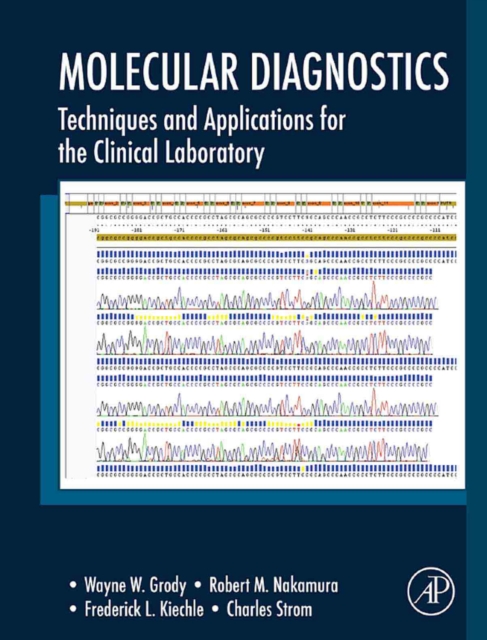
Advances in genomic and proteomic profiling of disease have transformed the field of molecular diagnostics, thus leading the way for a major revolution in clinical practice.
Established in 1960, Advances in Heterocyclic Chemistry is the definitive serial in the area-one of great importance to organic chemists, polymer chemists, and many biological scientists.
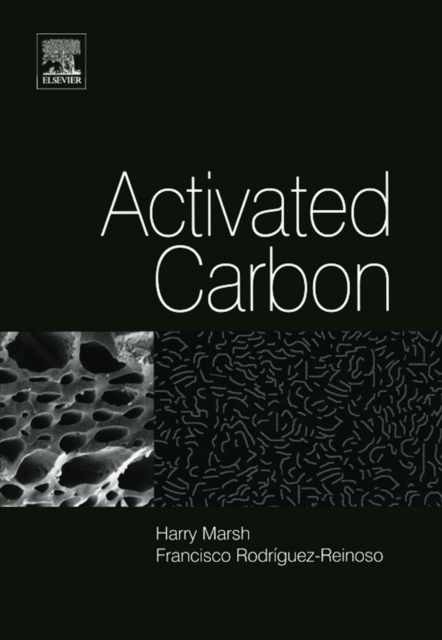
Recent years have seen an expansion in speciality uses of activated carbons including medicine, filtration, and the purification of liquids and gaseous media.
Pyridines: From Lab to Production provides a synthetic armory of tools to aid the practicing chemist by reviewing the most reliable historical methods alongside new methods/ Written by scientists who have actually used these in synthesis.
Established in 1960, Advances in Heterocyclic Chemistry is the definitive serial in the area--one of great importance to organic chemists, polymer chemists, and many biological scientists.
Microwave-assisted Organic Synthesis: One Hundred Reaction Procedures provides readers with a broad overview of microwave assisted organic synthesis, enabling students and researchers alike to produce more efficient and high yield syntheses while saving time and resources.
Established in 1960, Advances in Heterocyclic Chemistry is the definitive serial in the area - one of great importance to organic chemists, polymer chemists, and many biological scientists.
A classic in the area of organic synthesis, Strategies and Tactics in Organic Synthesis provides a forum for investigators to discuss their approach to the science and art of organic synthesis.
Advances in Synthetic Organic Chemistry and Methods Reported in US Patents provides synthetic guidelines for preparing current and commercially significant organic compounds, derivatives, and intermediates as reported in issued US Patents.
Natural products present in the plant and animal kingdom offer a huge diversity of chemical structures which are the result of biosynthetic processes that have been modulated over the millennia through genetic effects.
A best seller since 1966, Purification of Laboratory Chemicals keeps engineers, scientists, chemists, biochemists and students up to date with the purification of the chemical reagents with which they work, the processes for their purification, and guides readerd on critical safety and hazards for the safe handling of chemicals and processes.
Natural products present in the plant and animal kingdom offer a huge diversity of chemical structures, which are the result of biosynthetic processes that have been modulated over the millennia through genetic effects.
Methods in Carbohydrate Chemistry, Volume VI: General Carbohydrate Methods contains a collection of selected methods from the entire field of carbohydrate chemistry.
The fourth edition of The Immunoassay Handbook provides an excellent, thoroughly updated guide to the science, technology and applications of ELISA and other immunoassays, including a wealth of practical advice.
The generally accepted definitions of acids and bases together with the generalized definition for the solvent system introduced by the author for the description of both molecular and ionic solvents are discussed.
Established in 1960, Advances in Heterocyclic Chemistry is the definitive serial in the area-one of great importance to organic chemists, polymer chemists, and many biological scientists.