"e;Progress in Heterocyclic Chemistry"e; (PHC) an ongoing reference work on heterocyclic chemistry is published with the active involvement of The International Society of Heterocyclic Chemistry (ISHC) whose aim is to promote heterocyclic chemistry, in particular by serving as the primary sponsoring agency for the ISHC-Congress, a large biannual meeting attracting up to a thousand participants.
This revised and updated Second Edition of Polymer Synthesis II continues in the tradition of Volume I in presenting detailed laboratory instructions for the preparation of various polymers.
In the case of students, this laboratory preparations manual can be used to find additional experiments to illustrate concepts in synthesis and to augment existing laboratory texts.
The chapters in this volume have been written by some of the foremost practictioners in the field and should be of interest to both mechanistic and synthetic chemists.
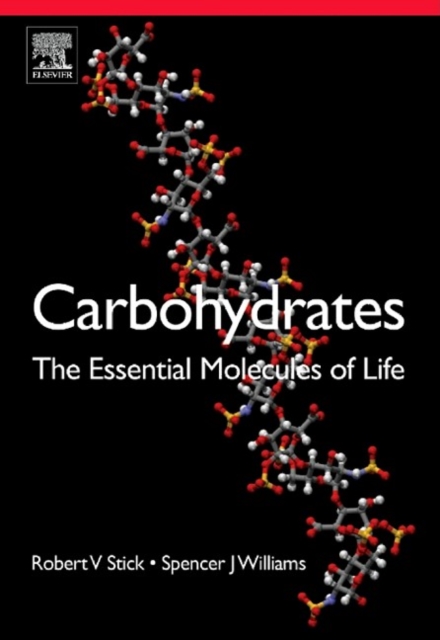
This book provides the "e;nuts and bolts"e; background for a successful study of carbohydrates - the essential molecules that not only give you energy, but are an integral part of many biological processes.
This volume provides organic chemists with a convenient, up-to-date reference source on reliable preparative procedures for the most common functional groups.
Volume II describes 17 additional functional groups and presents a critical review of their available methods of synthesis with preparative examples of each.
Organic Chemistry, Second Edition, Volume I: Organic Functional Group Preparations provides a convenient and useful source of reliable preparative procedures for the most common functional groups.
Almost all branches of chemistry and material science now interface with organometallic chemistry--the study of compounds containing carbon-metal bonds.
Organic Chemistry: A Series of Monographs, Volume 47: Hetero Diels-Alder Methodology in Organic Synthesis focuses on the use of hetero Diels-Alder reactions as pivotal steps in natural product total syntheses.
Advances in genomic and proteomic profiling of disease have transformed the field of molecular diagnostics, thus leading the way for a major revolution in clinical practice.
Phosphorous-31 NMR: Principles and Applications focuses on the evolution of phosphorus-31 nuclear magnetic resonance (NMR) as a widely applied spectroscopic probe of the structure and dynamics of phosphorus-containing compounds.
Industrialists developing new food and pharmaceutical products face the challenge of innovation in an increasingly competitive market that must consider incredient cost, product added-value, expectations of a healthy life-style, improved sensory impact, controlled delivery of active compounds and last, but not lease, product stability.
Organometallic compounds are utilized as reagents in the preparation and processing of advanced nanostructured materials, as catalysts in the production of a wide variety of specialty chemicals and polymers, and as drugs.
Established in 1960, Advances in Heterocyclic Chemistry is the definitive serial in the area-one of great importance to organic chemists, polymer chemists, and many biological scientists.
This Symposium provided the opportunity to review progress after more than 10 years of research and development in the field of natural gas conversion.
This volume contains invited papers and communications presented at the Third European Workshop Meeting on Selective Oxidation by Heterogeneous Catalysis.
Second Supplements to the 2nd Edition of Rodd's Chemistry of Carbon Compounds, Volume III: Aromatic Compounds spans several very important areas of aromatic chemistry.
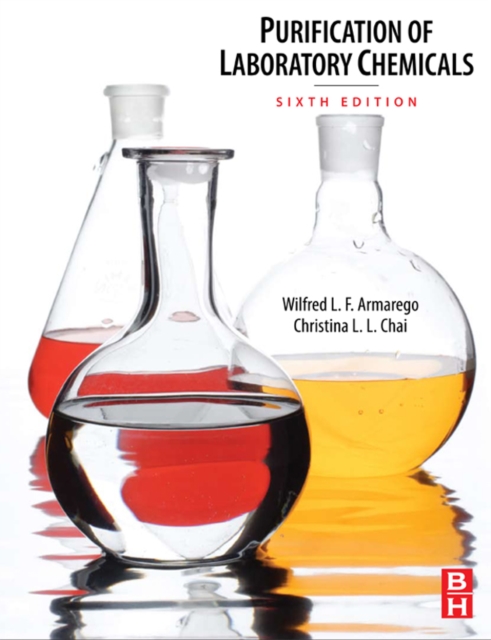
A best seller since 1966, Purification of Laboratory Chemicals keeps engineers, scientists, chemists, biochemists and students up to date with the purification of the chemical reagents with which they work, the processes for their purification, and guides readerd on critical safety and hazards for the safe handling of chemicals and processes.
Under the editorial leadership of Dr Gerald Litwack, Vitamins and Hormones continues to publish up-to-date synthetic reviews of interest to endocrinologists and biochemists.