Se dedica especialmente este libro a dos grupos de lectores: a aquellos que, ocupados en trabajos de carácter químico, no están en disposición de recibir un curso normal de Química orgánica y a los que, asistiendo a un curso regular, sienten la necesidad de un libro complementario que les ayude adecuadamente a acercarse a la Química orgánica.
El tercer libro de esta serie trata sobre el binomio corrosión y ambiente y los efectos de uno sobre el otro, siendo la atmósfera el medio cuyos efectos van a ser considerados principalmente.
Esta monografía va especialmente dirigida a los alumnos de cursos universitarios elementales que estén siguiendo esta materia y también puede ser utilizado en cursos de nivel intermedio, cuyos estudiantes no hayan tenido un entrenamiento en este campo de la Química orgánica.
This handbook, now in a new, second edition, is an essential resource for scientists with an interest in the role of glycosyltransferases and related genes involved in the biosynthesis of glycoproteins, glycolipids, and proteoglycans.
Microspheres and microcapsules have very broad applications in various fields, especially in those of biotechnology and biopharmaceuticals, as targeting drug-delivery carriers, separation media for protein, peptide, DNA, and so forth.
This book presents the results of comprehensive research of an inadequately studied class of secondary plant metabolites: phytoecdysteroids, which are structural analogs of the hormones of molting and metamorphosis of arthropods.
The industry's most comprehensive handbook - now available in its 3rd edition: the BASF Handbook covers the entire spectrum from coatings formulation and relevant production processes through to practical application aspects.
This book covers piping, buried pipe, duct systems, recommendations for fire safety and smoke, abrasion resistance of fiberglass reinforced plastic (FRP), mechanism of FRP corrosion and deterioration, grounding of FRP systems, and popular fabrication methods of FRP.
This textbook is written to thoroughly cover the topic of introductory chemistry in detail-with specific references to examples of topics in common or everyday life.
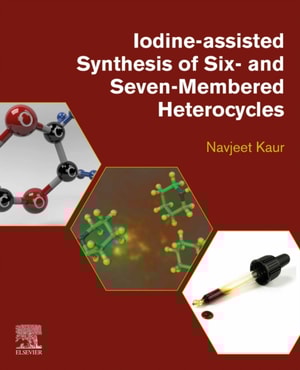
Iodine-Assisted Synthesis of Six- and Seven-Membered Heterocycles covers both existing and the latest methods for the synthesis of various six- and seven-membered heterocycles using iodine.
Organometallic Chemistry of Five-Membered Heterocycles explores the synthesis, coordination modes, reactivity of coordinated five-membered monoheterocycles, and organometallic complexes of their numerous derivatives, including chelating ligands, oligomers, and macrocycles.
Heterocyclic Chemistry in the 21st Century: A Tribute to Alan Katritzky, the latest volume in the Advances in Heterocyclic Chemistry series, is the definitive resource in the field-one of great importance to organic chemists, polymer chemists, and many biological scientists.
Advances in Heterocyclic Chemistry is the definitive series in this area-one of great importance to organic chemists, polymer chemists and many biological scientists.
Best Synthetic Methods: Organophosphorus (V) Chemistry provides systematic coverage of the most common classes of pentavalent organophosphorus compounds and reagents (including phosphonyl, phosphoryl, and organophosphates), and allows researchers an easy point of entry into this complex and economically important field.
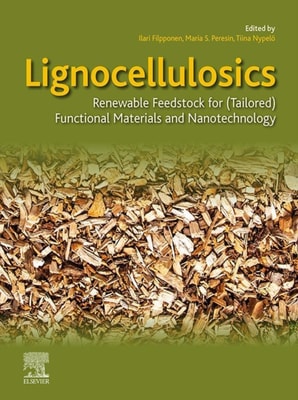
Lignocellulosics: Renewable Feedstock for (Tailored) Functional Materials and Nanotechnology gives a comprehensive overview of recent advances in using lignocellulosic substrates in materials science and nanotechnology.
Nanoparticles in Green Organic Synthesis: Strategy towards Sustainability presents the fundamental and latest practical uses of metal nanoparticles (MNPs) in organic synthesis, as well as their promising multidimensional applications.
Progress in Heterocyclic Chemistry: Volume 34, the latest in this annual review series commissioned by the International Society of Heterocyclic Chemistry (ISHC), contains both highlights of the previous year's literature on heterocyclic chemistry and articles on new developing topics of particular interest to heterocyclic chemists.
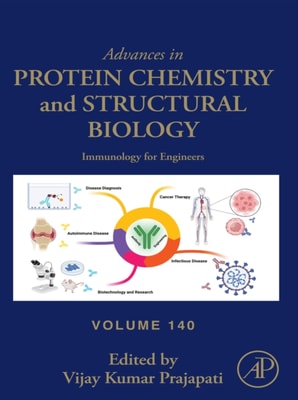
Immunology for Engineers, Volume 140 consists of chapters from stalwarts of the field, covering topics such as antibody engineering, adjuvant requirement and its methodology for assessment, and the need to develop immunotherapy, etc.
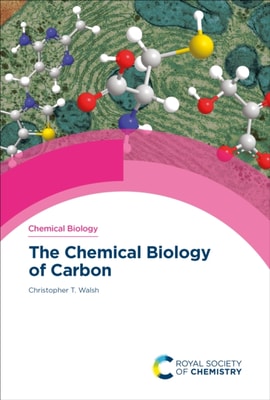
Building upon the previous volumes, The Chemical Biology of Sulfur, The Chemical Biology of Phosphorus, and The Chemical Biology of Nitrogen, this book examines the organic chemistry of life, The Chemical Biology of Carbon.
The first book devoted to a systematic consideration of electronic excitations and electronic energy transfer in organic crystalline multilayers and organics based nanostructures(quantum wells, quantum wires, quantum dots, microcavities).
Conjugated microporous polymers (CMPs) with various structures and properties have been synthesized, and it is possible to design the molecular structure of the conjugated skeleton and nanopores.
Reactive oligomers (ROs) constitute a starting material for the production of numerous polymeric materials with a pre-assigned set of physico-mechanical and physico-chemical properties.
This expanded, revised, and updated second edition of Innovations in Green Chemistry and Green Engineering provides a comprehensive introduction to the state-of-the-art in this key area of sustainability research.
Ethers and crown ethers are important structural parts of many man-made or natural organic materials with medicinal, agrochemical or technological attributes.
The book "e;Oxadiazole in Material and Medicinal Chemistry"e; is based on the utility of organic motifs that contain oxadiazole units in their molecular architecture.
This detailed book explores protocols with the aim of testing aerobic exercise, resistance training, special diets, additives and natural products, which have led to new insights into the physiological and molecular aspects of health and disease.
This book provides current glycoinformatics methods and protocols used to support the determination of carbohydrate structures in biological samples as well as carbohydrate structure databases, the interaction of carbohydrates with proteins, and theoretical and experimental methods to study their three-dimensional structure and dynamics.
Due to the significant contributions of carbohydrates to the functional diversity of the cell, the challenging study of the glycome has expanded beyond the research of carbohydrate experts and into the wider scope of the life sciences.
Glycosyltransferases (GTs) are essential for the biosynthesis of complex glycoconjugates and are powerful tools to study the functions of complex glycans in health, development and disease.
The study of functional glycomics requires the continuous development of rapid and sensitive methods for the identification of glycan structures and integration to structure-function relationships.