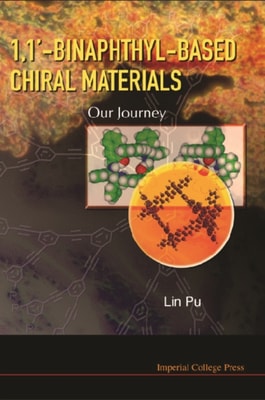
Chiral materials have been studied in the Department of Chemistry at the University of Virginia for applications in areas like asymmetric catalysis, enantioselective fluorescent sensing, and optical/electrical materials.
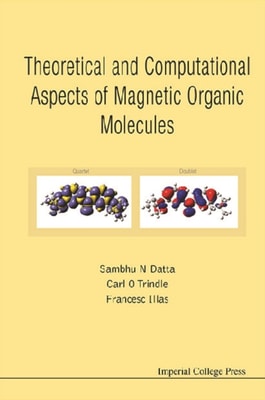
Organic materials with extraordinary magnetic properties promise a wide range of light, flexible, and inexpensive alternatives to familiar metal-based magnets.
Ethers and crown ethers are important structural parts of many man-made or natural organic materials with medicinal, agrochemical or technological attributes.
A valuable primer to help students and workers understand concepts and relationships which are developed more fully in other specialist texts on polymer molecular physics, Introduction to Molecular Motion in Polymers explains how molecular movement is determined by chemical structure, then how the motion controls the physical and technological properties of polymer materials.
The antiviral therapeutic area continues to rapidly generate meaningful new chemical entities; for example, for HIV alone more than 25 drugs have been approved, and in the next few years many individual drugs and single tablet regimens will be approved for the treatment of hepatitis C virus infection.
A series of critical reviews and perspectives focussing on specific aspects of organometallic chemistry interfacing with other fields of study are provided.
The combination of its unique morphology, physical properties, cost effectiveness and environmental friendliness make natural rubber an appealing constituent for many materials and applications.
The combination of its unique morphology, physical properties, cost effectiveness and environmental friendliness make natural rubber an appealing constituent for many materials and applications.
Catalysis has always been part of the development of mankind; from the fermentation of alcoholic drinks, through the development of fertilisers in the agricultural revolution and production of bulk chemicals in the 20th Century.
Natural products are sought after by the food, pharmaceutical and cosmetics industries, and research continues into their potential for new applications.
Chemically-modified carbon nanotubes (CNTs) exhibit a wide range of physical and chemical properties which makes them an attractive starting material for the preparation of super-strong and highly-conductive fibres and films.
Functional organic and organometallic polymers and materials have gained much attention as versatile materials for energy interconversions and optoelectronic/photonic applications, including electrical energy generation in photovoltaic cells and light generation in organic light-emitting diodes, as they offer a low cost, light weight and simple option for device fabrication.
This book details polysaccharides and other important biomacromolecules covering their source, production, structures, properties, and current and potential application in the fields of biotechnology and medicine.
Proton-coupled electron transfer (PCET) is emerging as an important new class of reactions and, over the past decade, great strides have been made in our understanding of them.
Chemical nomenclature is used to identify a chemical species by means of written or spoken words and enables a common language for communication amongst chemists.
Pharmaceutical process research and development is an exacting, multidisciplinary effort but a somewhat neglected discipline in the chemical curriculum.
A series of critical reviews and perspectives focussing on specific aspects of organometallic chemistry interfacing with other fields of study are provided.
P-stereogenic ligands were among the first to be used in asymmetric catalysis but synthetic difficulties and prejudices have hampered their development.
Carbon-carbon bond formations and functional group transformations are the most fundamental reactions for the construction of molecular frameworks and are at the forefront of organic chemistry research.
Thiol-X chemistries are already well established techniques, but it is only recently that they have been exploited for the functionalization and synthesis of polymers and other materials.
In the late 1990s, there was an explosion of research on ionic liquids and they are now a major topic of academic and industrial interest with numerous existing and potential applications.
Interest in the application of nanotechnology to medicine has surged in recent years and could transform the way we diagnose, treat and prevent diseases such as cancer.
Controlled/living radical polymerization (CRP) has revolutionized and revitalized the field of synthetic polymer chemistry over the last twenty years as it is now possible to prepare a wide variety of previously inaccessible macromolecules under relatively mild conditions.
The Handbook of Chalcogen Chemistry: New Perspectives in Sulfur, Selenium and Tellurium provides an overview of recent developments, particularly from the last decade, on the chemistry of the chalcogen group elements (S, Se and Te).
Polymers are used in many everyday technologies and their degradation due to environmental exposure has lead to great interest in materials which can heal and repair themselves.
A series of critical reviews and perspectives focussing on specific aspects of organometallic chemistry interfacing with other fields of study are provided.
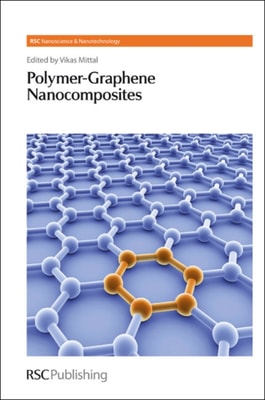
Polymer nanocomposites revolutionized research in the composites area by achieving the nanoscale dispersion of the inorganic filler (clay platelets) in the polymer matrices after suitable surface modifications of the filler phase.
This book, unique in its field, is a comprehensive description of all the methodologies reported for carrying out conjugate addition reactions in a stereoselective way, using small chiral organic molecules as catalysts (organocatalysts).