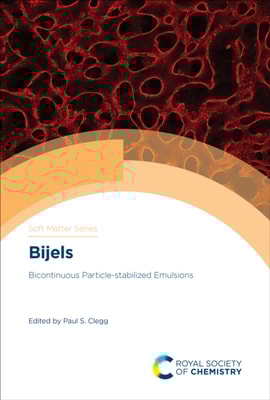
Bicontinuous interfacially jammed emulsion gels, now commonly termed 'bijels' are a class of soft materials, in which interpenetrating, continuous domains of two immiscible fluids are maintained in a rigid arrangement by a jammed layer of colloidal particles at their interface.
Bicontinuous interfacially jammed emulsion gels, now commonly termed 'bijels' are a class of soft materials, in which interpenetrating, continuous domains of two immiscible fluids are maintained in a rigid arrangement by a jammed layer of colloidal particles at their interface.
Legalization of cannabis extracts around the world has led to a resurgence of interest into research surrounding endocannabinoids (eCBs) and the endocannabinoid system.
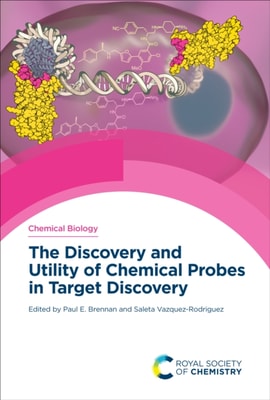
Numerous genetic methods can be utilised to link a phenotype to a single molecular target but annotated small molecule chemical probes and even entire chemogenomic libraries are increasingly being used as a complementary approach.
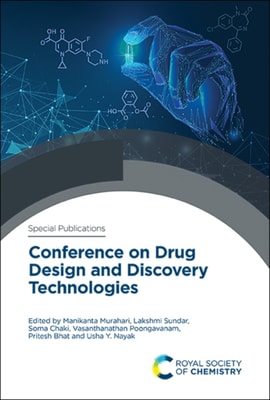
This publication is based on peer-reviewed manuscripts from the 2019 Conference on Drug Design & Discovery Technologies (CDDT) held at Ramaiah University of Applied Sciences, India.
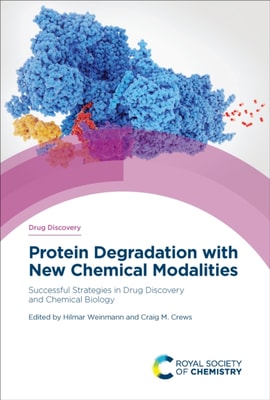
Targeting protein degradation using small molecules is one of the most exciting small-molecule therapeutic strategies in decades and a rapidly growing area of research.
Legalization of cannabis extracts around the world has led to a resurgence of interest into research surrounding endocannabinoids (eCBs) and the endocannabinoid system.
Numerous genetic methods can be utilised to link a phenotype to a single molecular target but annotated small molecule chemical probes and even entire chemogenomic libraries are increasingly being used as a complementary approach.
Targeting protein degradation using small molecules is one of the most exciting small-molecule therapeutic strategies in decades and a rapidly growing area of research.
Fibrosis is a condition with globally high unmet medical need, and as such is a highly active area of academic and pharmaceutical research covering multiple treatment targets, organs, tissues and therapeutic approaches.
The Medicinal Chemist's Guide to Solving ADMET Challenges summarizes a series of design strategies and tactics that have been successfully employed across pharmaceutical and academic laboratories to solve common ADMET issues.
Green chemistry has progressed from being a driver for change in the chemical and allied industries to being a critical part of chemical education at all levels.
The covalent conjugation of potent cytotoxic agents to monoclonal antibodies, known as antibody-drug conjugates (ADCs) is a powerful approach in the field of targeted treatment of cancer.
The covalent conjugation of potent cytotoxic agents to monoclonal antibodies, known as antibody-drug conjugates (ADCs) is a powerful approach in the field of targeted treatment of cancer.
Authored by leading experts in the enzymology of natural product biosynthesis, this completely revised and updated edition provides a description of the types of natural products, the biosynthetic pathways that enable the production of these molecules, and an update on the discovery of novel products in the post-genomic era.
From the earliest-known elements to those named in 2016, this book takes a comprehensive look at the development of the periodic table - and reveals untold stories, unsung pioneers and plenty of fascinating science along the way.
Building on decades of "e;host-guest"e; research, recent years have seen a surge of activity in water-soluble supramolecular receptors for protein recognition and assembly.
Building on decades of "e;host-guest"e; research, recent years have seen a surge of activity in water-soluble supramolecular receptors for protein recognition and assembly.
The chemistry that occurs within confined spaces is the product of a collection of forces, often beyond the molecule, and is not easily ascribed to singular factors.
The chemistry that occurs within confined spaces is the product of a collection of forces, often beyond the molecule, and is not easily ascribed to singular factors.
The concept of nanoarchitechtonics was introduced to describe the correct manipulation of nanoscale materials in the creation of nano-devices and applications.
The concept of nanoarchitechtonics was introduced to describe the correct manipulation of nanoscale materials in the creation of nano-devices and applications.
This annual review of the literature presents a comprehensive and critical survey of the vast field of study involving organophosphorus compounds, from phosphines and related P-C bonded compounds to phosphorus acids, phosphine chalcogenides and nucleotides.
Smart materials are of significant interest and this is the first textbook to provide a comprehensive graduate level view of topics that relate to this field.
The unique structures and properties of dendrimers make them attractive for many applications, from drug delivery and antimicrobial agents to catalysis and as functional materials.
Originally published in Portuguese, this book is divided into three sections: the chemistry of aldehydes, ketones, nitriles, imines and derivatives; the chemistry of carboxylic and carbonic acids and derivatives; and the chemistry of alpha, beta-unsaturated carbonyls.
Cucurbiturils (CBs) are a young family of molecular containers, able to form stable complexes with various guests, including drug molecules, amino acids and peptides, saccharides, dyes, hydrocarbons, perfluorinated hydrocarbons, and proteins.
Thermoelectric materials have received a great deal of attention in energy-harvesting and cooling applications, primarily due to their intrinsic low cost, energy efficient and eco-friendly nature.
Smart materials constructed through supramolecular assemblies have been receiving considerable attention because of their potential applications, which include self-healing materials, energy storage, photonic devices, sensors and theranostics.
Peptide therapy has become a key strategy in innovative drug development, however, one of the potential barriers for the development of novel peptide drugs in the clinic is their deficiencies in clearly defined chemistry, manufacturing and controls (CMC) strategy from clinical development to commercialization.
Since the introduction of FT-NMR spectroscopy around five decades ago, NMR has achieved significant advances in hardware and methodologies, accompanied with the enhancement of spectral resolution and signal sensitivity.
Concerns about the adverse health effects of chemicals and radiation present in the environment and at workplaces have created the need for better detection systems to assess their potential to cause DNA damage in humans and other organisms across ecosystems.