This book deals with polypyrazolylborates (scorpionates), a class of ligands known since 1966, but becoming rapidly popular with inorganic, organometallic and coordination chemists since 1986, because of their versatility and user-friendliness.
The Bartonian Legacy is a collection of memoirs, reminiscences and biographical details regarding Sir Derek Barton (1918-1998) who was one of the most influential organic chemists of the 20th Century.
Plasma Polymer Films examines the current status of the deposition and characterization of fluorocarbon-, hydrocarbon- and silicon-containing plasma polymer films and nanocomposites, with plasma polymer matrix.
New Strategies Targeting Cancer Metabolism: Anticancer Drugs, Synthetic Analogues and Antitumor Agents presents up-to-date synthetic strategies for three categories of antimetabolites: antifolates, purines and pyrimidines, the main classes of antimetabolites which are integrated into various pharmaceutical agents.
Fluoropolymers display a wide range of remarkable properties and are used in a number of applications including high performance elastomers, thermoplastics, coatings for optical fibers, and hydrophobic and lipophobic surfaces.
Building on key reactions presented in Volume 1, Synthetic Methods in Drug Discovery Volume 2 covers a range of important reaction types including organometallic chemistry, fluorination approaches and asymmetric methods as well as new and exciting areas such as Csp2-Csp3 couplings, catalytic amide bond forming reactions, hydrogen borrowing chemistry and methods to access novel motifs and monomers.
Meeting the desire for a comprehensive book that collects and curates the vast amount of knowledge gained in the field of singlet oxygen, this title covers the physical, chemical and biological properties of this reactive oxygen species and also its increasingly important applications across chemical, environmental and biomedical areas.
For years, concepts and models relevant to the fields of molecular electronics and organic electronics have been invented in parallel, slowing down progress in the field.
Organophosphorus chemistry is a very broad and exciting field, with potential opportunities to the researchers involved in multi-disciplinary areas of scientific endeavour including organic, medicinal, pharmaceutical, agricultural and industrial chemistry.
With the increase in volume, velocity and variety of information, researchers can find it difficult to keep up to date with the literature in their field.
Industrial and academic scientists face increasing challenges to find cost-effective and environmentally sound catalysts for a variety of applications.
Fluoropolymers display a wide range of remarkable properties and are used in a number of applications including high performance elastomers, thermoplastics, coatings for optical fibers, and hydrophobic and lipophobic surfaces.
Due to the lower costs of nickel catalysts and the high abundance of nickel complexes, enantioselective nickel-mediated transformations have received a continuous and growing attention in recent years.
The field of aromatic interactions, the fundamental nature of substituent effects and the identification of contacts between anions and aromatic systems have generated stimulating arguments in recent years.
Chemically-modified carbon nanotubes (CNTs) exhibit a wide range of physical and chemical properties which makes them an attractive starting material for the preparation of super-strong and highly-conductive fibres and films.
This book details polysaccharides and other important biomacromolecules covering their source, production, structures, properties, and current and potential application in the fields of biotechnology and medicine.
This updated new edition of the well established and highly readable introductory text book on polymer science is ideal for those requiring a broad overview of the subject.
Antimicrobial polymers are materials that prevent microorganism growth and are needed for many everyday applications from food packaging and water treatment to medicine and healthcare.
Porous carbon materials are at the heart of many applications, including renewable energy storage and generation, due to their superior physical properties and availability.
Quantum dots are nano-sized particles of semiconducting material, typically chalcogenides or phosphides of metals found across groups II to VI of the periodic table.
Information technology is essential to our daily life, and the limitations of silicone based memory systems mean a growing amount of research is focussed on finding an inexpensive alternative to meet our needs and allow the continued development of the industry.
There is great commercial interest in hyperbranched polymers from manufacturers of polymer formulations, additives and coatings, polymer electronics and pharmaceuticals.
There is much interest in biodegradable polymers for different uses and polyhydroxyalkanoates (PHAs) have potential applications in a broad range of areas from food packaging to biomedical applications.
Polymer solar cells have gained much attention as they offer a potentially economic and viable way of commercially manufacturing lightweight, flexible and low-cost photovoltaics.
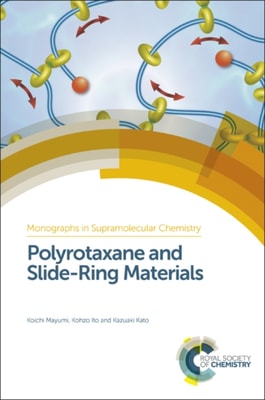
Polyrotaxane is a necklace-like supramolecule in which many cyclic molecules are threaded into a single polymer chain and can be cross-linked to produce functional polymeric materials.
Porous carbon materials are at the heart of many applications, including renewable energy storage and generation, due to their superior physical properties and availability.
Meeting the desire for a comprehensive book that collects and curates the vast amount of knowledge gained in the field of singlet oxygen, this title covers the physical, chemical and biological properties of this reactive oxygen species and also its increasingly important applications across chemical, environmental and biomedical areas.
Biomass-derived sugars provide a rich, renewable feedstock for a diverse range of chemicals, making them a promising and feasible source for the sustainable manufacture of a variety of valuable products.
Synthetic receptor molecules, molecules that mimic antibody recognition, are widely used for developing drug leads; drug delivery vehicles; imaging agents; sensing agents; capture agents and separation systems.