It was a great honor for us to organize ChiCat, a symposium devoted to Chiral Reactions in Heterogeneous Catalysis and to be the hostsofmore than 120 scientists coming from everywhere in the industrialized world, to celebrate together one century of existence ofInstitut Meurice.
In order to adapt the properties of living materials to their biological functions, nature has developed unique polyelectrolytes with outstanding physical, chemical and mechanical behavior.
This unique book covers the latest surface science studies on model catalysts, including single crystals, non-colloidal nanocatalysts, and nanoparticles in various forms with the control of size, shape and composition.
Convection in Porous Media, 4th Edition, provides a user-friendly introduction to the subject, covering a wide range of topics, such as fibrous insulation, geological strata, and catalytic reactors.
This book analyzes conventional fixed-bed reactors such as trickle-bed, bubble (packed) column, and multitubular reactors with regard to process efficiency, design and safety.
The increase of greenhouse gases in the atmosphere and the decrease of the available amount of fossil fuels necessitate finding new alternative and sustainable energy sources in the near future.
Palladium-catalysed cross-coupling reactions constitute a powerful class of chemical methods for the creation of carbon-carbon and carbon-heteroatom bonds used in organic synthesis, famously recognized by the 2010 Nobel Prize awarded to Richard F.
The union of covalent and noncovalent chemistries manifested in the mechanical bond represents one of the great chemical triumphs of the last half century.
Since the first works introducing the aluminum intercalated clay family in the early 1970s, interest in the synthesis of pillared interlayered clays has increased tremendously, especially research into the properties and applications of new synthesis methods.
This volume analyzes and summarizes recent developments and breakthroughs in several key interfacial electrochemical systems in fuel cell electrocatatalysis.
Ruthenium Oxidation Complexes explores ruthenium complexes, particularly those in higher oxidation states, which function as useful and selective organic oxidation catalysts.
Chemical Kinetics and Reaction Dynamics brings together the major facts and theories relating to the rates with which chemical reactions occur from both the macroscopic and microscopic point of view.
Metal Catalysed Reactions in Ionic Liquids is the first non-edited book on the subject of metal catalyzed reactions in ionic liquids to cover the literature from its origins until early 2005.
"e;Heterocycles from Transition Metal Catalysis: Formation and Functionalization"e; provides a concise summary of the prominent role of late transition metal (palladium, nickel, copper) catalysed processes in the synthesis and functionalization of heterocyclic systems.
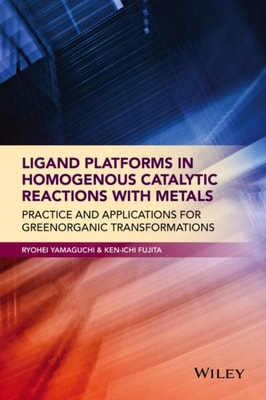
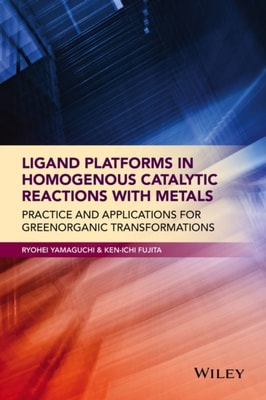
Serving as a user's manual for synthetic organic and catalytic chemists, this book guides chemists in the design and choice of ligands to catalyze organic reactions and apply the results for more efficient, green, and practical synthesis.
Serving as a user's manual for synthetic organic and catalytic chemists, this book guides chemists in the design and choice of ligands to catalyze organic reactions and apply the results for more efficient, green, and practical synthesis.
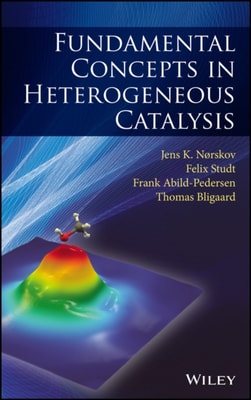
This book is based on a graduate course and suitable as a primer for any newcomer to the field, this book is a detailed introduction to the experimental and computational methods that are used to study how solid surfaces act as catalysts.
This book is based on a graduate course and suitable as a primer for any newcomer to the field, this book is a detailed introduction to the experimental and computational methods that are used to study how solid surfaces act as catalysts.
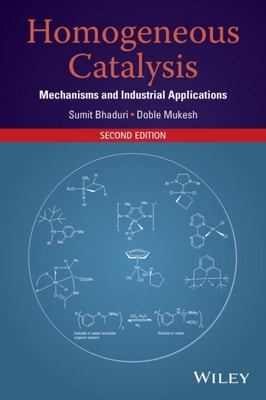
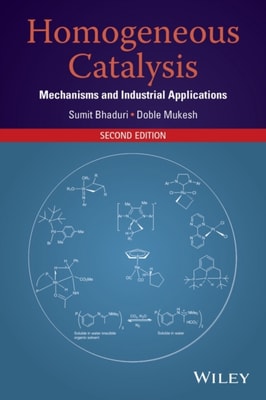
Over the last decade, the area of homogeneous catalysis with transition metal has grown in great scientific interest and technological promise, with research in this area earning three Nobel Prizes and filing thousands of patents relating to metallocene and non-metallocene single site catalysts, asymmetric catalysis, carbon-carbon bond forming metathesis and cross coupling reactions.
Over the last decade, the area of homogeneous catalysis with transition metal has grown in great scientific interest and technological promise, with research in this area earning three Nobel Prizes and filing thousands of patents relating to metallocene and non-metallocene single site catalysts, asymmetric catalysis, carbon-carbon bond forming metathesis and cross coupling reactions.
Photocatalytic water splitting is a promising strategy for capturing energy from the sun by coupling light harvesting and the oxidation of water, in order to create clean hydrogen fuel.
Photocatalytic water splitting is a promising strategy for capturing energy from the sun by coupling light harvesting and the oxidation of water, in order to create clean hydrogen fuel.
Sets forth an important group of environmentally friendly organic reactions With contributions from leading international experts in organic synthesis, this book presents all the most important methodologies for stereoselective organocatalysis, fully examining both the activation mode as well as the type of bond formed.
Sets forth an important group of environmentally friendly organic reactions With contributions from leading international experts in organic synthesis, this book presents all the most important methodologies for stereoselective organocatalysis, fully examining both the activation mode as well as the type of bond formed.
Exhibiting both homogeneous and heterogeneous catalytic properties, nanocatalysts allow for rapid and selective chemical transformations, with the benefits of excellent product yield and ease of catalyst separation and recovery.
Exhibiting both homogeneous and heterogeneous catalytic properties, nanocatalysts allow for rapid and selective chemical transformations, with the benefits of excellent product yield and ease of catalyst separation and recovery.
Demonstrates the advantages of catalytic cascade reactions for synthesizing natural products and pharmaceuticals Riding the wave of green chemistry, catalytic cascade reactions have become one of the most active research areas in organic synthesis.