Demonstrates the advantages of catalytic cascade reactions for synthesizing natural products and pharmaceuticals Riding the wave of green chemistry, catalytic cascade reactions have become one of the most active research areas in organic synthesis.
HELPS RESEARCHERS DEVELOP NEW CATALYSTS FOR SUSTAINABLE FUEL AND CHEMICAL PRODUCTION Reviewing the latest developments in the field, this book explores the in-situ characterization of heterogeneous catalysts, enabling readers to take full advantage of the sophisticated techniques used to study heterogeneous catalysts and reaction mechanisms.
HELPS RESEARCHERS DEVELOP NEW CATALYSTS FOR SUSTAINABLE FUEL AND CHEMICAL PRODUCTION Reviewing the latest developments in the field, this book explores the in-situ characterization of heterogeneous catalysts, enabling readers to take full advantage of the sophisticated techniques used to study heterogeneous catalysts and reaction mechanisms.
Opens the door to the sustainable production of pharmaceuticals and fine chemicals Driven by both public demand and government regulations, pharmaceutical and fine chemical manufacturers are increasingly seeking to replace stoichiometric reagents used in synthetic transformations with catalytic routes in order to develop greener, safer, and more cost-effective chemical processes.
Opens the door to the sustainable production of pharmaceuticals and fine chemicals Driven by both public demand and government regulations, pharmaceutical and fine chemical manufacturers are increasingly seeking to replace stoichiometric reagents used in synthetic transformations with catalytic routes in order to develop greener, safer, and more cost-effective chemical processes.
Over the last 60 years the increasing knowledge of transition metal chemistry has resulted in an enormous advance of homogeneous catalysis as an essential tool in both academic and industrial fields.
Over the last 60 years the increasing knowledge of transition metal chemistry has resulted in an enormous advance of homogeneous catalysis as an essential tool in both academic and industrial fields.
Dieser Band gibt einen Überblick über die jüngsten Entwicklungen und die Möglichkeiten des Einsatzes der Fließchemie im Bereich der heterozyklischen Synthese.
Catalysis in Electrochemistry: From Fundamental Aspects to Strategies for Fuel Cell Development is a modern, comprehensive reference work on catalysis in electrochemistry, including principles, methods, strategies, and applications.
Catalysis in Electrochemistry: From Fundamental Aspects to Strategies for Fuel Cell Development is a modern, comprehensive reference work on catalysis in electrochemistry, including principles, methods, strategies, and applications.
An expert overview of new technologies guiding the construction of a sustainable society This compendium of important insights from sixty distinguished international scholars looks at the significant advances in progressive environmental technology especially the molecular engineering used on plants, animals, and microorganisms as the game changer in the high-stakes race to reverse earth-damaging practices.
An expert overview of new technologies guiding the construction of a sustainable society This compendium of important insights from sixty distinguished international scholars looks at the significant advances in progressive environmental technology especially the molecular engineering used on plants, animals, and microorganisms as the game changer in the high-stakes race to reverse earth-damaging practices.
Contains the presentations and discussions that took place during a symposium at the CIBA Foundation on October 1-3, 1990 on the subject of catalytic antibodies.
This volume concentrates on catalysis in biochemical environments, giving new perspectives to previous research, current developments and future directions.
Provides a clear and systematic description of the key role played by catalyst reactant dynamism including: (i) the fundamental processes at work, (ii) the origin of its general and physical features, (iii) the way it has evolved, and (iv) how it relates to catalysis in man-made systems.
A compilation of recent advances and applications in asymmetric catalysis The field of asymmetric catalysis has grown rapidly and plays a key role in drug discovery and pharmaceuticals.
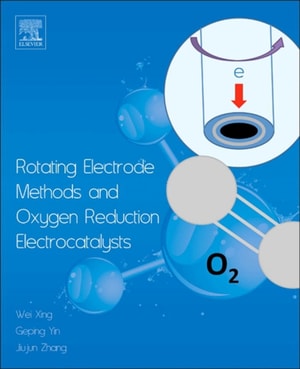
Rotating Electrode Methods and Oxygen Reduction Electrocatalysts provides the latest information and methodologies of rotating disk electrode and rotating ring-disk electrode (RDE/RRDE) and oxygen reduction reaction (ORR).
Heterogeneous Catalytic Materials discusses experimental methods and the latest developments in three areas of research: heterogeneous catalysis; surface chemistry; and the chemistry of catalysts.
This book is an excellent compilation of cutting-edge research in heterogeneous catalysis and related disciplines - surface science, organometallic catalysis, and enzymatic catalysis.
This book covers a significant number of R&D projects, performed mostly after 2000, devoted to the understanding and prevention of performance degradation processes in polymer electrolyte fuel cells (PEFCs).
Much has been written about fundamental aspects of catalysis, yet despite their universal applications details concerning commercial catalysts and information about actual operating conditions are not readily available.
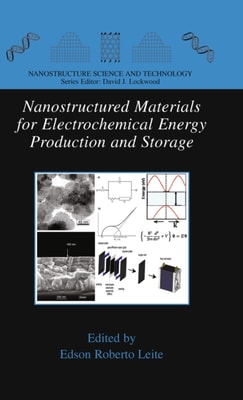
This work presents fundamental and other relevant properties of nanostructured materials that can be the basis of improved performance in a wide range of alternative energy devices.
Over the past few decades, mankind has observed an unprecedented and remarkable growth in industry, resulting in a more prosperous lifestyle for peoples of many countries.
This manual of solutions to the problems in "e;Kinetics of Catalytic Reactions"e; has been prepared to assist those who use this book in a teaching function.
Recent significant developments in sensor science and technology, such as the design of ultramicroelectrodes and arrays, are providing considerable stimulation in research.
This unique book, drawing on the author's lifetime experience, critically evaluates the extensive literature on the field of Metal-Catalysed Reactions of Hydrocarbons.
Since the discovery of ferrocene and the sandwich-type complexes, the development of organometallic chemistry took its course like an avalanche and became one of the scientific success stories of the second half of the twentieth century.
The book is focused on Bio Products derived from renewable resources processed by conventional catalytic thermochemical processes and or emerging bioprocessing techniques including fermentation and synthetic biology.
The fields of hydrodesulfurization (HDS) and hydrodenitrogenation (HDN) continue to attract the attention of researchers in the various disciplines connected to these fascinating problems that represent two of the key outstanding chemical challenges for the petroleum refining industry in view of their very strong environmental and commercial implications.
Over the past 20 years aqueous organometallic catalysis has found applications in small- scale organic synthesis in the laboratory, as well as in the industrial production of chemicals with a combined output close to one million tons per year.