Computers have been applied to problems in chemistry and the chemical sciences since the dawn of the computer age; however, it is only in the past ten or fifteen years that we have seen the emergence of computational chemistry as a field of research in its own right.
While the relevant features and properties of nanosystems necessarily depend on nanoscopic details, their performance resides in the macroscopic world.
The theoretical methods of quantum chemistry have matured to the point that accurate predictions can be made and experiments can be understood for a wide range of important gas-phase phenomena.
The first two editions of Concise Chemical Thermodynamics proved to be a very popular introduction to a subject many undergraduate students perceive to be difficult due to the underlying mathematics.
As a result of new statistical and mathematical approaches, improved visualization tools, and recognition by international regulatory groups, quantitative structure-activity relationships (QSARs) now play important roles in pharmacology for the design of new drugs as well as in toxicology and ecotoxicology for hazard identification and risk assessm
While modern computational methods can provide us with the wave function of a molecule in numerical form, most computer programs lack the sophisticated tools needed to extract chemical concepts from these wave functions.
Nanoporous materials are critical to various fields of research, including ion exchange, separation, catalysis, sensor applications, biological molecular isolation, and purification.
Molecular modeling is becoming an increasingly important part of chemical research and education as computers become faster and programs become easier to use.
An In-Depth View of Hardware Issues, Programming Practices, and Implementation of Key MethodsExploring the challenges of parallel programming from the perspective of quantum chemists, Parallel Computing in Quantum Chemistry thoroughly covers topics relevant to designing and implementing parallel quantum chemistry programs.
Virtual screening can reduce costs and increase hit rates for lead discovery by eliminating the need for robotics, reagent acquisition or production, and compound storage facilities.
Presenting the first database of its kind, this unique reference illustrates the relationships between the chemistry and developmental toxicity of a number of important pharmaceuticals and industrial toxicants.
Employing a wide range of examples from G-protein-coupled receptors and ligand-gated ion channels, this detailed, single-source reference illustrates the principles of pharmacological analysis and receptor classification that are the basis of rational drug design.
Chemoinformatics draws upon techniques from many disciplines including computer science, mathematics, computational chemistry and data visualisation to tackle these problems.
"e;Molecular Materials with Specific Interactions: Modeling and Design"e; has a very interdisciplinary character and is intended to provide basic information as well as the details of theory and examples of its application to experimentalists and theoreticians interested in modeling molecular properties and putting into practice rational design of new materials.
Computational Studies of RNA and DNA includes, in an integrated way, modern computational studies of nucleic acids, ranging from advanced electronic structure quantum chemical calculations through explicit solvent molecular dynamics (MD) simulations up to mesoscopic modelling, with the main focus given to the MD field.
Molecular dynamics simulations have become instrumental in replacing our view of proteins as relatively rigid structures with the realization that they were dynamic systems, whose internal motions play a functional role.
This book presents design guidelines and implementation approaches for enterprise safety management system as integrated within enterprise integrated systems.
This book provides an introduction to nanofluidics in a simple manner and can be easily followed by senior undergraduate students, graduate students, and other researchers who have some background in fluid mechanics.
This book provides an introduction to nanofluidics in a simple manner and can be easily followed by senior undergraduate students, graduate students, and other researchers who have some background in fluid mechanics.
Protein Actions: Principles and Modeling is aimed at graduates, advanced undergraduates, and any professional who seeks an introduction to the biological, chemical, and physical properties of proteins.
Protein Actions: Principles and Modeling is aimed at graduates, advanced undergraduates, and any professional who seeks an introduction to the biological, chemical, and physical properties of proteins.
Computer Chemistry illustrates the methods and philosophies of how a computer can be instructed to "e;understand"e; chemical facts, formulas and rules.
Computer Chemistry illustrates the methods and philosophies of how a computer can be instructed to "e;understand"e; chemical facts, formulas and rules.
In this volume, we have collected a series of reviews that cover both experimental and theoretical work geared toward the more exact requirements of current SFE applications.
In this volume, we have collected a series of reviews that cover both experimental and theoretical work geared toward the more exact requirements of current SFE applications.
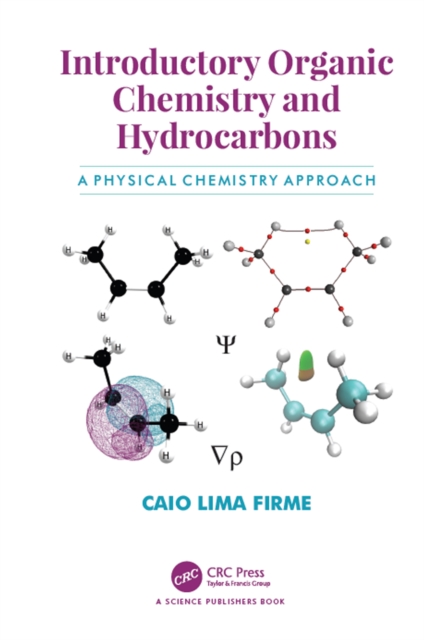
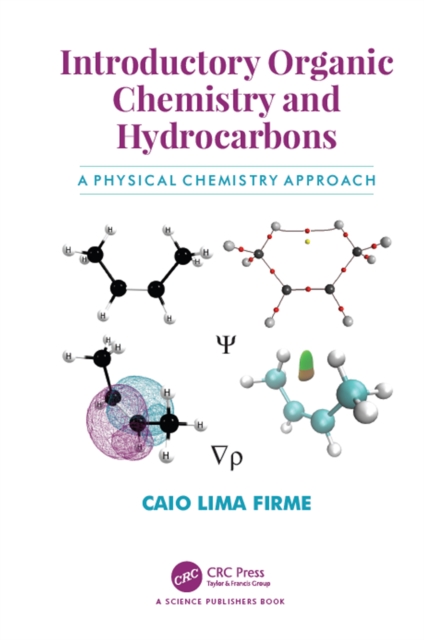
A novel proposal for teaching organic chemistry based on a broader and simplified use of quantum chemistry theories and notions of some statistical thermodynamic concepts aiming to enrich the learning process of the organic molecular properties and organic reactions.
A novel proposal for teaching organic chemistry based on a broader and simplified use of quantum chemistry theories and notions of some statistical thermodynamic concepts aiming to enrich the learning process of the organic molecular properties and organic reactions.
In a living body, a variety of molecules are working in a concerted manner to maintain its life, and to carry forward the genetic information from generation to generation.
In a living body, a variety of molecules are working in a concerted manner to maintain its life, and to carry forward the genetic information from generation to generation.
Due to recent advancements in the development of numerical algorithms and computational hardware, computer simulations of biological membranes, often requiring use of substantial computational resources, are now reaching a mature stage.
Due to recent advancements in the development of numerical algorithms and computational hardware, computer simulations of biological membranes, often requiring use of substantial computational resources, are now reaching a mature stage.