This compelling reevaluation of the relationship between logic and knowledge affirms the key role that the notion of judgement must play in such a review.
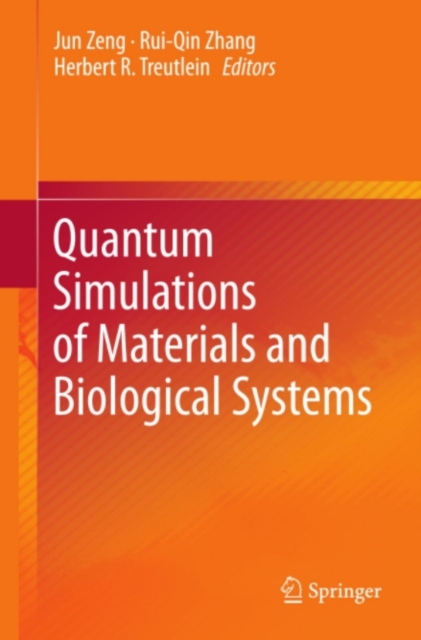
Quantum Simulations of Materials and Biological Systems features contributions from leading world experts in the fields of density functional theory (DFT) and its applications to material and biological systems.
"e;Carbon Bonding and Structures: Advances in Physics and Chemistry"e; features detailed reviews which describe the latest advances in the modeling and characterization of fundamental carbon based materials and recently designed carbon composites.
Advances in the Theory of Quantum Systems in Chemistry and Physics is a collection of 32 selected papers from the scientific contributions presented at the 15th International Workshop on Quantum Systems in Chemistry and Physics (QSCP-XV), held at Magdalene College, Cambridge, UK, from August 31st to September 5th, 2010.
Practical Aspects of Computational Chemistry I: An Overview of the Last Two Decades and Current Trends gathers the advances made within the last 20 years by well-known experts in the area of theoretical and computational chemistry and physics.
Practical Aspects of Computational Chemistry II: An Overview of the Last Two Decades and Current Trends gathers the discussion of advances made within the last 20 years by well-known experts in the area of theoretical and computational chemistry and physics.
Heavy metals always pose serious ecological risks when released into the environment due to their elemental non-degradable nature, regardless of their chemical form.
The Mathematics and Topology of Fullerenes presents a comprehensive overview of scientific and technical innovations in theoretical and experimental studies.
Practical Aspects of Computational Chemistry I: An Overview of the Last Two Decades and Current Trends gathers the advances made within the last 20 years by well-known experts in the area of theoretical and computational chemistry and physics.
The understanding of electron density as the carrier of all the information of a multielectronic system is implicit in the theorems of density functional theory.
Despite the fact that chemical applications of ultrasound are now widely acknowledged, a detailed presentation of inorganic systems covering nano-particles, catalysis, aqueous chemistry of metallic solutions and their redox characteristics, both from a theoretical and experimental perspective has eluded researchers of this field.
This corrected second edition contains new material which includes solvent effects, the treatment of singlet diradicals, and the fundamentals of computaional chemistry.
The composition of the most remote objects brought into view by the Hubble telescope can no longer be reconciled with the nucleogenesis of standard cosmology and the alternative explanation, in terms of the Λ-Cold-Dark-Matter model, has no recognizable chemical basis.
Brillouin-Wigner Methods for Many-Body Systems gives an introduction to many-body methods in electronic structure theory for the graduate student and post-doctoral researcher.
Advances in the Theory of Atomic and Molecular Systems, is a collection of contributions presenting recent theoretical and computational developments that provide new insights into the structure, properties, and behavior of a variety of atomic and molecular systems.
The art of chemistry is to thoroughly understand the properties of molecular compounds and materials and to be able to prepare novel compounds with p- dicted and desirable properties.
This unique monograph covers recent theoretical and experimental results on the complex character of f electrons in materials containing lanthanides (rare earths) or actinides, such as alpha-cerium and delta-plutonium.
"e;Practical Aspects of Computational Chemistry"e; presents contributions on a range of aspects of Computational Chemistry applied to a variety of research fields.
Advances in the Theory of Atomic and Molecular Systems, is a collection of contributions presenting recent theoretical and computational developments that provide new insights into the structure, properties, and behavior of a variety of atomic and molecular systems.
Channels of nanotubular dimensions exist in a variety of materials (examples are carbon nanotubes and the nanotubular channels of zeolites and zeotypes) and show promise for numerous applications due to their unique properties.
This textbook contains the essential knowledge in modeling, simulation, analysis, and applications in dealing with biological cellular control systems.
Este es un libro cuya escritura comporta una dificultad extraordinaria, pues en él la autora intenta comunicar los secretos de la experiencia mística unitiva.
Una importante área de la experiencia humana donde la ignorancia se densifica con el paso de los siglos es la relativa a la interrelación del hombre con las fuerzas que rigen y gobiernan el universo, con los planos superiores de la existencia, con la divinidad: con Dios.
Javier Melloni, teólogo y antropólogo especializado en mística comparada y diálogo intercultural e interreligioso, ofrece al lector una obra lenta y en tono poético, gestada poco a poco, para ser leída también pausadamente.
Hoy en día el símbolo se identifica muy a menudo con ciertos esoterismos de escasa profundidad intelectual, con una especie de magia infundada sin relación alguna con la religión o las ciencias humanas.