Modeling Nanoscale Imaging in Electron Microscopy presents the recent advances that have been made using mathematical methods to resolve problems in microscopy.
Advanced Topics in Shannon Sampling and Interpolation Theory is the second volume of a textbook on signal analysis solely devoted to the topic of sampling and restoration of continuous time signals and images.
During the last decade there has been a renewed interest in research on supramolecular assemblies in solutions, such as micelles and microemulsions, not only because of their extensive applications in industries dealing with catalysts, detergency, biotechnology, and enhanced oil recovery, but also due to the development of new and more powerful experimental and theoretical tools for probing the microscopic behavior of these systems.
This IMA Volume in Mathematics and its Applications SHOCK INDUCED TRANSITIONS AND PHASE STRUCTURES IN GENERAL MEDIA is based on the proceedings of a workshop that was an integral part of the 1990-91 IMA program on "e;Phase Transitions and Free Boundaries.
This outline of statistics as an aid in decision making will introduce a reader with limited mathematical background to the most important modern statistical methods.
The fifth volume in this series is focused on the chemical and physical interactions between rocks undergoing metamorphism and the fluids that they generate and that pass through them.
The propagation of acoustic and electromagnetic waves in stratified media is a subject that has profound implications in many areas of applied physics and in engineering, just to mention a few, in ocean acoustics, integrated optics, and wave guides.
One of the basic tenets of science is that deterministic systems are completely predictable-given the initial condition and the equations describing a system, the behavior of the system can be predicted 1 for all time.
In this book I present, in a systematic form, some local theorems on existence, uniqueness, and analytic dependence on the load, which I have recently obtained for some types of boundary value problems of finite elasticity.
This IMA Volume in Mathematics and its Applications MATHEMATICAL APPROACHES TO BIOMOLECULAR STRUCTURE AND DYNAMICS is one of the two volumes based on the proceedings of the 1994 IMA Sum- mer Program on "e;Molecular Biology"e; and comprises Weeks 3 and 4 of the four-week program.
Ever since the seminal works on traveling waves and morphogenesis by Fisher, by Kolmogorov, Petrovski and Piscunov, and by Turing, scientists from many disciplines have been fascinated by questions concerning the formation of steady or dynamic patterns in reactive media.
What our teachers don't tell us in school is that we will spend most of our scientific or engineering career in front of computers, trying to beat them into submission.
How to Use This Handbook The MATLAB Handbook is a complete reference tool for the MATLAB computation language, and is written for all MATLAB users, regardless of their discipline or field(s) of interest.
The purpose of this book is to provide the reader with a comprehensive introduction to the applications of symmetry analysis to ordinary and partial differential equations.
Polycrystalline metals, porous rocks, colloidal suspensions, epitaxial thin films, gels, foams, granular aggregates, sea ice, shape-memory metals, magnetic materials, and electro-rheological fluids are all examples of materials where an understanding of the mathematics on the different length scales is a key to interpreting their physical behavior.
This IMA Volume in Mathematics and its Applications DIAGNOSIS AND PREDICTION is one of the series based on the proceedings of a very successful 1997 IMA Summer Program on "e;Statistics in the Health Sciences.
This IMA Volume in Mathematics and its Applications MULTIPARTICLE QUANTUM SCATTERING WITH APPLICATIONS TO NUCLEAR, ATOMIC AND MOLECULAR PHYSICS is based on the proceedings of a workshop with the same title, which was an integral part of the 1994-1995 IMA program on "e;Waves and Scattering.
This book gives a new and direct approach into the theories of special functions with emphasis on spherical symmetry in Euclidean spaces of ar- bitrary dimensions.
This IMA Volume in Mathematics and its Applications AMORPHOUS POLYMERS AND NON-NEWTONIAN FLUIDS is in part the proceedings of a workshop which was an integral part of the 1984-85 IMA program on CONTINUUM PHYSICS AND PARTIAL DIFFERENTIAL EQUATIONS We are grateful to the Scientific Committee: Haim Brezis Constantine Dafermos Jerry Ericksen David Kinderlehrer for planning and implementing an exciting and stimulating year-long program.
This IMA Volume in Mathematics and its Applications DYNAMICAL ISSUES IN COMBUSTION THEORY is based on the proceedings of a workshop which was an integral part of the 1989-90 IMA program on "e;Dynamical Systems and their Applications.
Initiates of the Flame is the earliest literary work by the esteemed Manly P Hall, one of the foremost mystics of his era- one that stretched on for more than half a century.
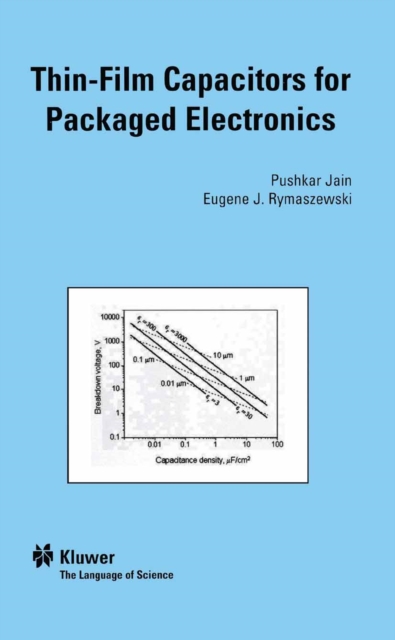
Thin-Film Capacitors for Packaged Electronics deals with the capacitors of a wanted kind, still needed and capable of keeping pace with the demands posed by ever greater levels of integration.
Printed Organic And Molecular Electronics was compiled to create a reference that included existing knowledge from the most renowned industry, academic, and government experts in the fields of organic semiconductor technology, graphic arts printing, micro-contact printing, and molecular electronics.
Interest in structures with nanometer-length features has significantly increased as experimental techniques for their fabrication have become possible.