This book is devoted to the complex nature of fire, the intricasies of the combustion process, the influence of chemical and physical properties of fuels, and the proper means of fire extinguishment.
Thermodynamics Problem Solving in Physical Chemistry: Study Guide and Map is an innovative and unique workbook that guides physical chemistry students through the decision-making process to assess a problem situation, create appropriate solutions, and gain confidence through practice solving physical chemistry problems.
Thermodynamics Problem Solving in Physical Chemistry: Study Guide and Map is an innovative and unique workbook that guides physical chemistry students through the decision-making process to assess a problem situation, create appropriate solutions, and gain confidence through practice solving physical chemistry problems.
Thermal Convection - Patterns, Stages of Evolution and Stability Behavior provides the reader with an ensemble picture of the subject, illustrating the state-of-the-art and providing the researchers from universities and industry with a basis on which they are able to estimate the possible impact of a variety of parameters.
Presents a solid introduction to thermal analysis, methods, instrumentation, calibration, and application along with the necessary theoretical background.
Simplified, innovative alternative to standard calculus-based thermodynamics This textbook proves how equilibrium thermodynamics, a traditionally difficult subject, can be accurately expressed using basic high school geometry concepts.
A completely updated, expanded edition of a longstanding and influential text on chemical thermodynamics Covers the logical foundations and interrelationships of thermodynamics and their application to problems that are commonly encountered by the chemist.
A comprehensive introduction, examining both macroscopic and microscopic aspects of the subject, the book applies the theory of thermodynamics to a broad range of materials; from metals, ceramics and other inorganic materials to geological materials.
Navigate the complexities of biochemical thermodynamics with Mathematica(r) Chemical reactions are studied under the constraints of constant temperature and constant pressure; biochemical reactions are studied under the additional constraints of pH and, perhaps, pMg or free concentrations of other metal ions.
Solution Thermodynamics and its Application to Aqueous Solutions: A Differential Approach, Second Edition introduces a differential approach to solution thermodynamics, applying it to the study of aqueous solutions.
Traditionally, the teaching of phase equilibria emphasizes the relationships between the thermodynamic variables of each phase in equilibrium rather than its engineering applications.
Reaction Rate Theory and Rare Events bridges the historical gap between these subjects because the increasingly multidisciplinary nature of scientific research often requires an understanding of both reaction rate theory and the theory of other rare events.
The book begins with an overview of the phase diagrams of fluid mixtures (fluid = liquid, gas, or supercritical state), which can show an astonishing variety when elevated pressures are taken into account; phenomena like retrograde condensation (single and double) and azeotropy (normal and double) are discussed.
Combustion Theory delves deeper into the science of combustion than most other texts and gives insight into combustions from a molecular and a continuum point of view.
Combustion Theory delves deeper into the science of combustion than most other texts and gives insight into combustions from a molecular and a continuum point of view.
Environmental engineering, is by its very nature, interdisciplinary and it is a challenge to develop courses that will provide students with a thorough broad-based curriculum that includes every aspect of the environmental engineering profession.
Environmental engineering, is by its very nature, interdisciplinary and it is a challenge to develop courses that will provide students with a thorough broad-based curriculum that includes every aspect of the environmental engineering profession.
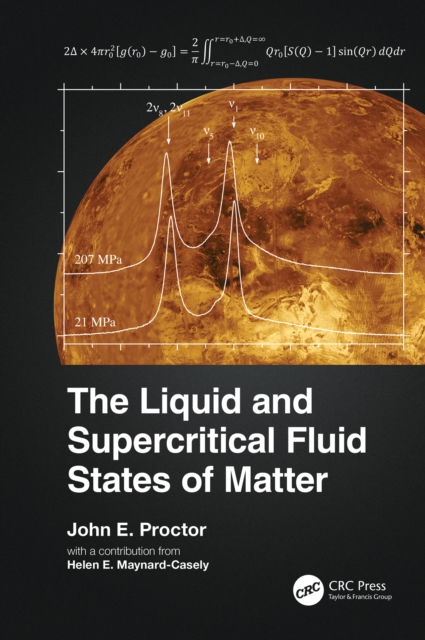
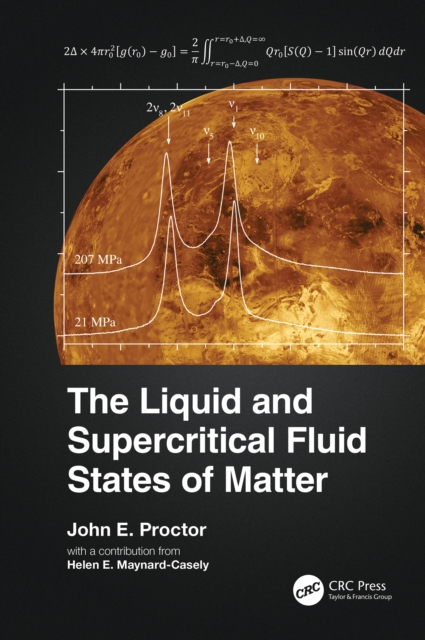
This book addresses graduate students and researchers wishing to better understand the liquid and supercritical fluid states of matter, presenting a single cohesive treatment of the liquid and supercritical fluid states using the gas-like and solid-like approaches.
This book addresses graduate students and researchers wishing to better understand the liquid and supercritical fluid states of matter, presenting a single cohesive treatment of the liquid and supercritical fluid states using the gas-like and solid-like approaches.
Thermodynamics can never be made easy, but with the right approach and a consistent use of scientific terms it can be made less opaque, and it can give a person, who is prepared to try, an insight into how science explains why things happen the way they do.
III-V semiconductors have attracted considerable attention due to their applications in the fabrication of electronic and optoelectronic devices as light emitting diodes and solar cells.
III-V semiconductors have attracted considerable attention due to their applications in the fabrication of electronic and optoelectronic devices as light emitting diodes and solar cells.
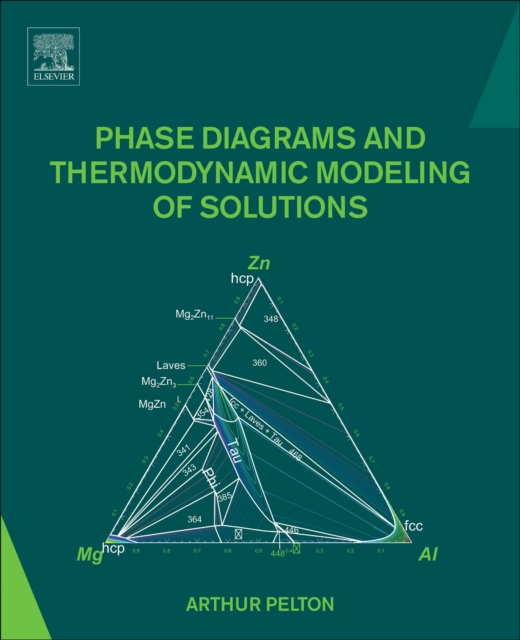
Phase Diagrams and Thermodynamic Modeling of Solutions provides readers with an understanding of thermodynamics and phase equilibria that is required to make full and efficient use of these tools.
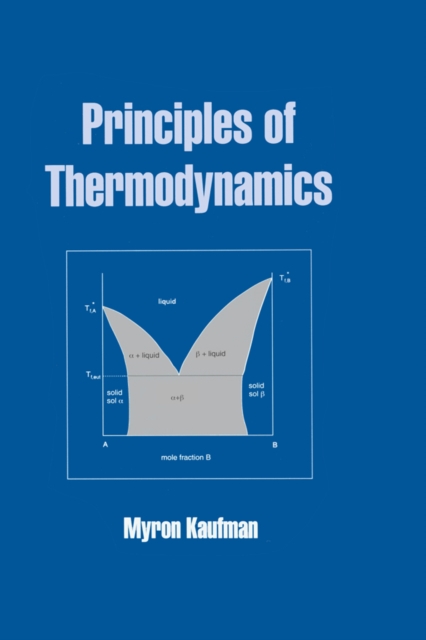
Ideal for one- or two-semester courses that assume elementary knowledge of calculus, This text presents the fundamental concepts of thermodynamics and applies these to problems dealing with properties of materials, phase transformations, chemical reactions, solutions and surfaces.
This book provides an introduction to the essentials of relativistic effects in quantum chemistry, and a reference work that collects all the major developments in this field.
This pioneering graduate textbook provides readers with the concepts and practical tools required to understand the maximum entropy principle, and apply it to an understanding of ecological patterns.
This pioneering graduate textbook provides readers with the concepts and practical tools required to understand the maximum entropy principle, and apply it to an understanding of ecological patterns.
This novel, interdisciplinary text presents biological understanding in terms of general underlying principles, treating energy as the overarching theme and emphasizing the all-pervading influence of energy transformation in every process, both living and non-living.
Modelling of heterogeneous processes, such as electrochemical reactions, extraction or ion-exchange, usually requires solving the transport problem associated to the process.
Energy, Entropy, and the Flow of Nature presents the essential principles of energetics (thermodynamics) in a straight-forward, easy to understand, and logically-consistent manner.
This book provides an introduction to the essentials of relativistic effects in quantum chemistry, and a reference work that collects all the major developments in this field.
Phase Diagrams and Thermodynamic Modeling of Solutions provides readers with an understanding of thermodynamics and phase equilibria that is required to make full and efficient use of these tools.
Throughout its previous four editions, Combustion has made a very complex subject both enjoyable and understandable to its student readers and a pleasure for instructors to teach.
Thermodynamics of Non-Equilibrium Processes for Chemists with a Particular Application to Catalysis consists of materials adapted from lectures on the thermodynamics of nonequilibrium processes that have been taught at the Department of Natural Sciences of Novosibirsk State University since 1995.
An important challenge brought to chemical engineering by new emerging technologies, in particular then by nano and bio technologies, is to deal with complex systems that cannot be dealt with and cannot be fully understood on a single scale.