This book re-examines the conventional pressure-temperature phase diagrams of pure substances, taking into account a universally acknowledged, albeit often neglected, state of matter-the plasma phase.
This book presents a collection of chapters on modern bioelectrochemistry, showing different aspects of emerging techniques and materials, biodevice design and reactions.
This book focuses on the use of nanoemulsion in enhanced oil recovery, along with a brief information about the emulsion and its types and different physico-chemical properties used to analyse the efficiency of the emulsions and nanoemulsions.
This book presents the fundamental aspects, recent developments in fabrication and characterization techniques, structure, properties, and emerging applications of MXenes.
This volume provides the latest developments in the field of surface science and technology based on diazonium coupling agents as well as their precursors (e.
This second edition updates and expands on the class-tested first edition text, augmenting discussion of dynamic strain aging and austenitic stainless steels and adding a section on analysis of nickel-base superalloys that shows how the mechanical threshold stress (MTS) model, an internal state variable constitutive formulation, can be used to de-convolute synergistic effects.
This book explains how peptide-based drug design works, what steps are needed to develop a peptide-based therapeutic, and challenges in synthesis as well as regulatory issues.
This book describes different aspects of characterization and detection of nanomaterials in liquid disperse systems, such as suspensions, emulsions and suspoemulsions.
This book provides a didactic derivation of the main theories of thermotropic and lyotropic liquid crystals, revealing the common molecular-theoretic framework that underpins both theories.
This book introduces readers to the physics governing electron emission under high voltages and temperatures, and highlights recent modeling and numerical developments for describing these phenomena.
This authored monograph presents the state-of-the-art improvements in 2D materials, focusing on their most significant achievements, as well as recent emergence and potential applications.
The first book in the newly created book series, Computer-Aided Drug Discovery and Design, focuses on the computational aspects of early drug discovery, drug target identification, and validation.
This book presents a collection of chapters on modern bioelectrochemistry, showing different aspects of electron transfer reactions in biological systems and techniques.
This book describes a unique combination of quantum chemical methods for calculating the basic physical properties of luminescent materials, or phosphors.
Concise, detailed, and transparently structured, this upper-level undergraduate textbook is an excellent resource for a one-semester course on thermodynamics for students majoring in physics, chemistry, or materials science.
This highly interdisciplinary book, covering more than six fields, from philosophy and sciences all the way up to the humanities and with contributions from eminent authors, addresses the interplay between content and context, reductionism and holism and their meeting point: the notion of emergence.
This edited volume collects six surveys that present state-of-the-art results on modeling, qualitative analysis, and simulation of active matter, focusing on specific applications in the natural sciences.
This book discusses two silicon biosensors: an electrochemical sensor - the Electrolyte Insulator Silicon Capacitor (EISCAP), and a mechanical resonant cantilever sensor.
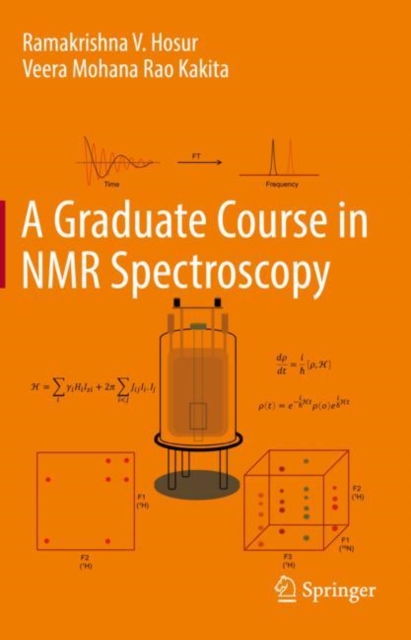
This textbook is designed for graduate students to introduce the basic concepts of Nuclear Magnetic Resonance spectroscopy (NMR), spectral analysis and modern developments such as multidimensional NMR, in reasonable detail and rigor.
This book covers a wide range of advanced analytical tools, from electrochemical to in-situ/ex-situ material characterization techniques, as well as the modeling of corrosion systems to foster understanding and prediction.
This newly designed and enlarged edition offers an up-to-date presentation of biosensor development and modeling from both a chemical and a mathematical point of view.
This book offers a new physical chemistry perspective on the control of lipid oxidation reactions by antioxidants, and it further explores the application of several oxidation inhibition strategies on food and biological systems.
This book provides the latest achievements and original research work in physics of combustion processes and application of the methods developed in combustion physics for astrophysical problems of stars burning, supernovae explosions and a confined thermonuclear fusion.
This book presents a unified view of the response of materials as a result of femtosecond laser excitation, introducing a general theory that captures both ultrashort-time non-thermal and long-time thermal phenomena.
This book focuses on the electrochemical and nanostructural properties of new photoanode/electrolyte combinations used in the development of novel surface-modified nanomaterials for environmental applications.
This book discusses the effect of the excitation of rotational, vibrational, and electronic degrees of freedom on the basic electrical properties of molecules and, as a consequence, on molecular optical and transport properties together with reactivity.
This book provides targeted support for students taking courses at the undergraduate level involving electrochemical methods and voltammetry, precision analytical techniques used in chemical engineering, chemical research and development, and pharmaceutical science.
This book is a substantially revised and expanded edition reflecting major developments in stochastic numerics since the first edition was published in 2004.