This book presents specific key natural and artificial systems that are promising biocatalysts in the areas of health, agriculture, environment and energy.
The thesis focuses on the syntheses, structural characterizations and chemical bonding analyses for several ternary R-M-Ge (R = rare earth metal; M = another metal) intermetallics.
This book offers an overview of the recent studies and advances in environmental catalysis by nanomaterials, considering both the fundamental and the technological aspects.
This book covers the role of water in global atmospheric phenomena, focussing on the physical processes involving water molecules and water microparticles.
This book presents new data on combustion processes for practical applications, discussing fire safety issues in the development of flame arresters and the use of noble metals in hydrogen recombiners for nuclear power plants.
The Science and Business of Drug Discovery is written for those who want to learn about the biopharmaceutical industry and its products whatever their level of technical knowledge.
This book, a consecutive contribution to the series Challenges and Advances in Computational Chemistry and Physics, focuses on understanding the photoinduced processes in biological systems.
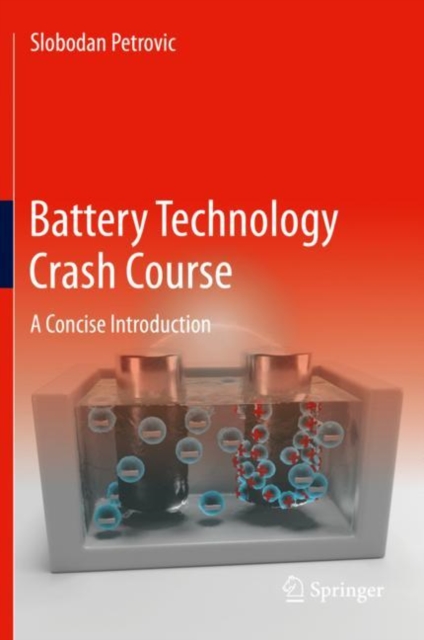
This book is a concise introductory guide to understanding the field of modern batteries, which is fast becoming an important area for applications in renewable energy storage, transportation, and consumer devices.
This book uses experimental and computational methods to rationalize and predict for the first time the relative impact sensitivities of a range of energetic materials.
This book provides a collection of contributed chapters, delivering a comprehensive overview of topics related to the synthesis and crystal growth of nitride compounds under supercritical ammonia conditions.
This book presents a variety of techniques for tackling phenomena that are not amenable to the conventional approach based on the concept of probabilities.
This book shares essential insights into the formation and properties of ionic interfaces based on the energy level structures of their interfaces obtained using a surface science approach.
This book, now in its second edition, introduces the singularity analysis of differential and difference equations via the Painleve test and shows how Painleve analysis provides a powerful algorithmic approach to building explicit solutions to nonlinear ordinary and partial differential equations.
Covering a wide-ranging facet of a "e;gold-standard"e; targeted mass spectrometry (MS) method for the consistent detection and accurate quantification of preselected proteins in complex biological matrices, Selected Reaction Monitoring Mass Spectrometry (SRM-MS) in Proteomics: A Comprehensive View describes:The knowledge-based development of highly efficient SRM methodology including assay workflow, selection of proteins, peptides, transitions and its validation, and quality assessmentAvailable bioinformatic tools - for both pre-acquisition method development and post-MS acquisition data analysis and data repositoriesVarious relative and absolute quantification techniquesSRM-MS' widespread applications in biomarker development and in clinical studies, as well as in the analysis of various posttranslational modifications (PTMs)Current challenges and contemporary trends to overcome those difficulties In addition,it features the historical development of modern-day mass spectrometry with its vivid applications and also covers basic MS instrumentation, ionization techniques, and various proteomics approaches.
This book explores how structure impacts the dynamics of organic molecules in an extensive and impressive range of femtosecond time-resolved experiments that are combined with state-of-the-art theoretical approaches.
This textbook concerns thermal properties of bulk matter and is aimed at advanced undergraduate or first-year graduate students in a range of programs in science or engineering.
This book shows how nanofabrication techniques and nanomaterials can be used to customize packaging for nano devices with applications to electronics, photonics, biological and biomedical research and products.
The series Topics in Current Chemistry Collections presents critical reviews from the journal Topics in Current Chemistry organized in topical volumes.
This textbook facilitates students' ability to apply fundamental principles and concepts in classical thermodynamics to solve challenging problems relevant to industry and everyday life.
Polaritonic chemistry is an emergent interdisciplinary field in which the strong interaction of organic molecules with confined electromagnetic field modes is exploited in order to manipulate the chemical structure and reactions of the system.
This book covers a diverse cross section of this interdisciplinary research field, with contributions grouped into four categories: laser-induced filamentation; atoms and molecules in a laser field; interaction of solid materials with a coherent light field; and ion acceleration and ionization of atoms in super intense laser fields.
Though thousands of articles and books have been published on various aspects of the Manhattan Project, this book is the first comprehensive single-volume history prepared by a specialist for curious readers without a scientific background.
This book presents selected peer-reviewed contributions from the 2019 International Conference on "e;Physics and Mechanics of New Materials and Their Applications"e;, PHENMA 2019 (Hanoi, Vietnam, 7-10 November, 2019), divided into four scientific themes: processing techniques, physics, mechanics, and applications of advanced materials.
The extended and revised edition of this textbook provides essential information for a comprehensive upper-level graduate course on the crystalline growth of semiconductor heterostructures.
This book provides a brief research source for optical fiber sensors for energy production and storage systems, discussing fundamental aspects as well as cutting-edge trends in sensing.
This book describes the physical basis of polarization modulation infrared reflection-absorption spectroscopy and its application in electrochemical studies.
This book shows how the fundamentals of electron paramagnetic resonance (EPR) spectroscopy are practically implemented and illustrates the diversity of current applications.
Although originally invented and employed by physicists, electron paramagnetic resonance (EPR) spectroscopy has proven to be a very efficient technique for studying a wide range of phenomena in many fields, such as chemistry, biochemistry, geology, archaeology, medicine, biotechnology, and environmental sciences.