In the story, its players, two brother monks and their respective pets, loyal and loving, two Bengal tigers and many spiritual leaders, among them a wise owl.
Where the Heavens Kiss the Earth is a comprehensive, transformative, enlightening book that reveals the deepest mysteries of life in an entertaining, user-friendly way.
Enchanting and compelling, Visits to the Glade is an account of ten profound and magical soul encountersmystical revelations that went on to inspire a unique artistic collaboration between nine women.
This book comprehensively covers all the core bioinformatics topics and includes practical examples completed using the MATLAB bioinformatics and machine learning toolboxes(TM).
Comprising two volumes, RNA: Computational Methods for Structure, Kinetics, and Rational Design is a comprehensive treatment of computational methods concerning the secondary structure, folding kinetics and rational design of RNA.
Plasma Physics and Engineering presents basic and applied knowledge on modern plasma physics, plasma chemistry, and plasma engineering for senior undergraduate and graduate students as well as for scientists and engineers working in academia; research labs; and industry with plasmas, laser and, combustion systems.
Plasma Physics and Engineering presents basic and applied knowledge on modern plasma physics, plasma chemistry, and plasma engineering for senior undergraduate and graduate students as well as for scientists and engineers working in academia; research labs; and industry with plasmas, laser and, combustion systems.
An ever-increasing dependence on green energy has brought on a renewed interest in polymer electrolyte membrane (PEM) electrolysis as a viable solution for hydrogen production.
Bridging condensed matter physics, photochemistry, photophysics, and materials science, Electromagnetic Radiation in Analysis and Design of Organic Materials: Electronic and Biotechnology Applications covers physical properties of materials in the presence of radiation from across the electromagnetic spectrum.
Adsorption and desorption in solution play significant roles in separations, detoxification of waste streams, in purification, chromatography, heterogeneous catalysis, metabolism of medicinal drugs, and beyond.
This timely and unique publication is designed for graduate students and researchers in inorganic and materials chemistry and covers bonding models and applications of symmetry concepts to chemical systems.
New materials hold the key to fundamental advances in energy conversion and storage, both of which are vital in order to meet the challenge of global warming and the finite nature of fossil fuels.
This book covers the essentials of Computational Science and gives tools and techniques to solve materials science problems using molecular dynamics (MD) and first-principles methods.
Most reference texts covering two-dimensional materials focus specifically on graphene, when in reality, there are a host of new two-dimensional materials poised to overtake graphene.
Innovation through specific and rational design and functionalization has led to the development of a wide range of mesoporous materials with varying morphologies (hexagonal, cubic, rod-like), structures (silicates, carbons, metal oxides), and unique functionalities (doping, acid functionalization) that currently makes this field one of the most exciting in materials science and energy applications.
Electrolytes for Electrochemical Supercapacitors provides a state-of-the-art overview of the research and development of novel electrolytes and electrolyte configurations and systems to increase the energy density of electrochemical supercapacitors.
This book reviews advances in important and practically relevant homogeneous catalytic transformations, such as single-site olefin polymerizations and chemo- and stereo-selective oxidations.
This classic reference examines the mechanisms driving adhesion, categories of adhesives, techniques for bond formation and evaluation, and major industrial applications.
An Introduction to High-Pressure Science and Technology provides you with an understanding of the connections between the different areas involved in the multidisciplinary science of high pressure.
This book is part of an acclaimed continuing series designed to provide authoritative reviews on recent developments and applications of well-established techniques in the field of electroanalytical chemistry.
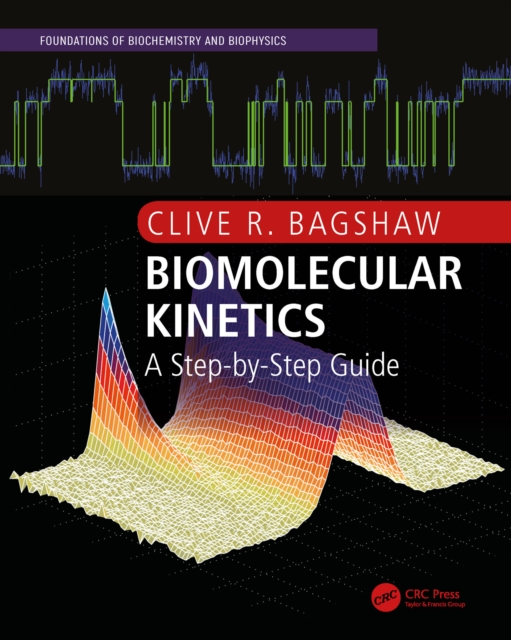
"e;a gem of a textbook which manages to produce a genuinely fresh, concise yet comprehensive guide"e;-Mark Leake, University of York"e;destined to become a standard reference.
Volume 3 of the 5-volume Quantum Nanochemistry presents the chemical reactivity throughout the molecular structure in general and chemical bonding in particular by introducing the bondons as the quantum bosonic particles of the chemical field, localization, from Huckel to Density Functional expositions, especially in relation to how chemical princi
Volume 4 of the 5-volume Quantum Nanochemistry covers quantum (physical) chemical theory of solids and orderability and addresses the electronic order problems in the solid state viewed as a huge molecule in special quantum states, including also the bondonic treatment of the graphene nano-ribbons, along basic crystallographic principles, from geom
Volume 5 of the 5-volume Quantum Nanochemistry focuses on modeling and predicting of the enzyme kinetics and quantitative structure-activity relationships.
To meet changing market demands that have stringent emission standards and to ensure proper performance in refinery units, evaluation of novel catalyst designs and results from material characterization and testing of catalysts are of crucial importance for refiners as well as for catalyst manufacturers.
Hydrogenation with Low-Cost Transition Metals describes recent developments in the preparation of catalysts and their catalytic abilities in chemoselective hydrogenation for the production of fine chemicals and pharmaceutical compounds.
Volume 2 of the 5-volume Quantum Nanochemistry presents in a balanced manner the fundamental and advanced concepts, principles, and models as well as their first and novel combinations and applications in quantum (physical) and chemical theory of atomic structure.
Volume 1 of the 5-volume Quantum Nanochemistry set presents an overall perspective of nuclear, atomic, molecular, and solids structures, and the observability and quantum properties as based on the quantum principles in their various levels of applications, from Planck, Bohr, Einstein, Schrodinger, Hartree-Fock, up to Feynman Path Integral approach
Volumes in the Proven Synthetic Methods Series address the concerns many chemists have regarding irreproducibility of synthetic protocols, lack of identification and characterization data for new compounds, and inflated yields reported in chemical communications-trends that have recently become a serious problem.
As the search for renewable sources of energy grows more urgent, more and more attention is focusing on the blueprint offered by biological photosynthesis for translating the energy of our Sun into energy rich molecules like H2 and carbohydrates, commonly known as "e;solar fuels.
This important new book provides innovative material, including peer-reviewed chapters and survey articles on new applied research and development, in the scientifically important field of QSAR in medicinal chemistry.
Since the 1990s the synthetic community has shown a growing interest in the development of catalytic reactions that employ entirely organic catalysts - so-called 'organocatalysts'.