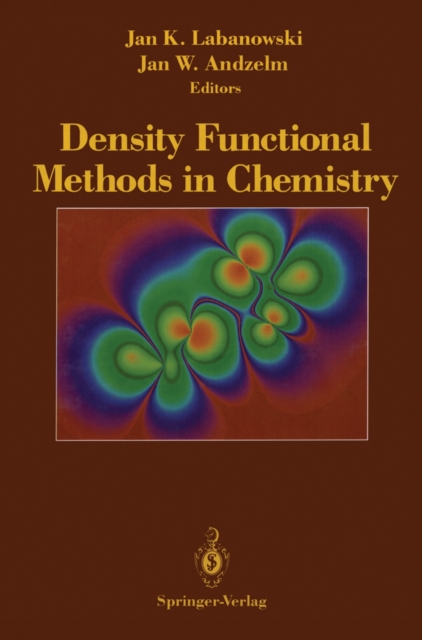
The energy of a molecule can be studied with the help of quantum theory, a satisfactory approach because it involves only basic and clearly identified physical concepts.
This outline of statistics as an aid in decision making will introduce a reader with limited mathematical background to the most important modern statistical methods.
The purpose of this volume is to present the latest planetary studies of an international body of scientists concerned with the physical and chemical aspects of terrestrial planets.
The fifth volume in this series is focused on the chemical and physical interactions between rocks undergoing metamorphism and the fluids that they generate and that pass through them.
The propagation of acoustic and electromagnetic waves in stratified media is a subject that has profound implications in many areas of applied physics and in engineering, just to mention a few, in ocean acoustics, integrated optics, and wave guides.
One of the basic tenets of science is that deterministic systems are completely predictable-given the initial condition and the equations describing a system, the behavior of the system can be predicted 1 for all time.
In the last 20 years the study of nonlinear nonequilibrium phenomena in spa- tially extended systems, with particular emphasis on pattern-forming phenomena, has been one of the very active areas in physics, exhibiting interesting ramifi- cations into other sciences.
In this book I present, in a systematic form, some local theorems on existence, uniqueness, and analytic dependence on the load, which I have recently obtained for some types of boundary value problems of finite elasticity.
This IMA Volume in Mathematics and its Applications MATHEMATICAL APPROACHES TO BIOMOLECULAR STRUCTURE AND DYNAMICS is one of the two volumes based on the proceedings of the 1994 IMA Sum- mer Program on "e;Molecular Biology"e; and comprises Weeks 3 and 4 of the four-week program.
Ever since the seminal works on traveling waves and morphogenesis by Fisher, by Kolmogorov, Petrovski and Piscunov, and by Turing, scientists from many disciplines have been fascinated by questions concerning the formation of steady or dynamic patterns in reactive media.
Physical Chemistry of Magmas investigates the properties, structure, and phase relationships of silicate melts with invited contributions from an international team of experts.
What our teachers don't tell us in school is that we will spend most of our scientific or engineering career in front of computers, trying to beat them into submission.
Over the past few decades we have learned a great deal about the behavior of such materials as liquid crystals, emulsions and colloids, polymers, and complex molecules.
In recent years there has been a great deal of activity in both the theoretical and applied aspects of partial differential equations, with emphasis on realistic engineering applications, which usually involve lack of smoothness.
The Institute for Computer Applications in Science and Engineer- ing (ICASE) and NASA Langley Research Center (LaRC) brought together on October 2-4, 1989 experts in the various areas of com- bustion with a view to expose them to some combustion problems of technological interest to LaRC and possibly foster interaction with the academic community in these research areas.
How to Use This Handbook The MATLAB Handbook is a complete reference tool for the MATLAB computation language, and is written for all MATLAB users, regardless of their discipline or field(s) of interest.
The purpose of this book is to provide the reader with a comprehensive introduction to the applications of symmetry analysis to ordinary and partial differential equations.
Polycrystalline metals, porous rocks, colloidal suspensions, epitaxial thin films, gels, foams, granular aggregates, sea ice, shape-memory metals, magnetic materials, and electro-rheological fluids are all examples of materials where an understanding of the mathematics on the different length scales is a key to interpreting their physical behavior.
This IMA Volume in Mathematics and its Applications DIAGNOSIS AND PREDICTION is one of the series based on the proceedings of a very successful 1997 IMA Summer Program on "e;Statistics in the Health Sciences.
This IMA Volume in Mathematics and its Applications MULTIPARTICLE QUANTUM SCATTERING WITH APPLICATIONS TO NUCLEAR, ATOMIC AND MOLECULAR PHYSICS is based on the proceedings of a workshop with the same title, which was an integral part of the 1994-1995 IMA program on "e;Waves and Scattering.