Lecture Notes on Impedance Spectroscopy (LNIS) is a book series covering new advances in the field of impedance spectroscopy including theory, fundamentals, and applications.
Impedance Spectroscopy is a powerful measurement method used in many application fields such as electrochemistry, material science, biology and medicine, semiconductor industry and sensors.
"e;an impressive text that addresses a glaring gap in the teaching of physical chemistry, being specifically focused on biologically-relevant systems along with a practical focus.
Surface Phenomena in the Structural and Mechanical Behaviour of Solid Polymers explores the role of various surface phenomena in the structural and mechanical behaviour of amorphous and semicrystalline polymers.
Surface Phenomena in the Structural and Mechanical Behaviour of Solid Polymers explores the role of various surface phenomena in the structural and mechanical behaviour of amorphous and semicrystalline polymers.
Photocatalysis, reactions carried out in the presence of a semiconductor and light, is rapidly becoming one of the most active areas of chemical research, with applications in areas such as electrochemistry, medicine, and environmental chemistry, Photocatalysis: Principles and Applications stresses the development of various types of photocatalytic semiconductors, including binary, ternary, quaternary, and composite, and their modifications by metallization, sensitization, and doping to enhance their photocatalytic activities.
While modern computational methods can provide us with the wave function of a molecule in numerical form, most computer programs lack the sophisticated tools needed to extract chemical concepts from these wave functions.
Written for use as a text and reference for those interested in how new materials may be used to capture, store, and use solar energy for alternative energy resources in everyday life, Solar Fuels: Materials, Physics, and Applications discusses the fundamentals of new materials and the physical processes involved in their mechanisms and design.
Brings Readers from the Threshold to the Frontier of Modern Research Many-Body Methods for Atoms and Molecules addresses two major classes of theories of electron correlation: the many-body perturbation theory and coupled cluster methods.
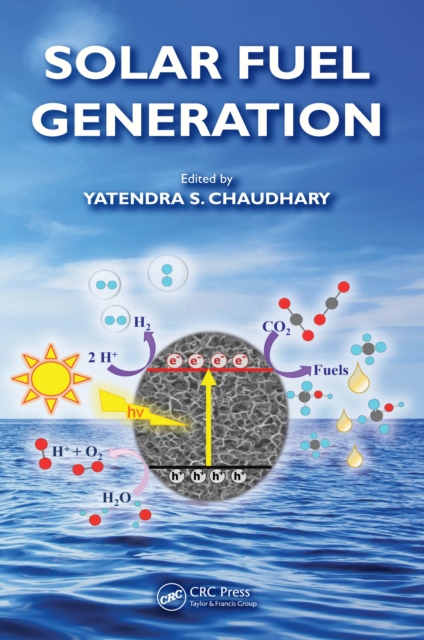
As the search for renewable sources of energy grows more urgent, more and more attention is focusing on the blueprint offered by biological photosynthesis for translating the energy of our Sun into energy rich molecules like H2 and carbohydrates, commonly known as "e;solar fuels.
To meet changing market demands that have stringent emission standards and to ensure proper performance in refinery units, evaluation of novel catalyst designs and results from material characterization and testing of catalysts are of crucial importance for refiners as well as for catalyst manufacturers.
Innovation through specific and rational design and functionalization has led to the development of a wide range of mesoporous materials with varying morphologies (hexagonal, cubic, rod-like), structures (silicates, carbons, metal oxides), and unique functionalities (doping, acid functionalization) that currently makes this field one of the most exciting in materials science and energy applications.
Adsorption and desorption in solution play significant roles in separations, detoxification of waste streams, in purification, chromatography, heterogeneous catalysis, metabolism of medicinal drugs, and beyond.
This new book brings together innovative research, new concepts, and novel developments in the application of informatics tools for applied chemistry and computer science.
Conjugated polymer composites with high dielectric constants are being developed by the electronics industry in response to the need for power-grounded decoupling to secure the integrity of high-speed signals and to reduce electromagnetic interference.
Direct alcohol fuel cells (DAFCs), such as methanol and ethanol ones, are very promising advanced power systems that may considerably reduce dependence on fossil fuels and are, therefore, attracting increased attention worldwide.
Plasmonic resonators, composed of metallic micro- and nanostructures, belong to the category of excited-state physics on resonances from gigahertz to petahertz.
With the phenomenal development of electromagnetic wave communication devices and stealth technology, electromagnetic wave absorbing materials have been attracting attention as antielectromagnetic interference slabs, stealth materials, self-concealing technology, and microwave darkrooms.
Discussing the electrospinning process, the book covers in great depth the current research interest in nanoscience and nanotechnology, especially electrospinning of polymer nanofibers.
Ultrafast Dynamics at the Nanoscale provides a combined experimental and theoretical insight into the molecular-level investigation of light-induced quantum processes in biological systems and nanostructured (bio)assemblies.
The current state and perspectives in natural and life sciences are strongly linked to the development of novel complex organic-inorganic materials at various levels of organization, including semiconductor quantum dots (QDs) and QD-based nanostructures with unique optical and physico-chemical properties.
Pathways to Modern Physical Chemistry: An Engineering Approach with Multidisciplinary Applications focuses on recent trends and takes a systematic and practical look at theoretical aspects of materials chemistry.
This book looks at the synthesis of polyaniline by different methods, under different conditions, for various applications, and presents studies of its properties by a wide range of the modern physic-chemical methods.
The Second Edition of Introduction to Electrochemical Science and Engineering outlines the basic principles and techniques used in the development of electrochemical engineering related technologies, such as fuel cells, electrolyzers, and flow-batteries.
The Second Edition of Introduction to Electrochemical Science and Engineering outlines the basic principles and techniques used in the development of electrochemical engineering related technologies, such as fuel cells, electrolyzers, and flow-batteries.
Certain small solid particles are surface-active at fluid interfaces and thus are able to stabilize materials previously considered impossible to stabilize in their absence.
Certain small solid particles are surface-active at fluid interfaces and thus are able to stabilize materials previously considered impossible to stabilize in their absence.
The full text downloaded to your computer With eBooks you can: search for key concepts, words and phrases make highlights and notes as you study share your notes with friends eBooks are downloaded to your computer and accessible either offline through the Bookshelf (available as a free download), available online and also via the iPad and Android apps.