This volume is part of a continuing Electroanalytical Chemistry Series designed to provide authoritative reviews on recent developments and applications of well-established techniques in the field of electroanalytical chemistry.
While the relevant features and properties of nanosystems necessarily depend on nanoscopic details, their performance resides in the macroscopic world.
Designed for students at the senior undergraduate and first-year graduate level, Introductory Nanoscience takes a quantitative approach to describing the physical and chemical principles behind what makes nanostructures so fascinating.
Presents short topics tied to numerical or conceptual ideas, reinforced with worked examples and questions Retaining the user-friendly style of the first edition, this text is designed to eliminate the knowledge gap for those life sciences students who have not studied chemistry at an advanced level.
With contributions from 24 international authorities, Synthetic Organic Photochemistry offers a leading-edge presentation of the most recent and in-demand applications of photochemical methodologies.
Researchers and engineers working in nuclear laboratories, nuclear electric plants, and elsewhere in the radiochemical industries need a comprehensive handbook describing all possible radiation-chemistry interactions between irradiation and materials, the preparation of materials under distinct radiation types, the possibility of damage of material
"e;Presents the most recent developments in the materials, properties, and performance characteristics of photographic, electrophotographic, electrostatic, diazo, and ink jet imaging processes.
Offering the latest research and developments in the understanding of surfactant behavior in solutions, this reference investigates the role and dynamics of surfactants and their solution properties in the formulation of paints, printing inks, paper coatings, pharmaceuticals, personal care products, cosmetics, liquid detergents, and lubricants.
Redox Signaling in Wound Healing in Elderly Populations: Clinical Approach, Part Two, Volume Three covers wounds in different types and locations (diabetic, ischemic, post-operational) in subcellular and macro dimensions, examining their relationship with aging with an aim to target deteriorating redox signaling cascades and highlight promising therapeutic approaches.
The study of environmental interfaces and environmental catalysis is central to finding more effective solutions to air pollution and in understanding of how pollution impacts the natural environment.
Featuring case studies and worked examples that illustrate key concepts in the text, this book contains guidelines for scaleup of laboratory and pilot plant results, methods to derive the correct reaction order, activation energy, or kinetic model from laboratory tests, and theories, correlations, and practical examples for 2- and 3-phase reaction
High surface area, a microporous structure, and a high degree of surface reactivity make activated carbons versatile adsorbents, particularly effective in the adsorption of organic and inorganic pollutants from aqueous solutions.
The third volume in a series dedicated to colloids and interfaces, Drops and Bubbles in Contact with Solid Surfaces presents an up-to-date overview of the fundamentals and applications of drops and bubbles and their interaction with solid surfaces.
Supramolecular Polymers, Second Edition details assembly processes and structure-function correlation in natural and synthetic self-assembling materials, focusing on developments occurred over the past five years.
In the 20 years since the pilot plant experiments used to develop the concept of electroviscoelasticity, inroads have been made in the understanding of its many related processes.
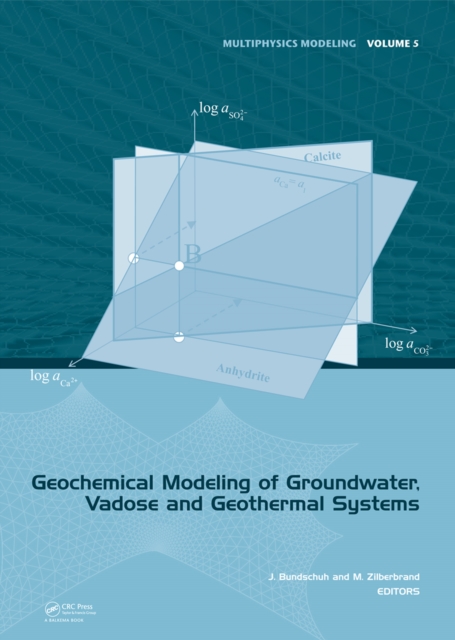
Geochemical modeling is an important tool in environmental studies, and in the areas of subsurface and surface hydrology, pedology, water resources management, mining geology, geothermal resources, hydrocarbon geology, and related areas dealing with the exploration and extraction of natural resources.
Electroanalytical chemists and others are concerned not only with the application of new and classical techniques to analytical problems, but also with the fundamental theoretical principles upon which these techniques are based.
Quantum mechanical tunneling plays important roles in a wide range of natural sciences, from nuclear and solid-state physics to proton transfer and chemical reactions in chemistry and biology.
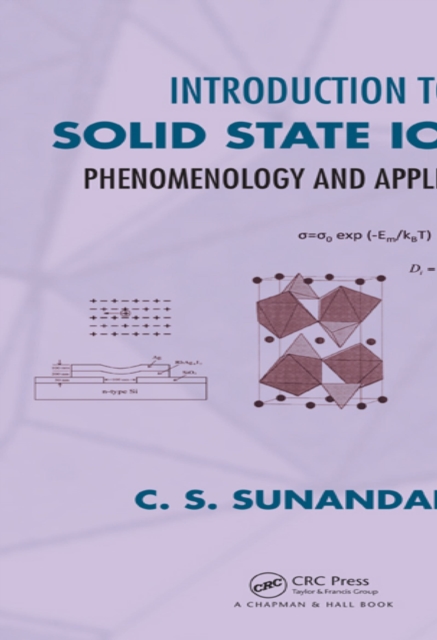
Introduction to Solid State Ionics: Phenomenology and Applications presents a pedagogical, graduate-level treatment of the science and technology of superionic conductors, also known as fast ion conductors or solid electrolytes.
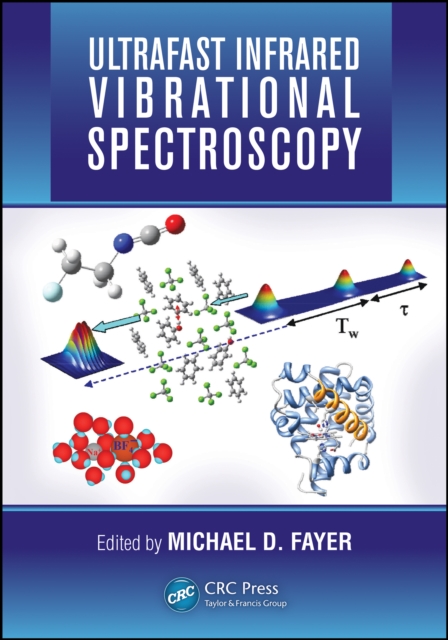
The advent of laser-based sources of ultrafast infrared pulses has extended the study of very fast molecular dynamics to the observation of processes manifested through their effects on the vibrations of molecules.
A complete and up-to-date presentation of the fundamental theoretical principles and many applications of solvent extraction, this enhanced Solvent Extraction Principles and Practice, Second Edition includes new coverage of the recent developments in solvent extraction processes, the use of solvent extraction in analytical applications and waste re
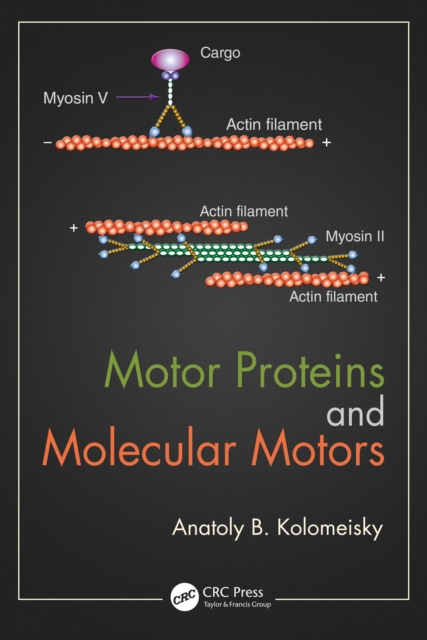
A Unified Microscopic Approach to Analyzing Complex Processes in Molecular MotorsMotor Proteins and Molecular Motors explores the mechanisms of cellular functioning associated with several specific enzymatic molecules called motor proteins.
This book chronicles the proceedings of the International Symposium on Apparent and Microscopic Contact Angles, held in conjunction with the American Chemical Society meeting in Boston, August 24--27, 1998.
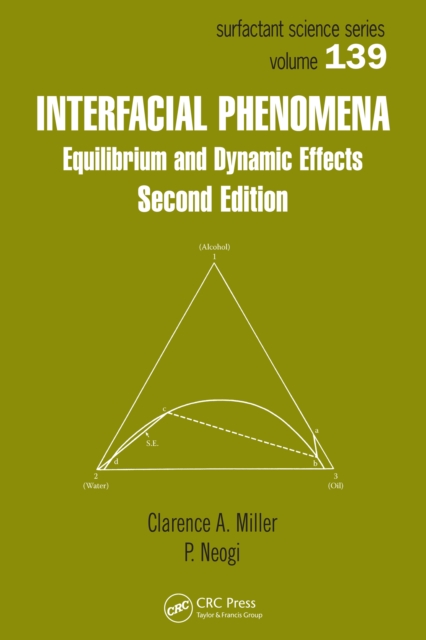
Since the publication of the first edition of Interfacial Phenomena, the interest in interfaces and surfactants has multiplied, along with their applications.
Over the years, researchers have reported solubility data in the chemical, pharmaceutical, engineering, and environmental literature for several thousand organic compounds.
Connecting past, present, and future instrument development and use, Biocalorimetry: Foundations and Contemporary Approaches explores biocalorimetry's history, fundamentals, methodologies, and applications.
This book is a collection of invited papers (previously published in special issues of the Journal of Adhesion Science and Technology) written by internationally recognized researchers actively working in the field of plasma surface modification.
The effective use of microemulsions has increased dramatically during the past few decades as major industrial applications have expanded in a variety of fields.
Discusses measuring the surface properties of flat or particulate solids with contact angles of drops of high-energy liquids deposited on solid surfaces or via the thin-layer wicking technique.
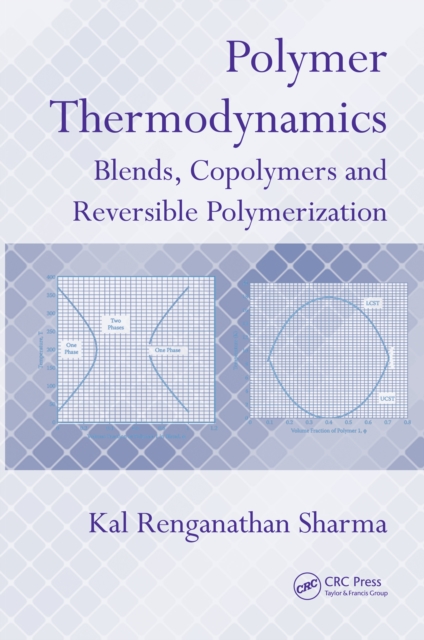
Polymer Thermodynamics: Blends, Copolymers and Reversible Polymerization describes the thermodynamic basis for miscibility as well as the mathematical models used to predict the compositional window of miscibility and construct temperature versus volume-fraction phase diagrams.
Atmospheric-pressure plasmas continue to attract considerable research interest due to their diverse applications, including high power lasers, opening switches, novel plasma processing applications and sputtering, EM absorbers and reflectors, remediation of gaseous pollutants, excimer lamps, and other noncoherent light sources.
Structural and Morphological Evolution in Metal-Organic Films and Multilayers presents major results of the authors' work carried out on Langmuir monolayers and Langmuir-Blodgett multilayers.
Despite the large quantity of phenomenological information concerning the bulk properties of nematic phase liquid crystals, little is understood about the origin of the surface energy, particularly the surface, interfacial, and anchoring properties of liquid crystals that affect the performance of liquid crystal devices.
Employing a wide range of examples from G-protein-coupled receptors and ligand-gated ion channels, this detailed, single-source reference illustrates the principles of pharmacological analysis and receptor classification that are the basis of rational drug design.
Remarkable developments in the spectroscopy field regarding ultrashort pulse generation have led to the possibility of producing light pulses ranging from 50 to5 fs and frequency tunable from the near infrared to the ultraviolet range.
Having successfully replaced elements used in traditional, pollution-prone, energy-consuming separation processes, nanoporous materials play an important role in chemical processing.