This new book, written by two outstanding scientists in the field, describes the basic principles of toxic mechanisms and organ toxicity, providing detailed information on specific mechanisms or chemicals for exemplification.
This practical guide to spectroscopy and inorganic materials meets the demand from academia and the science community for an introductory text that introduces the different optical spectroscopic techniques, used in many laboratories, for material characterisation.
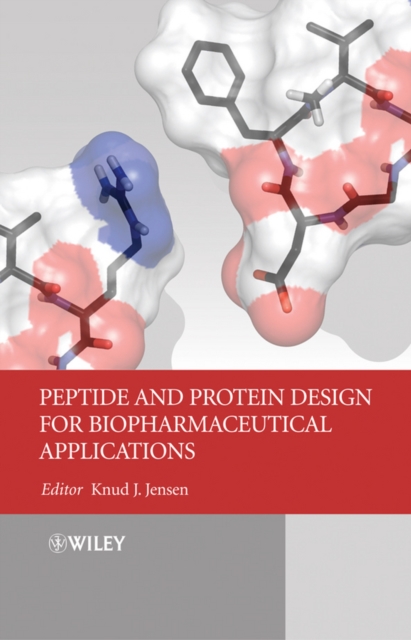
The latest edition of this highly acclaimed textbook, provides a comprehensive and up-to-date overview of the science and medical applications of biopharmaceutical products.
Presenting new developments in sampling and drug profiling, this book also provides practical information on how to carry out analysis, what the results mean and how they can be used as court evidence and for drugs intelligence purposes.
First explaining the basic principles of liquid chromatography and mass spectrometry and then discussing the current applications and practical benefits of LC-MS, along with descriptions of the basic instrumentation, this title will prove to be the indispensable reference source for everyone wishing to use this increasingly important tandem technique.
The Second Edition of Practical Gamma-Ray Spectrometry has been completely revised and updated, providing comprehensive coverage of the whole gamma-ray detection and spectrum analysis processes.
Completely revised and updated, Chemical Analysis: Second Edition is an essential introduction to a wide range of analytical techniques and instruments.
Although there are a number of books in this field, most of them lack an introduction of comprehensive analysis of MS and IR spectra, and others do not provide up-to-date information like tandem MS.
Although there are a number of books in this field, most of them lack an introduction of comprehensive analysis of MS and IR spectra, and others do not provide up-to-date information like tandem MS.
Edited by a highly regarded scientist and with contributions from sixteen international research groups, spanning Asia and North America, Rare Earth Coordination Chemistry: Fundamentals and Applications provides the first one-stop reference resource for important accomplishments in the area of rare earth.
Biocatalysis is rapidly evolving into a key technology for the discovery and production of chemicals, especially in the pharmaceutical industry, where high yielding chemo-, regio-, and enantioselective reactions are critical.
Widely used in adsorption, catalysis and ion exchange, the family of molecular sieves such as zeolites has been greatly extended and many advances have recently been achieved in the field of molecular sieves synthesis and related porous materials.
This book gives pharmaceutical scientists an up-to-date resource on protein aggregation and its consequences, and available methods to control or slow down the aggregation process.
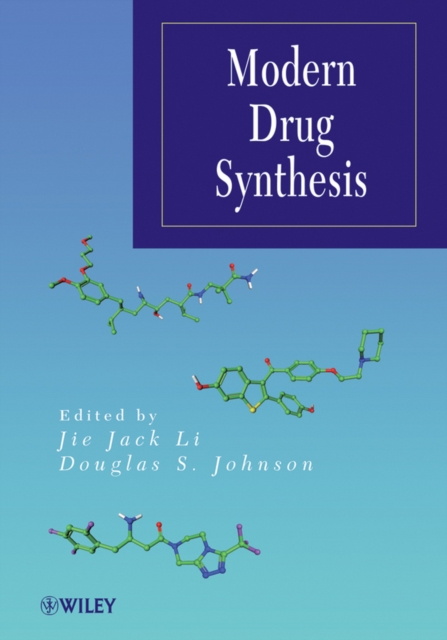
Following Contemporary Drug Synthesis and The Art of Drug Synthesis (Wiley, 2004 and 2007), two well-received works, is this new book that demystifies the process of modern drug discovery for practitioners and students.
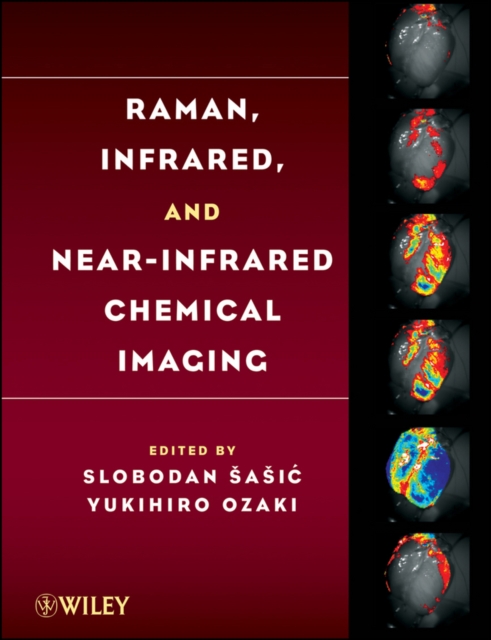
An all-inclusive guide on the analytical methods of Raman, infrared, and near-infrared chemical imaging An underutilized technology, chemical imaging through Raman, infrared (IR), and near-infrared (NIR) is beginning to gain recognition for its non-destructive method of permitting visualization of spatially resolved chemical information.
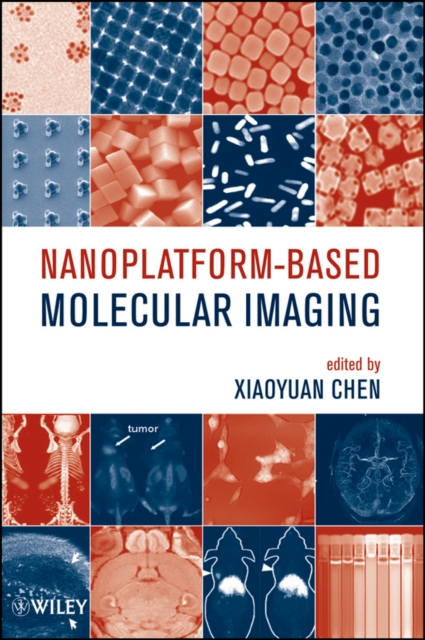
The cutting-edge guide on advancing the science of molecular imaging using nanoparticles Nanoplathform-Based Molecular Imaging provides rationale for using nanoparticle-based probes for molecular imaging, then discusses general strategies for this underutilized, yet promising, technology.
Offers a simple starting point to VPSEM, especially for new users, technicians and students containing clear, concise explanations Crucially, the principles and applications outlined in this book are completely generic: i.
This book presents the modern applications of hyphenated techniques in the analysis and study of the chemistry of grape, wine, and grape-derivative products.
A comprehensive, compilation and evaluation of the newest results in the field of enumerate evaluation of chromatographic data Aimed at the practicing professional, researchers and advanced students working in this area Special emphasis on practical applications While the principles of chromatography and multivariate mathematical-statistical methods are discussed separately, the book focuses on their interconnection.
Biofuels Biofuels The use of biofuels is rapidly gaining momentum all over the world, and can be expected to have an ever increasing impact on the energy and agricultural sector in particular.
Smart Packaging Technologies for Fast Moving Consumer Goods approaches the subject of smart packaging from an innovative, thematic perspective: Part 1 looks at smart packaging technologies for food quality and safety Part 2 addresses smart packaging issues for the supply chain Part 3 focuses on smart packaging for brand protection and enhancement Part 4 centres on smart packaging for user convenience.
Photoalignment possesses significant advantages in comparison with the usual rubbing treatment of the substrates of liquid crystal display (LCD) cells as it is a non-contact method with a high resolution.
Focusing on the key challenges that still impede the realization of the billion-ton renewable fuels vision, this book integrates technological development and business development rationales to highlight the key technological.
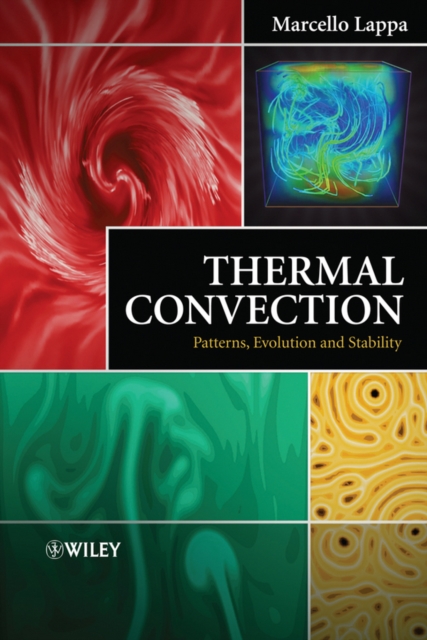
Thermal Convection - Patterns, Stages of Evolution and Stability Behavior provides the reader with an ensemble picture of the subject, illustrating the state-of-the-art and providing the researchers from universities and industry with a basis on which they are able to estimate the possible impact of a variety of parameters.
Groundwater is sometimes called the hidden asset awareness of its existence and its importance is not well known and as a consequence the measures which are required to protect and manage it in an environmental sustainable way are either not taken or are taken too late.
Mimicking natural biochemical processes, click chemistry is a modular approach to organic synthesis, joining together small chemical units quickly, efficiently and predictably.
Nanomaterials - substances smaller than 100 nanometers in size - have been added in recent years to an increasing numbers of consumer products used in day-to-day life; in food packaging, medical devices, pharmaceuticals, cosmetics, odor-resistant textiles and household appliances.