Physical Methods in Modern Chemical Analysis, Volume 3 presents the fundamental principles, the instrumentation or necessary equipment, and applications of selected physical methodologies in chemical analysis.
Aerosols and Atmospheric Chemistry is a collection of papers presented at the American Chemical Society Kendall Award Symposium honoring Professor Milton Kerker, held in Los Angeles, California, on March 28-April 2, 1971.
Coordination Polymerization contains the proceedings of a symposium sponsored by the American Chemical Society and held at the University of California-Los Angeles on April 3, 1974.
Methods in Carbohydrate Chemistry, Volume VIII: General Methods describes the principles and mode of operation of general methods for the analysis and structural characterization of carbohydrates.
Analysis of Triglycerides is a 13-chapter text that covers the various types of analyses, the specific operating conditions, and experimental details necessary when dealing with certain types of triglyceride molecules and their derived diglycerides.
The Actinides: Electronic Structure and Related Properties, Volume I reviews major advances that have been made concerning the electronic structure and properties of actinide elements, alloys, and compounds.
Huckel Molecular Orbital Theory aims to be a simple, descriptive, and non-mathematical introduction to the Huckel molecular orbital theory and its applications in organic chemistry, thus the more basic text found in the book.
Marine Natural Products: Chemical and Biological Perspectives, Volume II, reviews the state of knowledge in the chemistry and biology of marine natural products.
Backscattering Spectrometry reviews developments in backscattering spectrometry and covers topics ranging from instrumentation and experimental techniques to beam parameters and energy loss measurements.
Medicinal Chemistry: A Series of Monographs, Volume 13-II presents the context of inflammation and the therapeutic interventions in debilitating chronic inflammatory diseases.
Epitaxial Growth, Part A is a compilation of review articles that describe various aspects of the growth of single-crystal films on single-crystal substrates.
Frontiers of Free Radical Chemistry covers the proceedings of the 1979 symposium on Frontiers of Free Radical Chemistry, held in Louisiana State University Chemistry Department, supported by the Exxon Education Foundation.
Determination of Organic Structures by Physical Methods, Volume 4 is a seven-chapter text that discusses the refinements of some established physical methods for organic structure determination.
Organic Chemistry, A Series of Monographs, Volume 5-C: Oxidation in Organic Chemistry covers the preparative use and the mechanistic aspects of the various oxidation reactions.
Asymmetric Synthesis, Volume 4: The Chiral Carbon Pool and Chiral Sulfur, Nitrogen, Phosphorus, and Silicon Centers describes the practical methods of obtaining chiral fragments.
Energy Transfer Parameters of Aromatic Compounds focuses on the mechanisms underlying intramolecular and intermolecular electronic energy transfer in aromatic compounds, with emphasis on dipole-dipole interactions.
The Chemistry of Synthetic Dyes, Volume VII covers the synthesis and application of dyes, fluorescent brightening agents, color and electronic states of organic molecules, photochemistry of dyes, and physical chemistry of dyeing.
Determination of Organic Structures by Physical Methods, Volume 5 is a seven-chapter text that discusses the improvements of some established physical methods for organic structure determination.
Systematic Materials Analysis focuses on the broad range of instrumental methods that brings new approaches to materials analysts to yield the desired information about a given material.
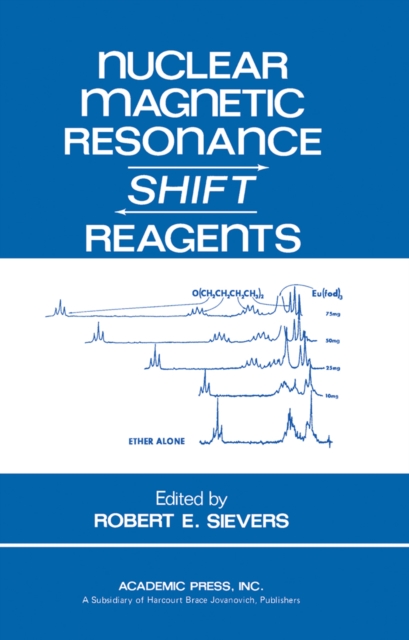
Nuclear Magnetic Shift Reagents presents the proceedings of the Symposium on the Chemistry of Nuclear Magnetic Resonance Shift Reagents, held in Dallas, Texas, on April 9-11, 1973.
Methods for the Oxidation of Organic Compounds: Alkanes, Alkenes, Alkynes, and Arenes is an account of the different methods used for the controlled oxidation of alkanes, alkenes, alkynes, and arenes.
Silicate Science, Volume VIII: Industrial Glass: Glazes and Enamels presents a focused discussion regarding glass fusion furnace construction as well as improvement for the efficiency of the various systems involved in glass engineering.
Gas-Solid Reactions describes gas-solid reaction systems, focusing on the four phenomena-external mass transfer, pore diffusion, adsorption/desorption, and chemical reaction.
The Organic Chemistry of Nickel, Volume II: Organic Synthesis describes the chemistry of the organonickel complexes and the use of nickel in organic synthesis.
Physical Methods in Modern Chemical Analysis, Volume 2 covers the fundamental principles, the instrumentation or necessary equipment, and applications of selected physical methods.
Spectral Line Broadening by Plasmas deals with spectral line broadening by plasmas and covers topics ranging from quasi-static approximation and impact approximation to intermediate approximations and correlation effects.
Ionic Interactions: From Dilute Solutions to Fused Salts, Volume I: Equilibrium and Mass Transport is an effort to present a broad spectrum of approaches to the study of ionic systems and their interactions.
Spectroscopy in Inorganic Chemistry, Volume I describes the innovations in various spectroscopic methods that are particularly effective in inorganic chemistry studies.