This book aims to provide a lively working knowledge of the thermodynamic control of microscopic simulations, while summarizing the historical development of the subject, along with some personal reminiscences.
This book aims to provide a lively working knowledge of the thermodynamic control of microscopic simulations, while summarizing the historical development of the subject, along with some personal reminiscences.
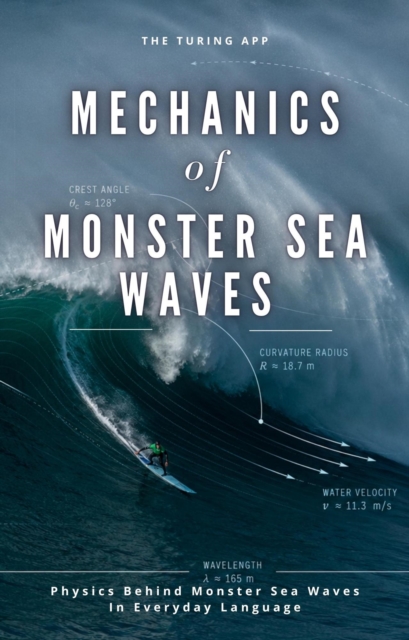
This book is a Weekend Pocketbook on Everything You Should Know About Rogue Waves, the sudden walls of water that once sounded like sailor folklore until instruments proved they were real.
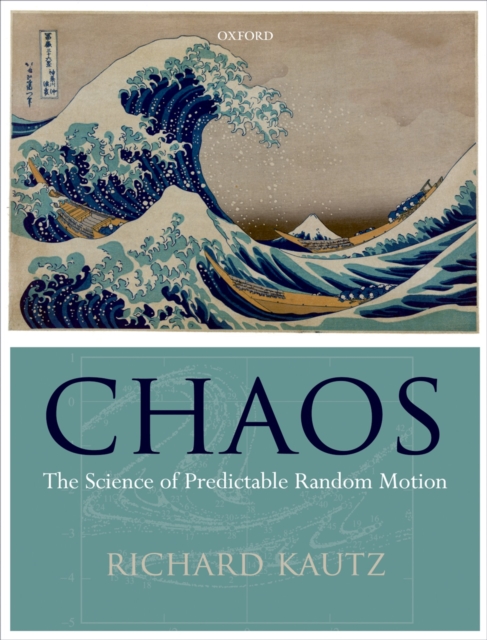
Based on only elementary mathematics, this engaging account of chaos theory bridges the gap between introductions for the layman and college-level texts.
What if everything you use today — your phone, your building, your medicine, your legal system — traces back to a single thousand-year window in human history?
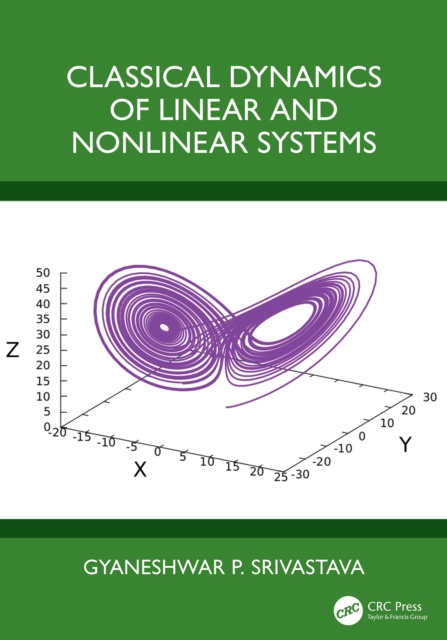
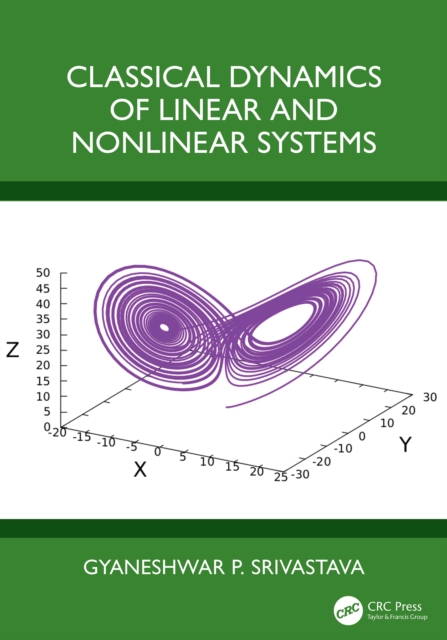
Classical Dynamics of Linear and Nonlinear Systems offers a comprehensive exploration of dynamical systems from fundamental principles to advanced applications.
Classical Dynamics of Linear and Nonlinear Systems offers a comprehensive exploration of dynamical systems from fundamental principles to advanced applications.
Sharkovsky's Theorem, Li and Yorke's "e;period three implies chaos"e; result, and the (3x+1) conjecture are beautiful and deep results that demonstrate the rich periodic character of first-order, nonlinear difference equations.
"e;Presents new approaches to qualitative analysis of continuous, discreteptime, and impulsive nonlinear systems via Liapunov matrix-valued functions that introduce more effective tests for solving problems of estimating the domains of asymptotic stability.
Offers Both Standard and Novel Approaches for the Modeling of SystemsExamines the Interesting Behavior of Particular Classes of ModelsChaotic Modelling and Simulation: Analysis of Chaotic Models, Attractors and Forms presents the main models developed by pioneers of chaos theory, along with new extensions and variations of these models.
Culled from the pages of CRC's highly successful, best-selling The Circuits and Filters Handbook, Second Edition, Nonlinear and Distributed Circuits presents a sharply focused, comprehensive review of the fundamental theory behind professional applications of these complex circuits.
Ecologists sometimes have a less-than-rigorous background in quantitative methods, yet research within this broad field is becoming increasingly mathematical.
Complex Dynamics: Families and Friends features contributions by many of the leading mathematicians in the field, such as Mikhail Lyubich, John Milnor, Mitsuhiro Shishikura, and William Thurston.
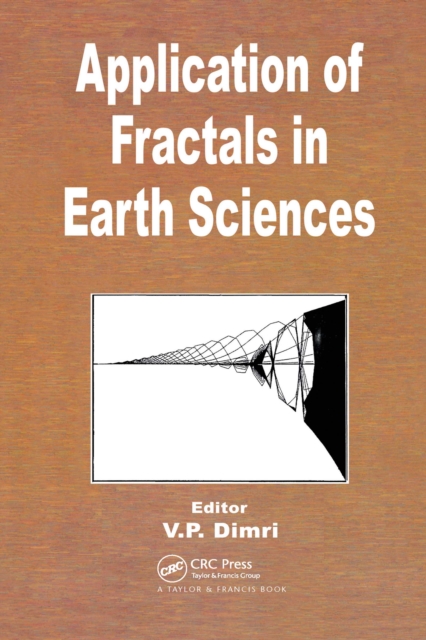
The theory of nonlinear dynamics and chaos, and the extent to which recent improvements in the understanding of inherently nonlinear natural processes present challenges to the use of mathematical models in the analysis of water and environmental systems, are elaborated in this work.
While maintaining the lucidity of the first edition, Discrete Chaos, Second Edition: With Applications in Science and Engineering now includes many recent results on global stability, bifurcation, chaos, and fractals.
This book presents some exceptional developments in chaotic attractor theory encompassing several new directions of research such as three-dimensional axiom A-diffeomorphisms, Shilnikov attractors, dendrites and finite graphs.
Self-organization of matter is observed in every context and on all scales, from the nanoscale of quantum fields and subatomic particles to the macroscale of galaxy superclusters.