The author, a respected authority on heat recovery, provides up-to-date and comprehensive coverage of the modelling of the process of heat transfer embodied in regenerative devices.
Although the particle swarm optimisation (PSO) algorithm requires relatively few parameters and is computationally simple and easy to implement, it is not a globally convergent algorithm.
This book presents the essential role of mathematical modelling and computational methods in representing physical phenomena mathematically, focusing on the significance of the I-function.
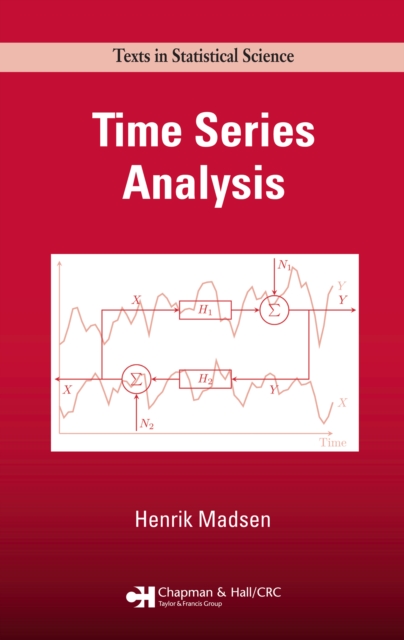
With a focus on analyzing and modeling linear dynamic systems using statistical methods, Time Series Analysis formulates various linear models, discusses their theoretical characteristics, and explores the connections among stochastic dynamic models.
This book provides sample exercises, techniques, and solutions to employ mathematical modeling to solve problems in Operations Research and Business Analytics.
MATLAB und Simulink Schnellkurs für Ingenieure ist ein benutzerfreundlicher Einführungsführer zu den Funktionen und Anwendungen von MATLAB und Simulink.
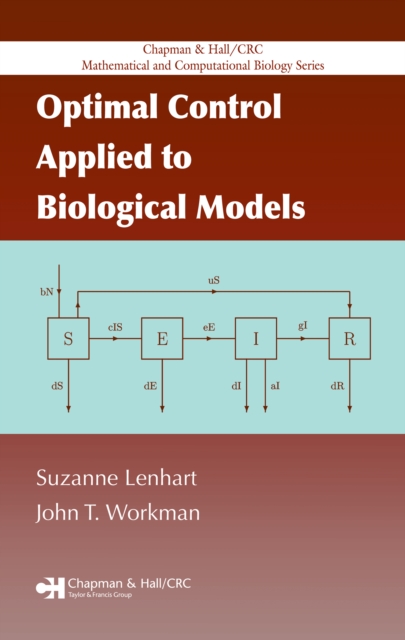
From economics and business to the biological sciences to physics and engineering, professionals successfully use the powerful mathematical tool of optimal control to make management and strategy decisions.
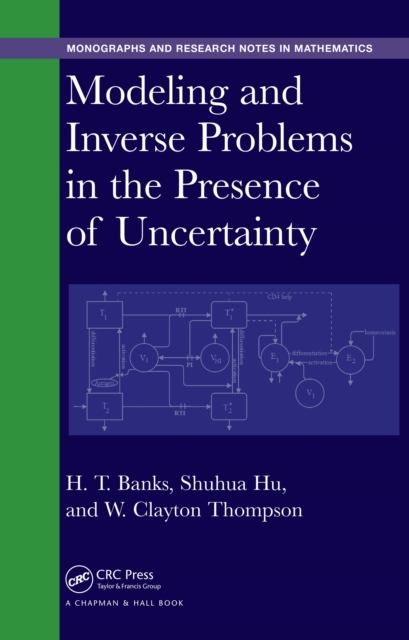
Modeling and Inverse Problems in the Presence of Uncertainty collects recent research-including the authors' own substantial projects-on uncertainty propagation and quantification.
The book discusses almost all aspects of spintronics-based neuromorphic computing, starting from a very basic level, and will be of interest to both spintronics and neuromorphic computing communities.
MATLAB und Simulink Schnellkurs für Ingenieure ist ein benutzerfreundlicher Einführungsführer zu den Funktionen und Anwendungen von MATLAB und Simulink.
The book discusses almost all aspects of spintronics-based neuromorphic computing, starting from a very basic level, and will be of interest to both spintronics and neuromorphic computing communities.
This book provides a practical guide on annotating emotions in natural language data and showcases how these annotations can improve Natural Language Processing (NLP) and Natural Language Understanding (NLU) models and applications.
This book provides a practical guide on annotating emotions in natural language data and showcases how these annotations can improve Natural Language Processing (NLP) and Natural Language Understanding (NLU) models and applications.
Functional Analysis for the Applied Mathematician is a self-contained volume providing a rigorous introduction to functional analysis and its applications.
For students in industrial and systems engineering (ISE) and operations research (OR) to understand optimization at an advanced level, they must first grasp the analysis of algorithms, computational complexity, and other concepts and modern developments in numerical methods.
Issues such as logistics, the coordination of different teams, and automatic control of machinery become more difficult when dealing with large, complex projects.
This book tells the story of building digital virtual human models in the context of the background, choices, and occurrences that shaped the author's own involvement and personal evolution.
Modelling large-scale wave fields and their interaction with coastal and offshore structures has become much more feasible over the last two decades with increases in computer speeds.
Dynamical Systems for Biological Modeling: An Introduction prepares both biology and mathematics students with the understanding and techniques necessary to undertake basic modeling of biological systems.
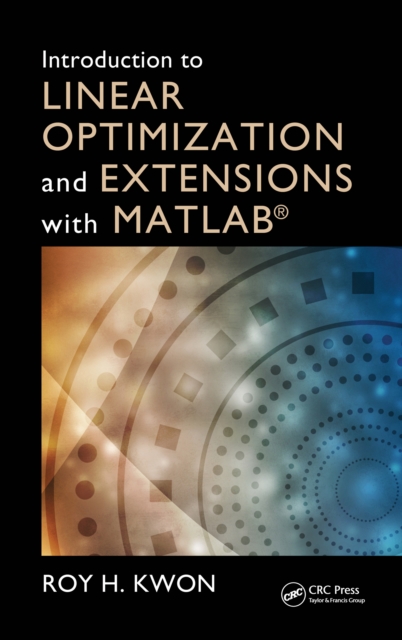
Filling the need for an introductory book on linear programming that discusses the important ways to mitigate parameter uncertainty, Introduction to Linear Optimization and Extensions with MATLAB provides a concrete and intuitive yet rigorous introduction to modern linear optimization.
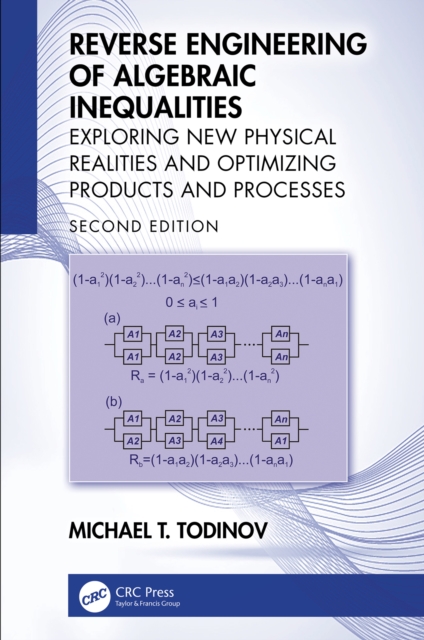
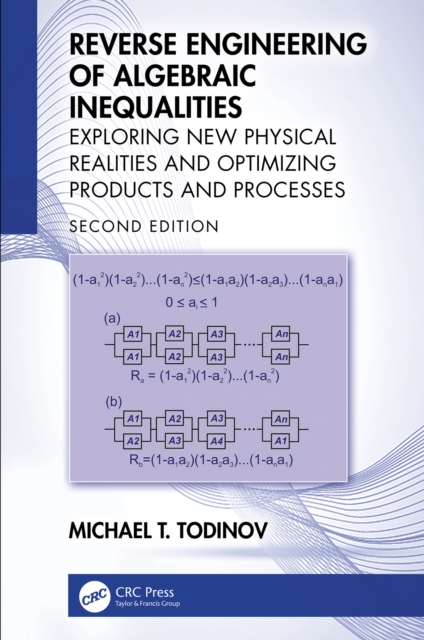
The second edition of Reverse Engineering of Algebraic Inequalities is a comprehensively updated new edition demonstrating the exploration of new physical realities in various unrelated domains of human activity through reverse engineering of algebraic inequalities.
Functional Analysis for the Applied Mathematician is a self-contained volume providing a rigorous introduction to functional analysis and its applications.
Mathematical Modelling with Case Studies: Using Maple and MATLAB, Third Edition provides students with hands-on modelling skills for a wide variety of problems involving differential equations that describe rates of change.
The author, a respected authority on heat recovery, provides up-to-date and comprehensive coverage of the modelling of the process of heat transfer embodied in regenerative devices.
The second edition of Reverse Engineering of Algebraic Inequalities is a comprehensively updated new edition demonstrating the exploration of new physical realities in various unrelated domains of human activity through reverse engineering of algebraic inequalities.
Applied Mathematics: A Computational Approach aims to provide a basic and self-contained introduction to Applied Mathematics within a computational environment.
Understand Quantitative Radiobiology from a Radiation Biophysics PerspectiveIn the field of radiobiology, the linear-quadratic (LQ) equation has become the standard for defining radiation-induced cell killing.
This sixth volume of the book series applies finite injury priority method to R-calculi and obtain (in)completeness theorem for binary-valued, Post three-valued, B2^2-valued and L4-valued first-order logics, and extend the method to infinite injury priority method and 0"e;-method for default logic to produce pseudo-extensions of a default theory, corresponding to different R-calculi.
This sixth volume of the book series applies finite injury priority method to R-calculi and obtain (in)completeness theorem for binary-valued, Post three-valued, B2^2-valued and L4-valued first-order logics, and extend the method to infinite injury priority method and 0"e;-method for default logic to produce pseudo-extensions of a default theory, corresponding to different R-calculi.