It is thought as necessary to write a Preface before a Book, as it is judged civil, when you invite a Friend to Dinner, to proffer him a Glass of Hock beforehand for a Whet.
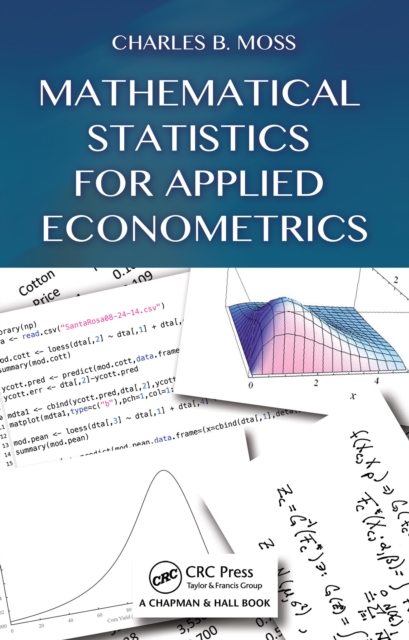
An Introductory Econometrics TextMathematical Statistics for Applied Econometrics covers the basics of statistical inference in support of a subsequent course on classical econometrics.
Model a Wide Range of Count Time Series Handbook of Discrete-Valued Time Series presents state-of-the-art methods for modeling time series of counts and incorporates frequentist and Bayesian approaches for discrete-valued spatio-temporal data and multivariate data.
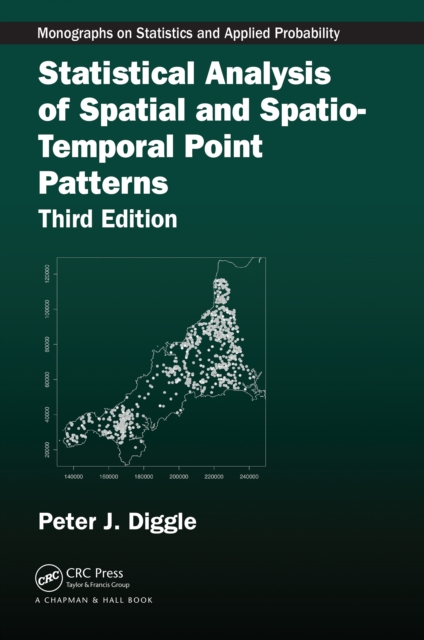
Retaining all the material from the second edition and adding substantial new material, this third edition presents models and statistical methods for analyzing spatially referenced point process data.
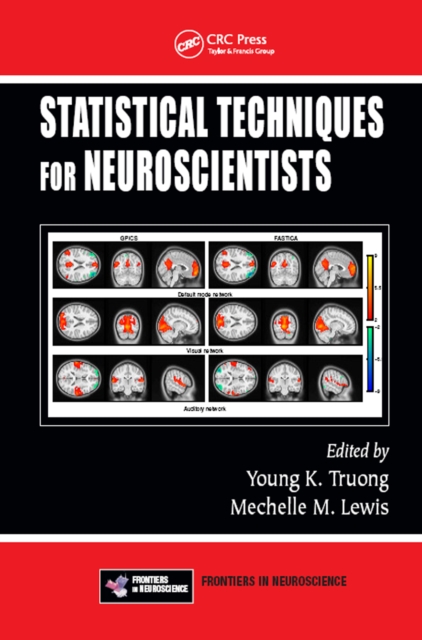
Statistical Techniques for Neuroscientists introduces new and useful methods for data analysis involving simultaneous recording of neuron or large cluster (brain region) neuron activity.
A discussion of the basic reliability concepts and models, this book is suitable for students of reliability engineering as well as for those who wish a supplement on applied survival data analysis.
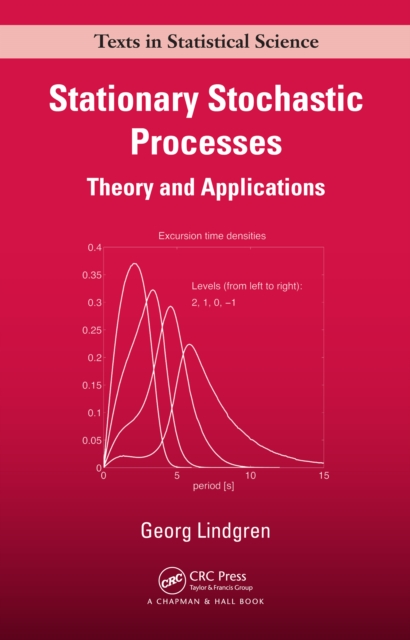
Intended for a second course in stationary processes, Stationary Stochastic Processes: Theory and Applications presents the theory behind the field's widely scattered applications in engineering and science.
Multivariate Bonferroni-Type Inequalities: Theory and Applications presents a systematic account of research discoveries on multivariate Bonferroni-type inequalities published in the past decade.
Providing a much-needed bridge between elementary statistics courses and advanced research methods courses, Understanding Advanced Statistical Methods helps students grasp the fundamental assumptions and machinery behind sophisticated statistical topics, such as logistic regression, maximum likelihood, bootstrapping, nonparametrics, and Bayesian me
Since 1972 the Institute of Mathematics and the Committee of Mathematics of the Polish Academy of Sciences organize annually con- ferences on mathematical statistics in Wisla.
Experience gained during a ten-year long involvement in modelling, program- ming and application in nonlinear optimization helped me to arrive at the conclusion that in the interest of having successful applications and efficient software production, knowing the structure of the problem to be solved is in- dispensable.
Conditional Monte Carlo: Gradient Estimation and Optimization Applications deals with various gradient estimation techniques of perturbation analysis based on the use of conditional expectation.
Optimization in Quality Control presents a broad survey of the state of the art in optimization in quality, and focuses on industrial and national competitiveness.
Applied Stochastic Models and Control for Finance and Insurance presents at an introductory level some essential stochastic models applied in economics, finance and insurance.
Sample-Path Analysis of Queueing Systems uses a deterministic (sample-path) approach to analyze stochastic systems, primarily queueing systems and more general input-output systems.
Driven by the request for increased productivity, flexibility, and competitiveness, modern civilization increasingly has created high-performance discrete event dynamic systems (DEDSs).
The three decades which have followed the publication of Heinz Neudecker's seminal paper `Some Theorems on Matrix Differentiation with Special Reference to Kronecker Products' in the Journal of the American Statistical Association (1969) have witnessed the growing influence of matrix analysis in many scientific disciplines.
Computations with Markov Chains presents the edited and reviewed proceedings of the Second International Workshop on the Numerical Solution of Markov Chains, held January 16--18, 1995, in Raleigh, North Carolina.
Although several books or monographs on multiobjective optimization under uncertainty have been published, there seems to be no book which starts with an introductory chapter of linear programming and is designed to incorporate both fuzziness and randomness into multiobjective programming in a unified way.
Robust Technology with Analysis of Interference in Signal Processing discusses for the first time the theoretical fundamentals and algorithms of analysis of noise as an information carrier.
A highly readable introduction to stochastic integration and stochastic differential equations, this book combines developments of the basic theory with applications.