Covering both theory and applications, this collection of eleven contributed papers surveys the role of probabilistic models and statistical techniques in image analysis and processing, develops likelihood methods for inference about parameters that determine the drift and the jump mechanism of a di
Covering both theory and applications, this collection of eleven contributed papers surveys the role of probabilistic models and statistical techniques in image analysis and processing, develops likelihood methods for inference about parameters that determine the drift and the jump mechanism of a di
This undergraduate text distils the wisdom of an experienced teacher and yields, to the mutual advantage of students and their instructors, a sound and stimulating introduction to probability theory.
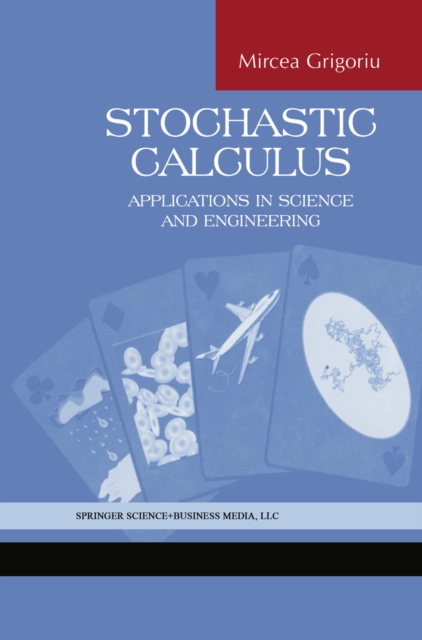
This advanced undergraduate and graduate text has now been revised and updated to cover the basic principles and applications of various types of stochastic systems, with much on theory and applications not previously available in book form.
This book provides an accessible yet rigorous first reference for readers interested in learning how to model and analyze cellular network performance using stochastic geometry.
Quantile-Based Reliability Analysis presents a novel approach to reliability theory using quantile functions in contrast to the traditional approach based on distribution functions.
Expanding on the first edition of An Introduction to Continuous-Time Stochastic Processes, this concisely written book is a rigorous and self-contained introduction to the theory of continuous-time stochastic processes.
This second edition of A Beginner's Guide to Finite Mathematics: For Business, Management, and the Social Sciences takes a distinctly applied approach to finite mathematics at the freshman and sophomore level.
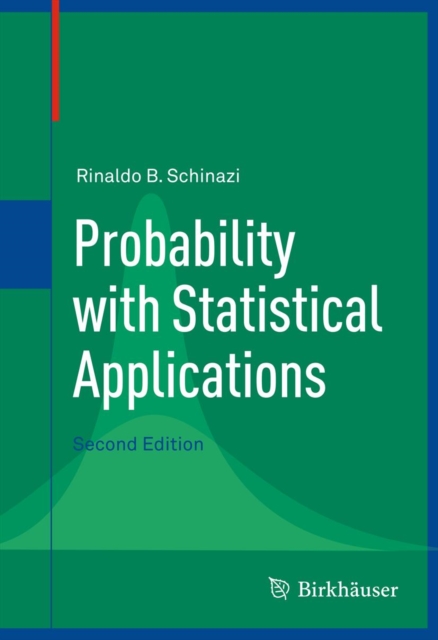
This second edition of Probability With Statistical Applications offers a practical introduction to probability for undergraduates at all levels with different backgrounds and views towards applications.
Algebraic, differential, and integral equations are used in the applied sciences, en- gineering, economics, and the social sciences to characterize the current state of a physical, economic, or social system and forecast its evolution in time.
Congestion control algorithms were implemented for the Internet nearly two decades ago, but mathematical models of congestion control in such a large-scale network are relatively new.
ANOVA models involving random effects have found widespread application to experimental design in varied fields such as biology, econometrics, and engineering.
The main goal of the two authors is to help undergraduate students understand the concepts and ideas of combinatorics, an important realm of mathematics, and to enable them to ultimately achieve excellence in this field.
Loosely speaking, adaptive systems are designed to deal with, to adapt to, chang- ing environmental conditions whilst maintaining performance objectives.
With each methodology treated in its own chapter, this monograph is a thorough exploration of several theories that can be used to find explicit formulas for heat kernels for both elliptic and sub-elliptic operators.
This monograph offers a thorough and updated guide to the theory and methods of progressive censoring, an area that has experienced tremendous growth in recent years.
An outgrowth of the 12th International Conference on Applied Stochastic Models and Data Analysis, this book is a collection of invited chapters presenting recent developments in the field of data analysis, with applications to reliability and inference, data mining, bioinformatics, lifetime data, and neural networks.
This revised and expanded second edition is an in-depth study of the change point problem from a general point of view, as well as a further examination of change point analysis of the most commonly used statistical models.
This introductory textbook is designed for a one-semester course on queueing theory that does not require a course on stochastic processes as a prerequisite.
This volume, following in the tradition of a similar 2010 publication by the same editors, is an outgrowth of an international conference, "e;Fractals and Related Fields II,"e; held in June 2011.
Many probability books are written by mathematicians and have the built-in bias that the reader is assumed to be a mathematician coming to the material for its beauty.
Enrique Castillo is a leading figure in several mathematical and engineering fields, having contributed seminal work in such areas as statistical modeling, extreme value analysis, multivariate distribution theory, Bayesian networks, neural networks, functional equations, artificial intelligence, linear algebra, optimization methods, numerical methods, reliability engineering, as well as sensitivity analysis and its applications.
Introduction to Probability with Statistical Applications targets non-mathematics students, undergraduates and graduates, who do not need an exhaustive treatment of the subject.
Scan statistics is currently one of the most active and important areas of research in applied probability and statistics, having applications to a wide variety of fields: archaeology, astronomy, bioinformatics, biosurveillance, molecular biology, genetics, computer science, electrical engineering, geography, material sciences, physics, reconnaissance, reliability and quality control, telecommunication, and epidemiology.
Barry Arnold has made fundamental contributions to many different areas of statistics, including distribution theory, Bayesian inference, multivariate analysis, bounds and orderings, and characterization problems.
Lagrangian expansions can be used to obtain numerous useful probability models, which have been applied to real life situations including, but not limited to: branching processes, queuing processes, stochastic processes, environmental toxicology, diffusion of information, ecology, strikes in industries, sales of new products, and production targets for optimum profits.
The book aims at presenting a detailed and mathematically rigorous exposition of the theory and applications of a class of point processes and piecewise deterministic p- cesses.
Stochastic switching systems represent an interesting class of systems that can be used to model a variety of systems having abrupt random changes in their dynamics.
Increasingly, neural networks are used and implemented in a wide range of fields and have become useful tools in probabilistic analysis and prediction theory.