All the precision of financial modeling--and none of the complexityEvidence-based decision making is only as good as the external evidence on which it is based.
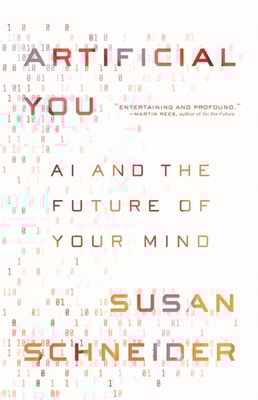
Hailed by the Washington Post as "e;a sure-footed and witty guide to slippery ethical terrain,"e; a philosophical exploration of AI and the future of the mind that Astronomer Royal Martin Rees calls "e;profound and entertaining"e;Humans may not be Earth's most intelligent beings for much longer: the world champions of chess, Go, and Jeopardy!
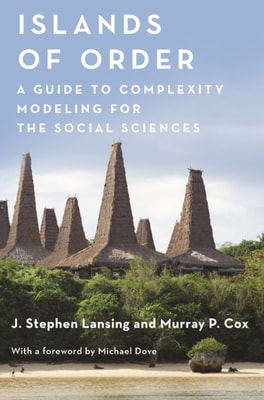
Two pioneering anthropologists reveal how complexity science can help us better understand how societies change over timeOver the past two decades, anthropologist J.
Understanding how a single shape can incur a complex range of transformations, while defining the same perceptually obvious figure, entails a rich and challenging collection of problems, at the interface between applied mathematics, statistics and computer science.
This book gathers selected research articles presented in the "e;6th International Conference on Mathematical Modelling, Applied Analysis and Computation (ICMMAAC)"e;, held at JECRC University, Jaipur, during August 3-5, 2023.
In honour of Professor Erkki Oja, one of the pioneers of Independent Component Analysis (ICA), this book reviews key advances in the theory and application of ICA, as well as its influence on signal processing, pattern recognition, machine learning, and data mining.
Featuring previously unpublished results, Semi-Markov Models: Control of Restorable Systems with Latent Failures describes valuable methodology which can be used by readers to build mathematical models of a wide class of systems for various applications.
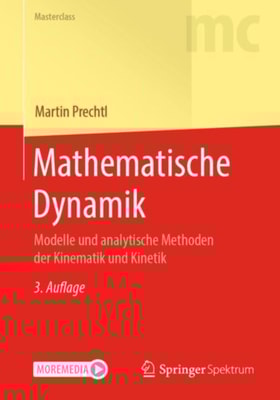
In diesem Lehrbuch werden folgende Themengebiete abgedeckt: Kinematik, Massenpunkt- und Starrkörperkinetik, Mehrkörpersysteme und schwingungsfähige Systeme – einschließlich ausgewählter Fragestellungen der sogenannten Maschinendynamik.
This advanced undergraduate and graduate text has now been revised and updated to cover the basic principles and applications of various types of stochastic systems, with much on theory and applications not previously available in book form.
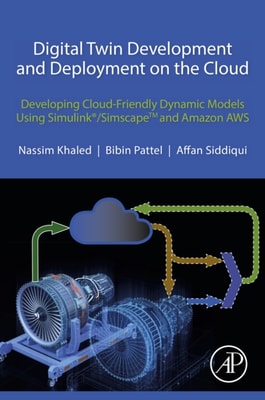
Digital Twin Development and Deployment in the Cloud: Developing Cloud-Friendly Dynamic Models Using Simulink(R)/SimscapeTM and Amazon AWS promotes a physics-based approach to the field of digital twins.
Analysis of Step-Stress Models: Existing Results and Some Recent Developments describes, in detail, the step-stress models and related topics that have received significant attention in the last few years.
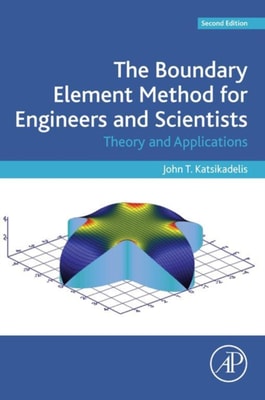
The Boundary Element Method for Engineers and Scientists: Theory and Applications is a detailed introduction to the principles and use of boundary element method (BEM), enabling this versatile and powerful computational tool to be employed for engineering analysis and design.
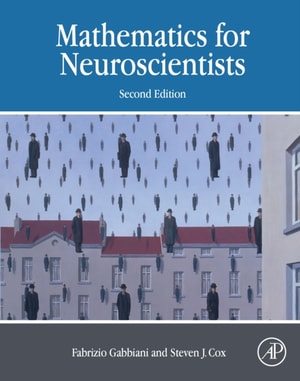
Mathematics for Neuroscientists, Second Edition, presents a comprehensive introduction to mathematical and computational methods used in neuroscience to describe and model neural components of the brain from ion channels to single neurons, neural networks and their relation to behavior.
Written by experts in both mathematics and biology, Algebraic and Discrete Mathematical Methods for Modern Biology offers a bridge between math and biology, providing a framework for simulating, analyzing, predicting, and modulating the behavior of complex biological systems.
Effective Dynamics of Stochastic Partial Differential Equations focuses on stochastic partial differential equations with slow and fast time scales, or large and small spatial scales.
Cybersecurity and Applied Mathematics explores the mathematical concepts necessary for effective cybersecurity research and practice, taking an applied approach for practitioners and students entering the field.
Reliability Analysis and Plans for Successive Testing: Start-up Demonstration Tests and Applications discusses all past and recent developments on start-up demonstration tests in the context of current numerical and illustrative examples to clarify available methods for distribution theorists and applied mathematicians dealing with control problems.
The material collected in this volume discusses the present as well as expected future directions of development of the field with particular emphasis on applications.
Mathematics for Physical Science and Engineering is a complete text in mathematics for physical science that includes the use of symbolic computation to illustrate the mathematical concepts and enable the solution of a broader range of practical problems.
Advanced Mathematical Tools for Automatic Control Engineers, Volume 2: Stochastic Techniques provides comprehensive discussions on statistical tools for control engineers.
Since the publication of the first edition of this classic textbook over thirty years ago, tens of thousands of students have used A Course in Probability Theory.
Applied Continuum Mechanics for Thermo-Fluids presents the tensor notation rules and integral theorems before defining the preliminary concepts and applications of continuum mechanics.
Visualizing More Quaternions, Volume Two updates on proteomics-related material that will be useful for biochemists and biophysicists, including material related to electron microscopy (and specifically cryo-EVisualizing.
This book draws on advances in computational neuroscience and theoretical biology to provide a clear and accessible agentive account of the nature of causality and scientific explanations.
Linear Partial Differential and Difference Equations and Simultaneous Systems: With Constant or Homogeneous Coefficients is part of the series "e;Mathematics and Physics for Science and Technology,"e; which combines rigorous mathematics with general physical principles to model practical engineering systems with a detailed derivation and interpretation of results.
Ordinary differential equations (ODEs) and differential-algebraic equations (DAEs) are widely used to model control systems in engineering, natural sciences, and economy.
This work is dedicated to Wassiliy Leontief's concepts of Input-Output Analysis and to the algebraic properties of Piero Sraffa's seminal models described consequently by matrix algebra and the Perron-Frobenius Theorem.
For scientists, students, and curious laypersons, this compilation, Proofs and Logical Arguments Supporting the Foundational Laws of Physics: A Handy Guide for Students and Scientists examines the most important laws and relationships taught in science courses, attaching a short and accessible proof or logical argument for each assertion.
This work is dedicated to Wassiliy Leontief's concepts of Input-Output Analysis and to the algebraic properties of Piero Sraffa's seminal models described consequently by matrix algebra and the Perron-Frobenius Theorem.